
Tullus Hostilius: Warrior King Of Rome, Who Succeeded Numa Pompilius And Feared Prophecies
A. Sutherland - AncientPages.com - Traditionally counted, there were seven kings of Rome. However, it is difficult to attribute their deeds to a respective ruler, because ancient records were destroyed in the Sack of Rome by the Gauls, 390 BC.
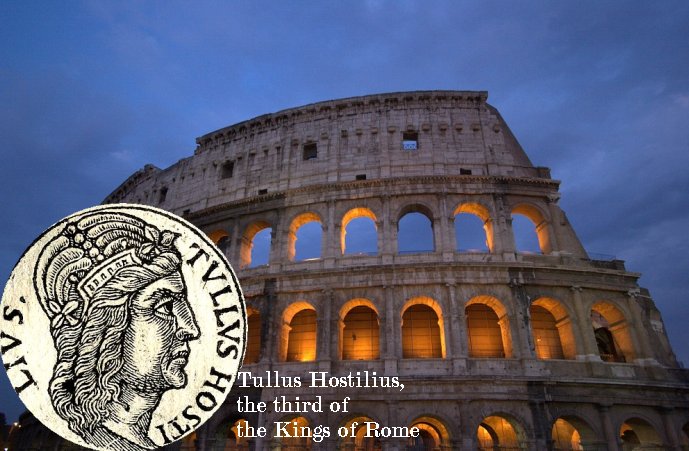
Tulius-Hostilius was the third of the Kings of Rome. Source
According to ancient tradition, the warlike king (and founder) of the city, known as Romulus, was succeeded by the Numa Pompilius, who was not a warrior king but rather a statesman and politician whose reign was characterized by peace and tranquility.
Contrary to Numa, his successor, Tullus Hostilius was a warrior king, much more interested in conquests than peace in the Empire. His reign was filled with warlike activities.
He was the grandson of Hostus Hostilius, a nobleman of ancient Rome during the reign of Romulus, who had fought with Romulus and died during the Sabine invasion of Rome.
Demolition Of Alba Longa
One of the most memorable historical events during the reign of Tullus was the destruction of Alba Longa.
Legend says that in ancient times, Alba Longa was the oldest city in the province of Lazio in the Alban Mountains southeast of Rome. Alba Longa was founded in 1152 BC as a new home village for the Trojan refugees. Rome's founders Romulus and Remus were descended from the city's royal family, but after Rome's founding, the cities became competitors, according to the legend.
It is traditionally stated that Alba Longa was destroyed by the Romans during Tullus Hostilius in the 600s BC. However, archaeologists have only found burial sites in the area, never any city, which would suggest that the city has never existed. Although the people of Alba Longa were made a vassal state, their king Mettius Fufetius betrayed Rome. Tullus ordered Alba Longa to be destroyed and its people were forced to migrate to Rome and become Roman citizens.
The third king of Rome, Tullus Hostilius participated in several other successful battles, the so-called Roman-Etruscan Wars, which took place for a longer period of time and from the earliest stages of the history of Rome. However, information about these military encounters is very limited.
One thing is certain, during the reign of this king, Rome expanded its borders like never before.
Interregnum ‘Gaps’ Between Reigns Of Roman Kings
Tullus Hostilius becomes king after a short interregnum. In the Roman Empire, there were several imperial interregnum (‘gaps’) between the reigns of the Roman kings. It could even take up a few years. According to Livy, the interregnum which followed the death of Romulus was of one-year-long while upon the death of Numa, the interregnum lasted longer than was necessary for the ceremony of the election, the next king, Tullus Hostilius.
Warrior King Tullus Had Not Much Time For Religious Activities
According to the Roman historian, Livy (64 or 59 BC-AD 12 or 17), Tullus showed very little interest in religious ceremonies and rituals. He simply considered them unworthy of a king's attention.

During the reign of king Tullus Hostilius, Rome expanded its borders like never before. (Painting by Rembrandt).
Livy reports in his book of Roman History, however, that at the close of Tullus’ reign, the great city of Rome was affected by some ominous prophecies. Among others, volcanic activity "...there had been a shower of stones on the Alban Mount" commonly known as Monte Cavo.
In response to it, a public religious festival of nine days was held – a novendialis, and a loud voice was heard on the summit of the mount complaining that the people had failed to show devotion to their former gods, and a plague struck in Rome.
King Tullus became ill and was filled with superstition. He knew that his predecessor, Numa Pompilius was a religious man but he was not. He ignored the religious practices recommended by Numa.
Now, it was perhaps time to introduce some changes in his warrior-like life and reign. King Tullus made attempts to follow certain instructions to the religious practices of Numa Pompilius. Unfortunately, he did not follow the instructions correctly when he tried to sacrifice to the god Jupiter.
Tullus Hostilius, his family, and his house were struck by lightning and so his reign ended in about 642 BC.
Written by – A. Sutherland - AncientPages.com Senior Staff Writer
Copyright © AncientPages.com All rights reserved. This material may not be published, broadcast, rewritten or redistributed in whole or part without the express written permission of AncientPages.com
Expand for referencesReferences:
Hooke N. The Roman history, from the building of Rome to the ruin of the commonwealth
More From Ancient Pages
-
 On This Day In History: Emperor Gordian II Loses The Battle Of Carthage – On Apr 12, 238 AD
-
 Posca: ‘Wine Of The People’ Was Popular In Ancient Rome And Greece
-
 Is There An Ancient Secret Connection Between The Statue Of Liberty And The Anunnaki Goddess Inanna?
-
 Boomerangs Were Used To Shape Stone Tools By Aboriginal People
-
 Evidence Of The Moon-Eyed People – Strange Runic Tablet And A Curious Discovery In North Dakota – Part 1
-
 Ancient Roman Portable Toilets Studied By Scientists
-
 Hades – ‘The Unseen’ God Of The Dead, Fertility, Wealth And Earth’s Minerals
-
 Mead: Secret Drink Of The Vikings And Gods – Was It An Ancient Antibiotic?
-
 Controversial Atacama Skeleton Is Not An Alien – DNA Study Reveals
-
 Was Ancient Egyptian Science Inherited From A Lost Atlantean Civilization?
-
 2,000-Year-Old Measuring Table With Stone Weights Unearthed In Jerusalem
-
 Evidence Foreigners Fought Alongside Ancient Greeks Is Challenging Millennia Of Military History
-
 Study Of Ancient Skulls Sheds Light On Human Interbreeding With Neandertals
-
 Exceptionally Rare 1,300-Year-Old Golden Pommel Found In Blairdrummond, Scotland
-
 Location Of Burial Place Belonging To Alexander Nevsky’s Son And Grandson – Found
-
 Ancient City Of Sardis Investigated By Archaeologists
-
 Secrets Of The Assyrian Dream Book And Dream Interpretation In The Ancient Near East
-
 Rare Ancient Caribbean Skull Shows Evidence Of Leprosy
-
 Unique Seal Stamp That Belonged To Elisabeth Buggesdatter, One Of The Most Powerful Women In Denmark – Discovered
-
 Boxer At Rest – Rare Sculpture And Masterpiece Of Hellenistic Bronze Art

