
Rock-Cut Tomb Of Pennut, Viceroy Of Nubia Under Reign Of Ramses VI
A. Sutherland - AncientPages.com - Many ancient monuments have been rescued from rising waters of powerful Nile River.
One of them is rock cut 'Tomb of Pennut', which is situated in Aneiba (Aniba), Lower Nubia, approximately 140 miles south of Aswan, in the south of Egypt.

In the 1970s some of the best and most colourful of the scenes were stolen. Tomb of Pennut. Lake Nasser, Egypt. Image credit: Dennis Jarvis - CC BY-SA 2.0 DEED
Today, Aneiba (or Mi’am) does not exist. It was flooded by the Lake Nasser but in times of Ramses VI, it was an important administrative center of Lower Nubia and the seat of governor and higher officials. The city's Horus temple dates back to the Middle Kingdom. The cult of Horus of Mi'am was not limited to his city but like all other Horus it was widespread throughout Nubia.
The current location of the tomb of Pennut is on the shore of Lake Nasser, on the site of the new Amada.
Pennut, Viceroy of Kush was a prominent figure also known as “King’s Son of Kush”. This prominent Egyptian official lived at the time of Ramses VI (1143-1136 BC) and was supervisor of the province of Aneiba, the seat of governor and higher officials.
Egyptologist Professor George Steindorff (1861-1951) found the tomb during the excavations at the second raising of the Aswan Dam.

Inside the tomb of Pennut. Photo credits: travel-tour-guide.com
While studying the tomb, he found that Pennut served under Ramses VI, the fifth ruler of the Twentieth Dynasty of Egypt. His office was “Deputy of Wawat”, Chief of the Quarry Service” and Steward of Horus, Lord of Mi’am” and he was an important Nubian figure.
See also:
Taharqa – The Most Powerful Of The Black Pharaohs
Ancient Great City Of Napata In The Kingdom Of Kush
Two of his relatives also held high positions of “Treasurer of the Lord of Two Lands of Mi’am” and another was “Scribe of the white House and Mayor of M’am”.
However, their tombs have never been discovered.
The tomb of Pennut, a small, well-preserved structure with the entrance leading into a chamber 6.5 m (21ft) wide by 2.8 m (9ft) deep).
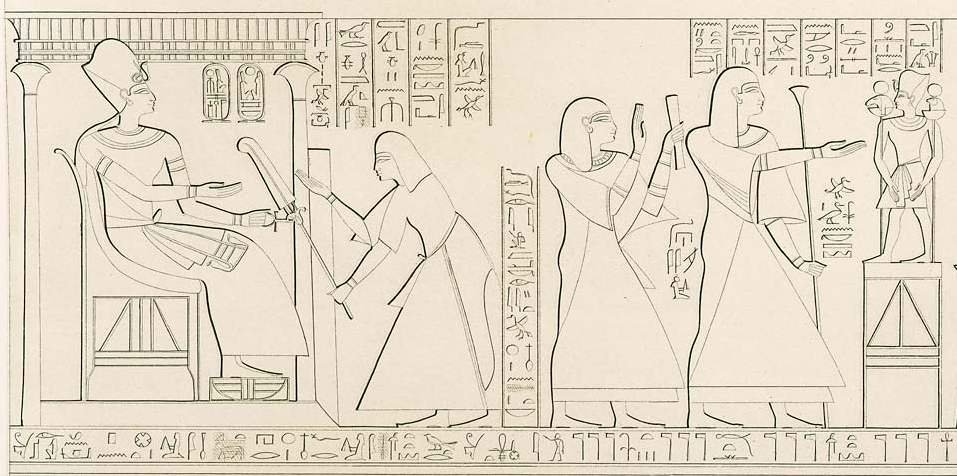
King's Son of Kush depicted in the tomb of Pennut in Aniba. Dates to the 20th dynasty. Ramesses VI. From Lepsius Denkmaler Abt 3, Band 7, Page 230
The tomb of Pennut (with a small offering chapel and a niche at the rear) was found decorated with the cartouches of the Pharaoh Ramses VI, carved on the walls of the chapel and many reliefs depicting how the Viceroy and members of his family used to adore various gods in front of other officials, and other important events and personalities from the Viceroy’s life.
One relief in his tomb shows Pennut himself receiving the gifts from Ramses VI form of two silver vessels.
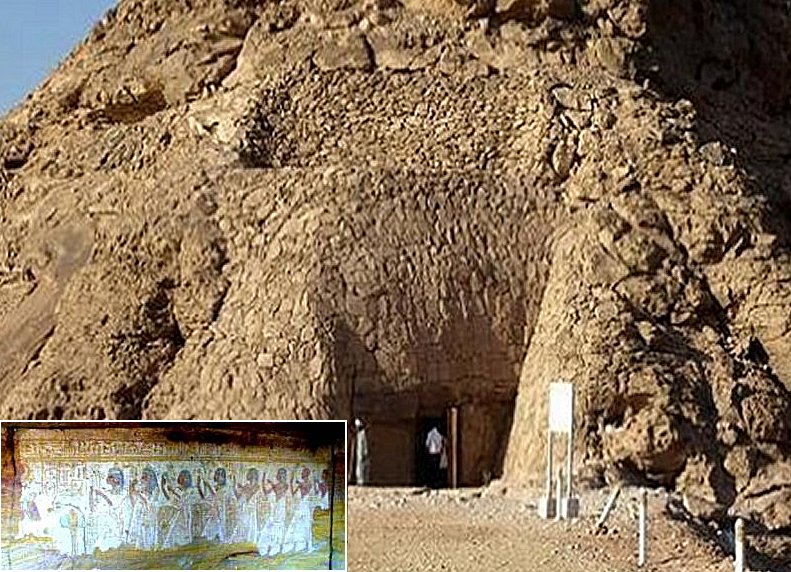
The tomb of Pennut was rescued by UNESCO's project, it presently is located opposite Qasr Ibrim, some 25 miles away from its original site.
There are also scenes associated with the afterlife. The tomb has several well-preserved and informative inscriptions.
Although very old, Pennut’s tomb is not only beautiful but also famous for its inscriptions authored by Pennut. The inscriptions give us a picture of the Nubian official’s life including records of the boundaries, offerings and presents given to Ramses VI.
In the tomb, there is also text recording Pennut’s donation of a statue of Ramses VI to the temple of Horus in Aneiba and funding made by him on behalf of agricultural lands.
Written by – A. Sutherland - AncientPages.com Senior Staff Writer
Copyright © AncientPages.com All rights reserved. This material may not be published, broadcast, rewritten or redistributed in whole or part without the express written permission of AncientPages.com
Expand for referencesReferences:
Török L. The Kingdom of Kush
N. D. Harkless, Nubian Pharaphs and Meroitic Kings
Altenmüller H. Studien zur Altägyptischen Kultur, Volym 31
More From Ancient Pages
-
 Hundreds Of Burials Discovered In Northern Lazio, The Home Of The Etruscan Civilization – Digitized
-
 Tahpanhes – Biblical City Where Prophet Jeremiah And King Zedekiah’s Daughters Hid From The Babylonians
-
 Once-In-A-Lifetime Find – Ancient Roman and Saxon Cemetery Unearthed In Leeds
-
 Kingdom Of Judah: Government Complex And 120 Seal Impressions Stamped On Jars – Unearthed
-
 Magnificent Reconstruction Of Scotland’s Largest Pictish Fort Burghead
-
 Researchers Confirm Museum Shrunken Head As Human Remains
-
 First Book Of Breathing: Egyptian Papyrus Sheds Light On Funerary Text Helping The Deceased In Afterlife
-
 Has The Legendary Viking Stronghold Jomsborg Finally Been Found?
-
 Unexplained Mystery Of The Glowing Woman Who Baffled Scientists
-
 On This Day In History: Courageous And Heroic Radio Rescue At Sea – On Jan 23, 1909
-
 Goddess Xi Wangmu (Xiwangmu) Who Controlled Life, Death, Creation And Talked Directly To Humans In Chinese Mythology
-
 First Neanderthal Footprints Discovered In Gibraltar Dunes
-
 Symbol of Immortality: Honey Offering In A 2,500-Year-Old Shrine – Identified
-
 Earliest Evidence For Domestic Yak – Revealed By Ancient DNA And Archaeology
-
 Malignant Serpent God Apophis: Symbol Of Chaos And Forces Of Darkness
-
 Time Capsule – Best Preserved 3,000-Year-Old Dwelling Ever Found In Britain
-
 Why Was Celebration Of Christmas, Easter, Midsummer And Saint’s Day Forbidden In Scotland?
-
 Discovery Of Roman Settlement, Workshops And Artifacts Will Shed Light On Their Life In Northern England
-
 The Boomerang Was Used 20,000 Years Ago By Stone Age People
-
 The Hittites – Rise And Fall Of An Ancient Powerful Empire

