
How Did Ancient Romans Grow Their Gardens?
AncientPages.com - The Roman garden culture was significantly developed after 60 BC. Roman gardens were influenced by Egyptian, Persian, and Greek gardening techniques.
Each area in the garden had its special function. The owner could use his garden’s shaded path (gestation) to ride horseback or be carried by slaves.
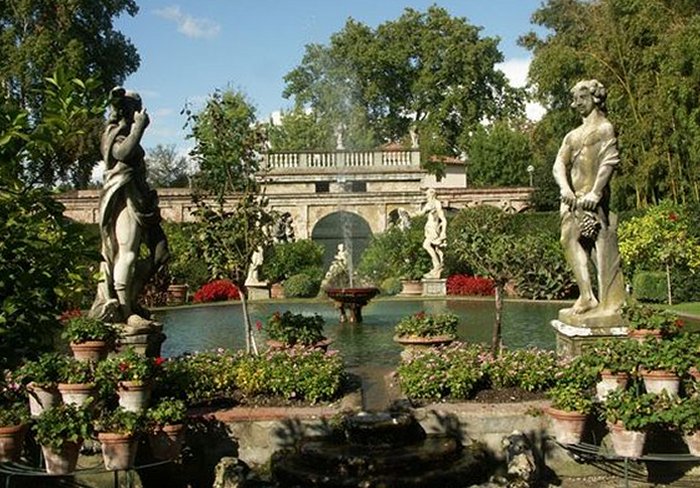
The large gardens in the city's edge were extensive parks with pavilions, statues and spring water. Source
The gardens gave flowers for wreaths that were used at parades and religious festivals in ancient Rome.
Most gardens had a pergola, a shaded walkway, passageway, or sitting area surrounded by vertical pillars covered with growing vines.
While in China pergolas were built to provide shade in temples and living spaces, in ancient Egypt they were used to provide both shade and to house figs and grapes.
The Romans used pergolas for growing vines, which were often seen climbing many pergolas and providing a green shade especially during a romantic meal for two or a larger family.
A large and lush garden gave status and prestige to the Romans. In the shady environment, the master of the house could relax or have guests, while slaves did the hard work of cultivating the soil and taking care flowers (usually roses, violets, and oleanders) and tall trees along with a variety of dwarf trees.
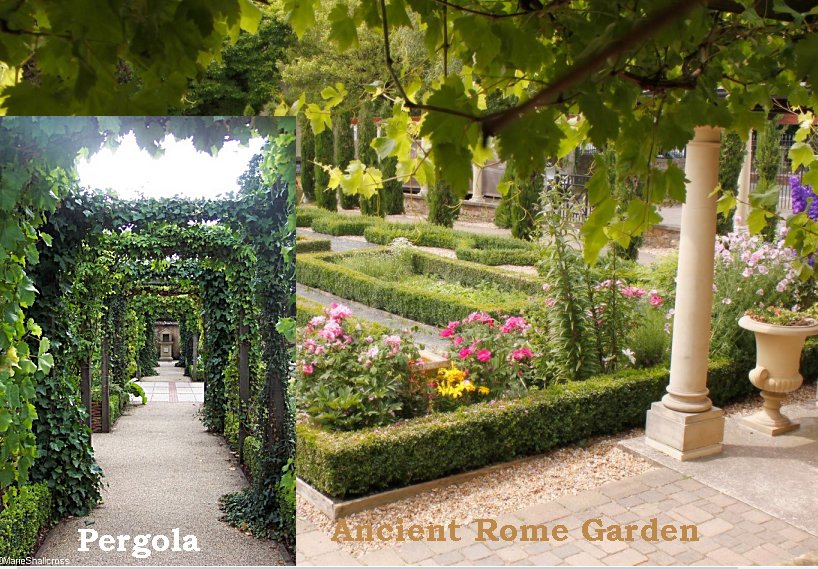
The Romans widely used pergolas for growing vines.
The large gardens in the city's edge were extensive parks with pavilions, statues and spring water. Some even had their own zoo. Rare plants housed during travel or field trains gave special status. The garden was not only used to boast. Archaeological finds show that the Romans both ate and worked in it. The women used to weave outdoors in the shade of the trees.
See also:
Why Did Ancient Romans Build So Many Straight Roads?
Ancient Roman Women Wore Bikini In 1400 B.C.
First Pay Toilets Were Invented In Ancient Rome In 74 A.D.
Families who had houses built on small pieces of land, usually could set up miniature gardens or satisfied themselves with beautiful murals, which gave the illusion of that the house was surrounded by a lush pond.
The peasants of medieval Europe considered their gardens an important source of food and herbs to cure all sorts of diseases. In the upper class, however, the garden became a fashion phenomenon during the late Middle Ages.
Garden played an important role in people’s daily life; rich people discussed all the new tricks and tips to drive out the best vegetables and the trees that gave the most fruit.
Most excavated Roman gardens show straight paths, however, serpentine or curved paths were also designed especially in larger gardens.
Pliny (AD 23–79), a Roman author, naturalist and natural philosopher, wrote that his villa at Laurentum, on the west coast of the Italian Peninsula southwest of Rome, had only one wide path that circled around a central bed, while his stadium garden in Tuscany had several different paths. (Pliny Epistulae 2).
Copyright © AncientPages.com All rights reserved. This material may not be published, broadcast, rewritten or redistributed in whole or part without the express written permission of AncientPages.com
Expand for referencesReferences:
Katharine T. von Stackelberg, The Roman Garden: Space, Sense, and Society
Bowe P. Gardens of the Roman World
More From Ancient Pages
-
 Syamantaka – Divine Jewel With Magical Powers Was A Gift From The Sun God In Hindu Mythology
-
 Crusader-Era Sword Discovered At Previously Unknown Burial Site In Finland
-
 Largest Ever Human Family Tree: 27 Million Ancestors Mapped
-
 War Between Romans And Persians Lasted 721 Years: One Of The World’s Longest Human Conflicts In History
-
 Mysterious Wise Pre-Flood Beings Who Gave Humans A Precious Gift – Did We Reject It?
-
 Ancient Clay Seals That Could Re-Write Hittite History Discovered In Kayalıpınar, Turkey
-
 Mystery Of The Proto-Elamite Tablets – Cracking The World’s Oldest Undeciphered Writing
-
 How Did Vikings Worship Their Gods?
-
 Rare Bronze Oil Lamp With A Face Cut In Half Unearthed In Israel
-
 Sandstone Head Of A Bodhisattva Discovered Near Ta Nei Temple
-
 Why Is A Snake Symbol Of Medicine And Pharmacies?
-
 Unexplained Encounters With Unknown Beings In California – Old And Modern Reports
-
 Rosicrucians’ Secret Knowledge Of Atlantis, Pyramids And Extraterrestrial Visitations
-
 First Peoples Of Japan: Ainu Civilization And Its Unknown Origin
-
 Medieval Warhorses Were Pony-Sized And Much Smaller Than Previously Thought
-
 Hulagu Khan Destroyed Thousands Of Priceless Ancient Books Kept In The House Of Wisdom In Baghdad
-
 The Untold Story Of Mexico’s Ancient Giant Indians – Cunning Plan And The Evil Nation – Part 2
-
 Native American Population Does Not Originate In Japan – Genetics And Skeletal Biology Questioned
-
 Remains at Crenshaw Site Are Local, Ancestors Of Caddo – New Study
-
 DNA From 3,800-Year-Old Individuals Sheds New Light On Bronze Age Families

