
Samurai – Powerful Skilled Warriors Who Loved Music, Art And Poetry
A. Sutherland - AncientPages.com - The samurai were the legendary warriors of old Japan who led noble but violent lives governed by the demands of honor, personal integrity, and loyalty.
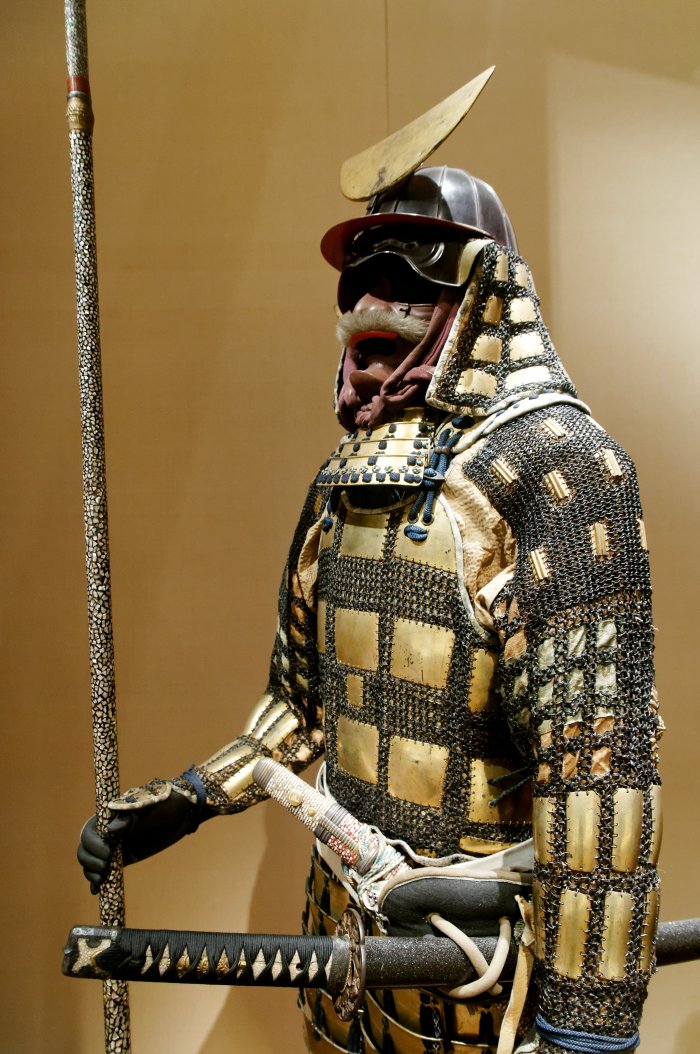
Japanese folding armor (tatami gusoku), Edo period. - Karuta tatami do gusoku, Edo period. A lightweight portable folding (tatami) armour made from small square or rectangle armor plates called karuta. The karuta are usually connected to each other by chainmail and sewn to a cloth backing. Image credit: Marie-Lan Nguyen - CC BY 2.5
Members of the warrior class in Japan from 1185-1867, Samurai (means "one who serves"), lived by the Bushido Code and were willing to give their lives to defend their honor. They were the well-paid retainers of the daimyo, powerful Japanese feudal lords during the Middle Ages in Japan.
An emperor and his family officially ruled the country, but respective areas were governed by the 'daimyo' military generals and powerful warlords with strong armies of fighters.
The Daimyo lords belonged to the Samurai class, the highest caste, until the abolition of the caste. They reported directly to the shogun, and their status was counted in the so-called 'koku,' a measure of how much rice their country could produce. After the famous battle at Sekigahara in 1600, the daimyo was divided into two groups: tozama and fudai, depending on which side they were on this battle.
These men had at their disposal large, formidable armies and were often in conflict with each other.
At the head of their military forces were some of the bravest and most terrifying warriors - the 'samurai' (which means' ones who serve'), highly respected for their extraordinary skills and courageous nature of warriors.
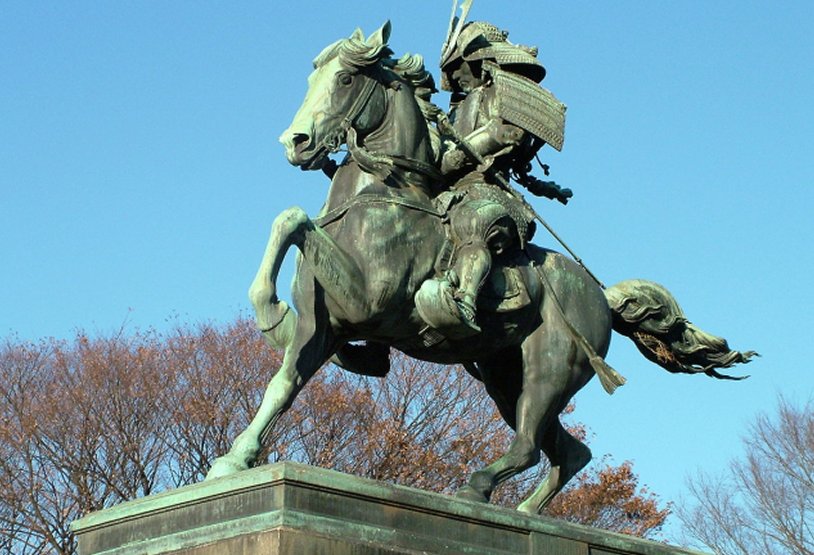
Statue of samurai Kusunoki Masashige stationed outside Tokyo Imperial Palace. Image credit: David Moore - CC BY-SA 2.5
The samurai lived at the top of a strictly layered society (made up of individuals, families, and groups in society) and controlled political power and wealth.
The Samurai class existed in Japan for over a thousand years. The Samurai has quite a fascinating history. They started in the 1100s and ended their existence in 1835.
The samurai were not considered part of the aristocracy. Instead, they served as mercenary tools, helping competing groups within the elite. Their military success for the aristocratic families, on the other hand, resulted in grants of considerable parcels of land to these noble families.
Subsequently, this land came under the administration of their samurai vassals, and eventually, the land came under samurai control as payment for their services. It was a gift because the samurai supported rich and influential daimyo and fought for them. Peasants who worked on these given lands had to pay taxes for money and food to support their masters.
It reminds us of warriors and knights of Medieval Europe, as we described earlier in one of the articles on Ancient Pages.
A samurai was expected to show reckless courage, fairness, reverence for the gods, and generosity toward those weaker. At the heart of all Samurai, training was the 'Bushido Code,' a strict creed – 'Way of the Warrior.'
Dying an honorable death was judged more important than living a long life.
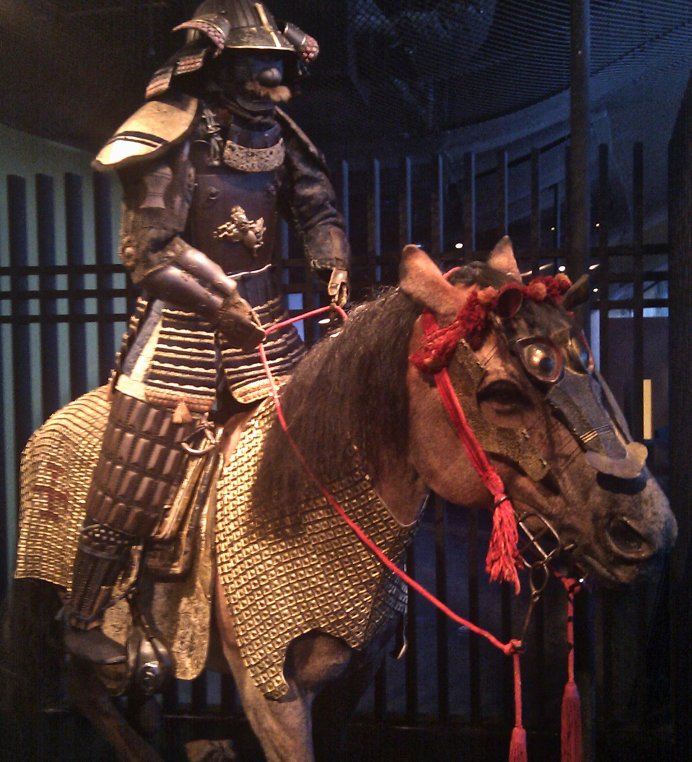
A re-creation of an armored samurai riding a horse, showing horse armour (uma yoroi or bagai), from The Musée du Quai Branly, Paris France, the collection of samurai armor from The Ann and Gabriel Barbier-Mueller Museum, Dallas. source
For decades, Samurai armies were engaged in power struggles and battles between various factions. By the late 12th century, the samurai's power had become dominant. In this new situation, the emperor established the first shogun or military dictator. As a result, powerful samurai would rule Japan for most of the next seven centuries.
"The establishment of martial rule and ascension of Samurai as the dominant class would have far-reaching effects on the development of Japanese society. Samurai political dominance exerted influence not only in the areas of ruler and lawgivers but also as patrons in the fields of education and the arts." 1
Surprisingly, despite their excellent skills in battle, the samurai loved music, art, and poetry. Many samurai were deeply interested in Zen Buddhism, an essential force in Japan, especially after the 12th century. It had considerable influence on Japanese culture, far beyond the temple. It successfully reached cultural and social areas of all kinds, including gardening, ink painting, calligraphy, the tea ceremony, and even military strategies.
The samurai preferred hand-to-hand combat using razor-sharped swords.
As their fighting style was based on quick movements, it was vital for them to have only light armor-decorated helmets for cheek and neck protection. Additional armor included frightening masks and shoulder plates (of leather, wood, and later steel), usually tied to breastplates, for better body protection.
Underneath his armor, the Samurai usually would wear a baggy garment, loose pants, and a kimono on top of that.
The samurai did not use shields; instead, they used the sides of their swords to neutralize an enemy attack.
Written by – A. Sutherland AncientPages.com Staff Writer
Updated on Nov 4, 2023
Copyright © AncientPages.com All rights reserved. This material may not be published, broadcast, rewritten or redistributed in whole or part without the express written permission of AncientPages.com
Expand for referencesMore From Ancient Pages
-
 Ancient Basilica Cistern: Intriguing Hidden Subterranean World With Medusa Heads
-
 On This Day In History: Shakespeare’s King Lear Performed Before The Court Of King James I – On Dec 26, 1606
-
 Forgotten Ancient Wisdom: People Have Two Souls – Native American And Pre-Christian Beliefs Reveal
-
 Early Māori Settlement On The Subantarctic Islands -Uncovering Some Of The Unknown
-
 World’s Oldest Dala Horse Discovered In Sweden
-
 The Olmecs – Who They Were, Where They Came From Still Remains A Mystery
-
 New Method Reveals Falsified And Original Manuscripts Of Famous Robert Burns
-
 Mysterious Pyramid-Shaped Tomb Discovered In China
-
 Mystery Of The Real Sword: How Did A Meter Long Sword End Up In Solid Rock?
-
 Rome’s Most Wanted Enemy – Poison King Mithradates Murdered 80,000 Roman Civilians
-
 On This Day In History: William Penn – English Philosopher, Quaker And Founder Of Pennsylvania Was Born – Oct 14, 1644
-
 Viking Age silver coins unearthed in Jutland
-
 The Real Paleo Diet: New Archaeological Evidence Changes What We Thought About How Ancient Humans Prepared Food
-
 Sinuses Prevented Prehistoric Crocodile Relatives From Deep Diving
-
 Second Gate Of Bazira And Unique Artifacts Discovered In The Ancient City Of Alexander The Great
-
 How Did Climate Change Impact European Ice Age Humans?
-
 Ancient Symbol Fleur-de-lis: It’s Meaning And History Explained
-
 Legendary Brahan Seer Of The Clan Mackenzie (Coinneach) – The Scottish Nostradamus
-
 Three 3,500-Year-Old Painted Wooden Coffins Discovered In Luxor, Egypt
-
 Immortal Mimi Spirits In Beliefs Of Aborigines Of Arnhem Land

