
Camazotz: ‘Death Bat’ Vampire God In Ancient Maya Beliefs
A. Sutherland - AncientPages.com - In ancient Maya beliefs, Camazotz (Camoazotz) was a vampire bat god. Camazotz means "death bat" in the Quiché Maya language. Chinese cultures see the bat as a good luck sign, and the Europeans fear it as evil.
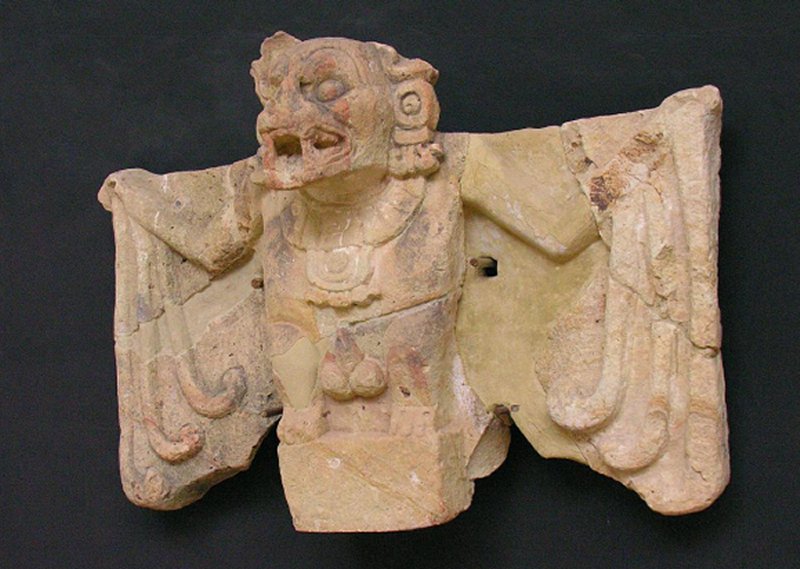
Cama Zotz (Camazotz), Copán , Classic - Image credit: Dennis Jarvis - Honduras-0334 - CC BY-SA 2.0
Camazotz was often depicted holding his victim and a knife associated with night, death, and sacrifice. The Maya considered him a terrifying god who served death and ruled the domain of twilight.
He lived in bloody caves and other dark places that people tried to avoid for fear of disturbing him.
In the beginning, bats in pre-Columbian cultures were not associated with evil. They were believed to be powerful creatures, spirits, and even gods. For example, in the Tajin pre-Columbian stone sculptures of Veracruz, vampire bats are depicted as gods and are also mentioned in epic myths and the book of creation, "Popol Vuh."
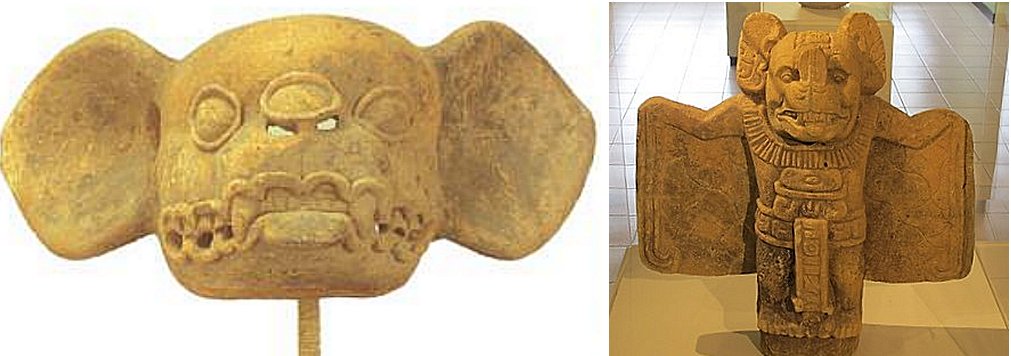
Left: Mayan Bat Effigy; Right: Pre-Columbian Maya bat god sculpture in Museo Popol Vuh in Guatemala City. Image credit: Tracy Barnett - CC BY-SA 2.0
In one story, Camazotz, a "death bat," takes the head of one of the twin heroes, who entered his underworld domain, and this head is later used in the ritual ball game.
In most pre-Columbian codices, such as Codex Borgia, bats (having human form or personality) are depicted as involved in human sacrifice.
Among many beliefs of the Tzotzil Maya, an indigenous Maya people of the central Chiapas highlands in southern Mexico, there was one especially important because it explained the origin of these people. These Maya used to call themselves "Zotzil uinic," (batmen).
Their origin story claims that their ancestors had once discovered a stone bat and considered it their god.
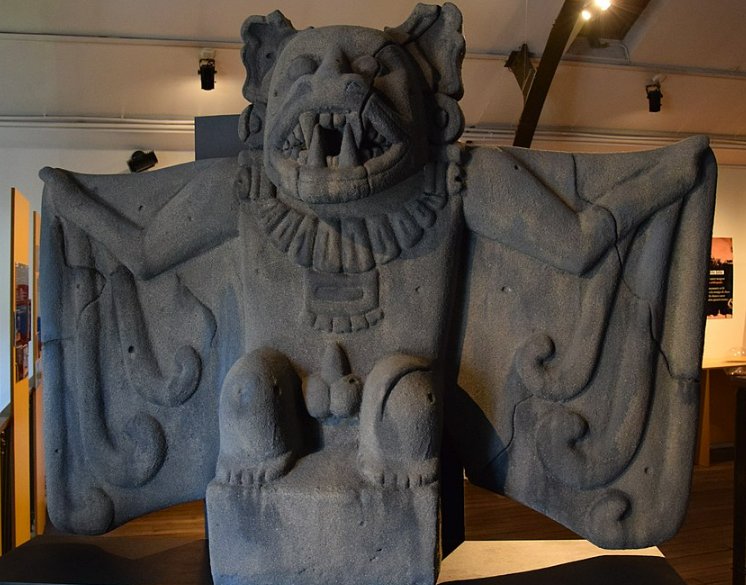
Statue of the God Camazotz. Image credit: - CC BY-SA 3.0
Mayans of Central America believed the bat was the guardian of the Underworld and a powerful force against enemies.
According to one myth, the Hero Twins were skillful ballplayers. One day the lords of Xibalba, the Maya death gods who ruled the Underworld in Quiche Maya mythology, organized a contest in the Underworld. They summoned all the best ballplayers, and the Hero Twins saw this as an excellent opportunity to avenge their father's death.
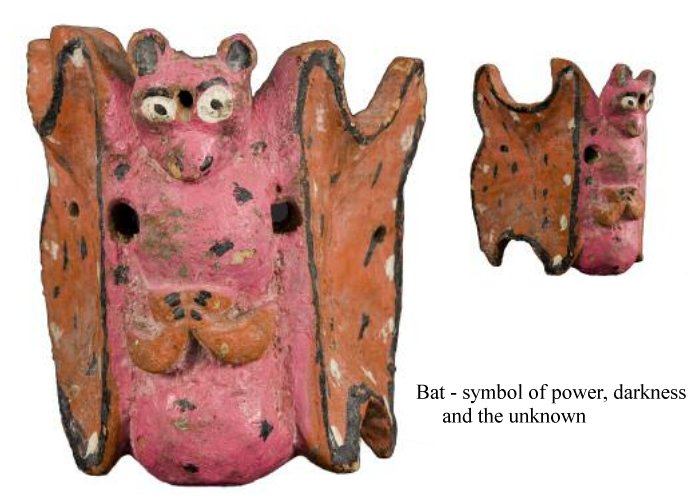
Bat Mask, Oaxaca, Mexico
They successfully went through all the tests they were given. They survived in the House of Cold, escaped from the House of Jaguars, and passed unharmed through the House of Fire.
Their problem appeared in the House of Bats when one bat cut off the Hero Twin's head. The lords of Xibalba took the head to the ball court as a trophy, but the other twin luckily returned to rescue his brother's head.
Written by – A. Sutherland - AncientPages.com Senior Staff Writer
Updated on October 17, 2022
Copyright © AncientPages.com All rights reserved. This material may not be published, broadcast, rewritten or redistributed in whole or part without the express written permission of AncientPages.com
Expand for referencesReferences:
Read K. A. Mesoamerican Mythology A Guide to the Gods, Heroes, Rituals
Fischer-Hornung D. Mueller M. Vampires and Zombies: Transcultural Migrations and Transnational Interpretations
More From Ancient Pages
-
 Does Yarmouth Runic Stone Describe A Trans-Atlantic Viking Voyage?
-
 Why Is Roulette Called The Devil’s Game?
-
 Why Did Ancient Romans Build So Many Straight Roads?
-
 First Sumerian Revolt – People Oppose The Harsh Akkadian Empire
-
 What Was The Role Of The Priests And Priestesses In Ancient Greece?
-
 Ancient Adobe Throne Found At Aslantepe, An Acient Hittite Site, Turkey
-
 On This Day In History: Battle Of Cibalae Was Fought Between Two Roman Emperors – On Oct 8, 314
-
 Mysterious Devil’s Footprints In Maine – An Ancient Mystery That Will Never Be Solved
-
 Baroque-Period Marble Skull Analyzed With Standard Forensic Anthropological Techniques
-
 Denisovan Family Tree: New Branches Revealed In Ancient DNA
-
 Oldest Artifact Crafted From Hippopotamus Ivory Discovered In The Iberian Peninsula
-
 Hunter-Gatherer Metallurgy In The Early Iron Age Of Northern Fennoscandia Was Integrated And Advanced
-
 Was King William II Murdered In The New Forest?
-
 Magnificent Virtual 3D Tour Of Famous Temples Of Baalbek – Now Available To Anyone
-
 Mummified Crocodiles Provide Insights Into Mummy-Making Over Time
-
 Huge Ancient Sarayini Underground City Is Twice As Large As Previously Thought
-
 Who Was The Mysterious Spitalfields Roman Noblewoman Dressed In Silk Found In A Sarcophagus In London?
-
 Researchers Study Human Mobility At The Bronze Age City Of Alalakh, Turkey
-
 Why Some Stories About Ancient Roman Emperor Nero Are Wrong
-
 On This Day In History: Famous American Author Edgar Allan Poe Found Dying – On Oct 3, 1849

