
Berserkers: Icelandic Viking ‘Mad Warriors’ In The Army Of God Odin
A. Sutherland - AncientPages.com - Icelandic Viking warriors known as ‘berserkers’ (in Old Norse: ‘berserkr’) were feared by enemies and even their battle companions.
These warriors - half-naked and covered in furs - entered into combat in trance, possessed by hatred and blind fury, even without armor or protection. The berserkers did not fear pain and death and they had a strong desire to kill.
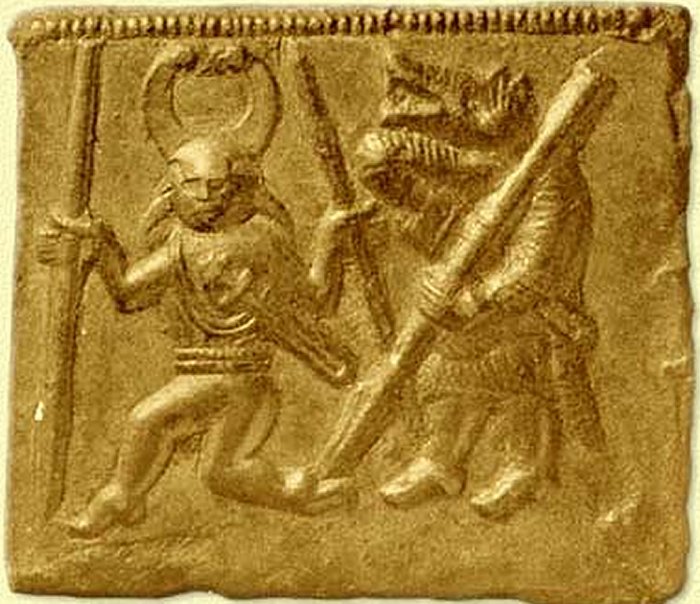
Vendel-period bronze plate discoverd on Öland (Torslunda socken), Sweden. Image credit: Bengans historia sidor_wadbring.com
How did they get the spirit of reckless attack in order to fight madly as they did?
The berserkers are mainly known from Icelandic literature but the most cited source is the "Ynglinga saga" dated to 1220 AD, In his work, Snorri Sturlusson describes berserks as 'mad fighters' without body armor:
"Woden's [Odin's] men went without hauberks and raged like dogs or wolves. They bit their shields and were strong like bears or bulls. They killed men, but neither fire nor iron hurt them…”
See also:
Were The Viking Berserkers True Warriors Or Drug Addicts Fighting In Trance?
Famous Viking Ragnar Lodbrok – Legendary Fearless Sea-King Of The North
Mysterious Jomsvikings: Fearless Scandinavian Warrior-Brotherhood
Vikings: Facts And History About The Tough Norse Seafaring People
What the word ‘berserker’ ("björnsärk") means is uncertain, but one theory proposes a reasonable explanation that the word is related to Odin warrior’s habit of wearing a coat (Old Norse: “serkr”) made from the pelt of a bear (Old Norse: ber-) during their furious battles.
Ivar The Boneless Was A Berserker
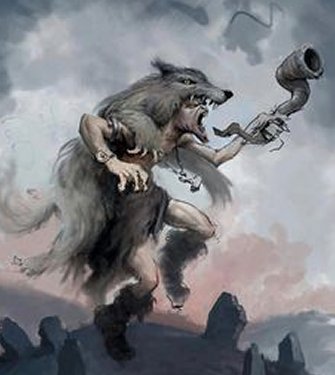
Odin’s feared berserkers became a model for later generations of warriors that were insanely brave and feared nothing.
One example can be Ragnar Lodbrok’s son Ivar Ragnarsson widely known as Ivar the Boneless (794-873).
He was exceptionally violent and cruel Viking warlord, reputed to be a berserker.
He was reported to serve as a warrior in Denmark where he was said to lead an army of Berserker warriors.
In the Sagas, Ivar the Boneless is described as being more like a giant than an ordinary man.
His powerful arms were able to carry a bow that was much stronger than those used by other warriors and with heavier arrows.
It happens that not everything that ancient myths and legends tell seems to be only a fantasy.
During an excavation at the churchyard of St. Wystan’s in Repton in Derbyshire, in the East Midlands of England, archaeologists unearthed a skeleton of a 9-foot tall Viking warrior. This discovery made them believe, the remains belong to Ivar the Boneless. Ancient historical sources confirm that in 873, the Great Viking Army led by Ivar Ragnarsson (“the Boneless”) spent the winter in Repton.
Also, the Saga of Ragnar Lodbrok, Ivar’s father, states that Ivar the Boneless was buried in England.
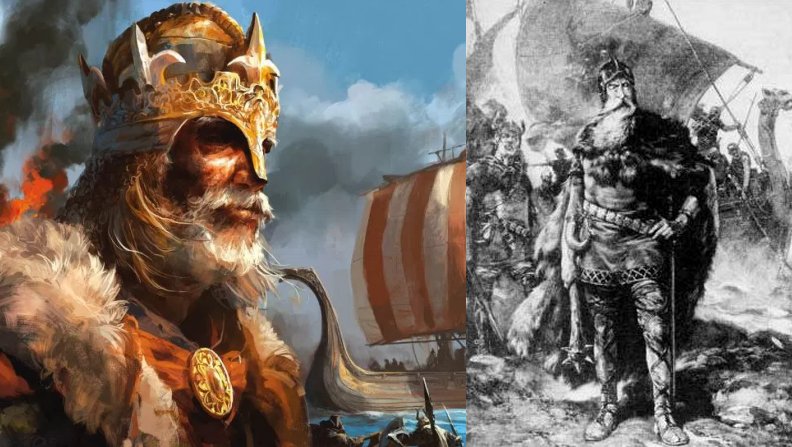
Harald Hardrada Was A Famous Viking Warrior And A Berseker
Another reputed warrior who was believed to be the berserker, was Harald Hardrada “(hard ruler”) officially Harald III Sigurdsson (1015-1066), one of the most famed Viking leaders, who participated in the Battle of Stiklestad in 1030 AD at the age of 15.
Later (but before Hardrada became king of Norway) his Viking army of warriors were employed as protectors of the emperor and Harald became a military commander in Kievan Rus' and of the Varangian Guard in the Byzantine Empire.
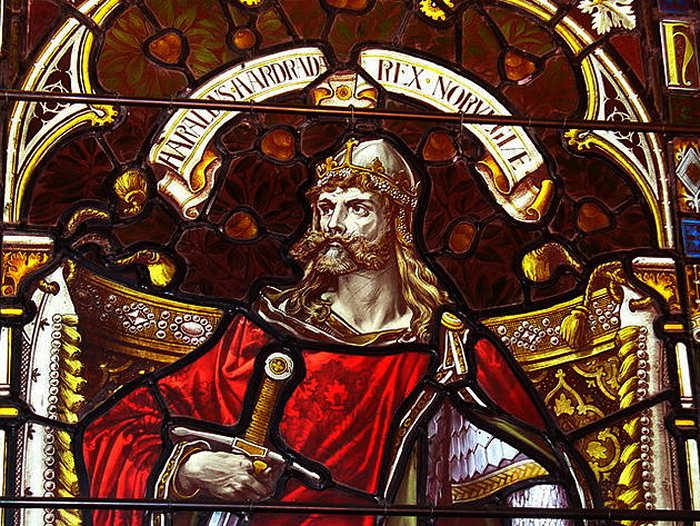
Window with portrait of Harald in Lerwick Town Hall, Shetland.
Old customs and beliefs in powerful berserkers also survived in the famous medieval legend of Beowulf. Beowulf, a ‘prince of the Geats’ of southern Sweden, arrived with a small group of warriors ready to get rid of Grendel, an evil man-eating monster that is half-man and half-fiend.
To meet the monster on its own terms, he threw off his helmet, (“hauberk”) and sword, but still, his strength was that of thirty men, and he killed Grendel by pulling off one of the monster’s arms.
However, in its later, more Christianized version, mighty Beowulf trusts in God's power, not in strength coming from his altered state of mind, as did Odin’s brave warriors in the past.
Written by – A. Sutherland AncientPages.com Staff Writer
Copyright © AncientPages.com All rights reserved. This material may not be published, broadcast, rewritten or redistributed in whole or part without the express written permission of AncientPages.com
Expand for referencesReferences:
D. Clark,N. Perkins, Anglo-Saxon Culture and the Modern Imagination
Hightower, L. The Vikings: Raiders
Brownworth, L. The Sea Wolves
More From Ancient Pages
-
 Unique Ornamented Golden Bronze Age Belt Discovered Near Opava, Czech Republic
-
 Tezcatlipoca: Enigmatic Aztec God Who Looked Inside People’s Hearts And Observed Their Deeds On Earth
-
 How Ramesses II Became The Greatest Pharaoh In Egypt
-
 Could Doggerland Be Europe’s True ‘North Atlantis’ Of Stone Age?
-
 Mysterious Ancient European Civilization – Puzzling Mysterious Ancient European Civilization – Part 2
-
 66 Diorite Statues Of Lion-Headed Goddess Sekhmet Discovered In Luxor, Egypt
-
 On This Day In History: ‘Edict Of Nantes’ About Freedom Of Religion Issued By Henry IV – On Apr 13, 1598
-
 Did The Inca Use The Quipu To Collect Taxes?
-
 Human Ancestors Preferred Mosaic Landscapes And High Ecosystem Diversity – New Study
-
 Oshun Goddess Of Yoruba People Who Brings All Things That Make Life Worth Living
-
 Bronze Age Finding Offer New Clues On The Beginnings Of Cardiff
-
 Coca-Cola Was Invented As A Cure For Headache And Hangover In The 1880s
-
 Gashadokuro: A Terrifying Nocturnal Ghost Yokai With Voracious Appetite For Human Blood
-
 Maat – Ancient Egypt’s Most Important Religious Concept
-
 Oldest Recently Discovered Fossil of Bird ‘Archaeopteryx’ That Lived 150 Million Years Ago
-
 Strange Case Of The ‘Impossible’ Glove Remains Unexplained – The Discovery – Part 1
-
 Rare Discovery Of 4,300-Year-Old Copper Ingots Left By Mistake In A Settlement In Oman
-
 Notre Dame Is On Fire! Can The Magnificent Cathedral Still Be Saved?
-
 Texas Revolution – A Courageous Fight For Independence
-
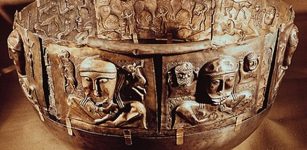 Gundestrup Cauldron: Great Gilded Silver Vessel Decorated With Scenes Derived From Celtic Mythology

