
Ancient ‘Yahweh And His Asherah’ Inscriptions At Kuntillet ‘Ajrud Remain An Unsolved Biblical Mystery
Ellen Lloyd - AncientPages.com - An ancient drawing and curious inscriptions discovered at Kuntillet ‘Ajrud in the Sinai Desert are intriguing Biblical mysteries that still remain unsolved.
Biblical scholars, historians, and archaeologists have long debated whether the figures found on an ancient drawing storage jar depict Yahweh and his Asherah or someone else.
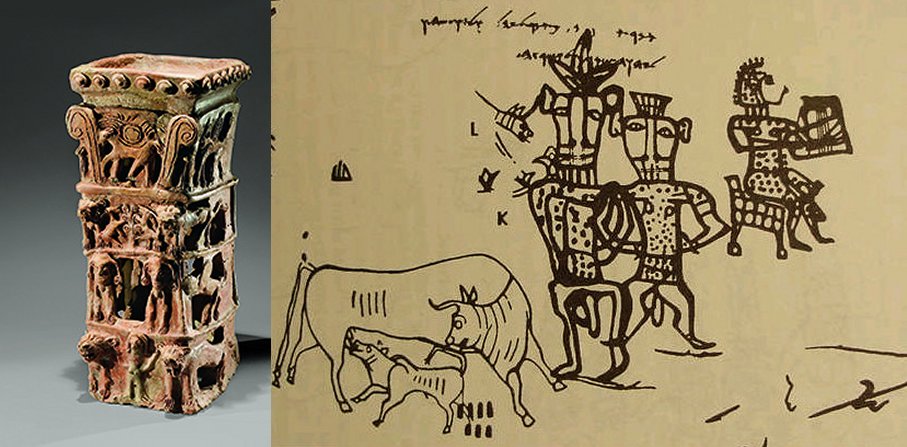
In 1975, while excavating at Kuntillet ‘Ajrud archaeologists unearthed unique artifacts. Among them were two large pithois, or storage jars, that weighed about 30 pounds each.
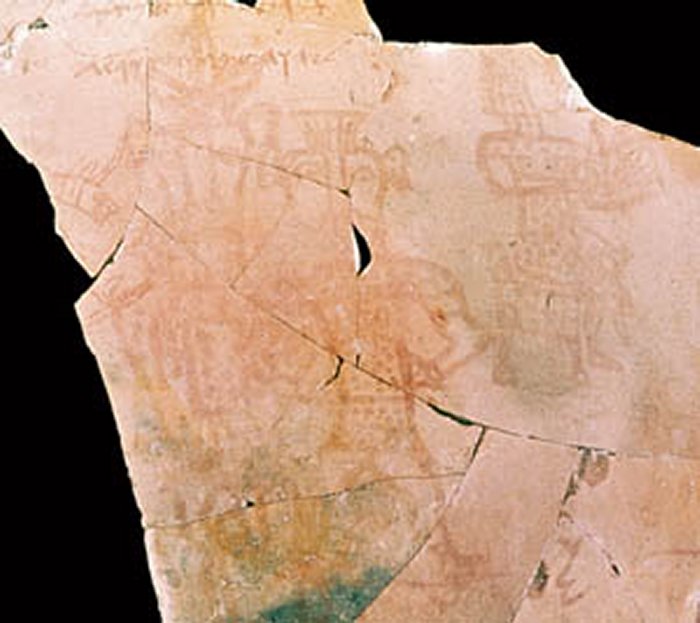
“Yahweh and his Asherah” is written across the top of this eighth-century B.C. drawing on a ceramic pithos, or storage jar, from Kuntillet ‘Ajrud in the eastern Sinai. Image credit: Dr. Ze’ev Meshel and Avraham Hai/Tel Aviv University Institute of Archaeology.
Reconstruction of the ancient jars revealed they were painted with animals, symbols, humans, deities, and several inscriptions. It is believed the drawing were made over a considerable period and by several different artists. The iconography is entirely Syrian/Phoenician and lacks any connection to the Egyptian models.
The inscriptions are mostly in early Hebrew with some in the Phoenician script. Many of the inscriptions are religious in nature, invoking Yahweh, El, and Baal.
What created an intense debate are the inscriptions that include the phrases "Yahweh of Samaria and his Asherah" and "Yahweh of Teman and his Asherah.
Who or what was Asherah? The answer to this question depends on scholars’ interpretation of Asherah in relation to Yahweh.
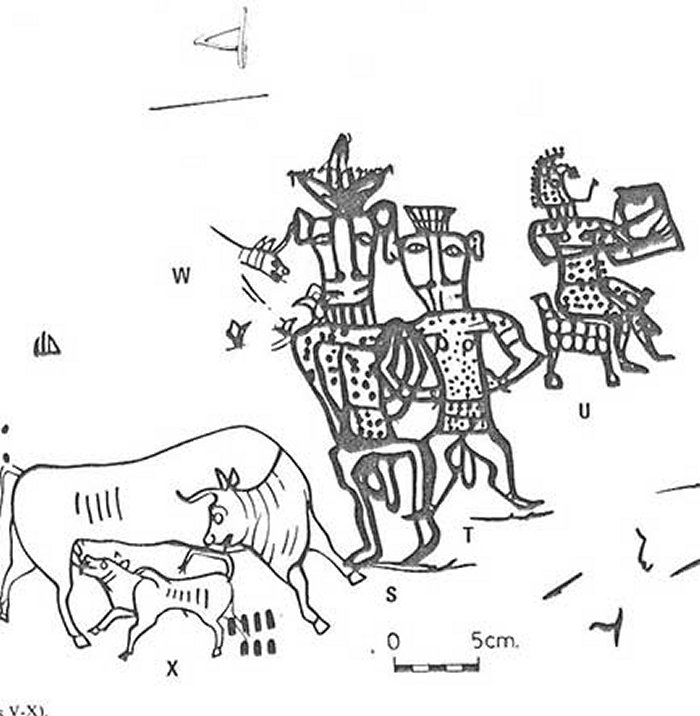
Painted on a jar found in Kuntilat Ajrud in the Sinai Peninsula. Image credit: - Public Domain
Some scholars make a distinction between Asherah the goddess and Asherah as a cultic object (sacred pole).
Asherah was a pagan goddess. Was she God’s wife? The term “asherah” is mentioned 40 times in the Bible. It means in Hebrew “happy” or “upright” and some suggest “(sacred) place.”
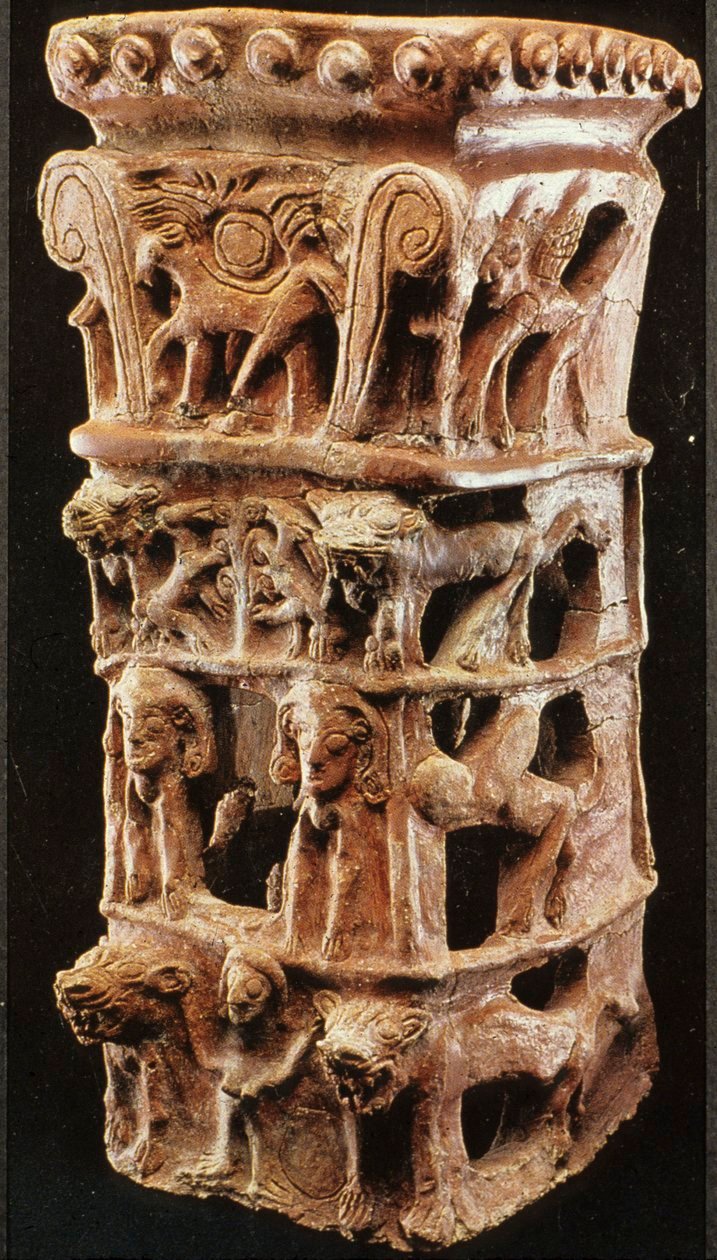
This four-tiered cult stand found at Tanaach is thought to represent Yahweh and Asherah, with each deity being depicted on alternating tiers. Photo: © The Israel Museum, Jerusalem/Israel Antiquities Authority (photograph by Avraham Hay).
This means that the text on the inscription found at Kuntillet ‘Ajrud can be a reference to a particular goddess, a class of goddess, or a cult symbol used to represent the goddess.
The problem with the inscription on the pithoi becomes even greater because of the drawing depicting two figures that scholars have identified as the Egyptian god Bes, which is in fact a collective name for a group of dwarf deities.
The two figures appear to be depictions of two males and not a drawing of God and his goddess wife.
It is believed that the image was drawn after the inscription was written, so the two may be completely unrelated.
The ancient inscription and the drawing are still subject of a lengthy scholarly discussion as to whether and how the inscription should be interpreted; that is, together with the drawings or independently.
Written by Ellen Lloyd – AncientPages.com
Copyright © AncientPages.com All rights reserved. This material may not be published, broadcast, rewritten or redistributed in whole or part without the express written permission of AncientPages.com
Expand for referencesMore From Ancient Pages
-
 Ivan The Terrible: Military Arsenal Unearthed Near Moscow
-
 Anglo-Saxon Watermill Discovered In Buckinghamshire, UK
-
 Burnt Mound Complex Dated To Bronze Age – Uncovered At Suffolk Site
-
 5,000-Year-Old Perga City And Kommagene Civilization: Most Of Treasures Are Still Underground
-
 Jackalope – Are Mythical Horned Hares Real?
-
 Acheulian Culture Of Ethiopian Highlands And Their Prehistoric Tool Selection To Make Society’s Life Easier
-
 Encounter With Time Window At The Upper Current River And Curious Glimpses From The Past
-
 DNA Analysis Of Human Remains In Early Medieval Alemannic Graveyard
-
 Neolithic Watermelons Reveal Some Surprises About Our Ancestors
-
 Archaeologists Dug For Evidence Of The Rosetta Stone’s Ancient Egyptian Rebellion – Here’s What They Found
-
 Linked Human Skeletons Lying In Spiral Circle Unearthed In Pre-Aztec Burial Pit Near Mexico City
-
 120,000-Year-Old Bone Etchings – Evidence Of The Earliest-Known Use Of Symbols
-
 Will Ancient DNA Unravel History Of The Scythians From Central Asian Steppe?
-
 Strange Ancient Human Bones And Artifacts Of An Unknown Lost Civilization Found In Nebraska
-
 Priam’s Treasure – Authentic Trove From Homeric Troy Or Deception?
-
 Ukko: Karelian-Finnish God Of Thunderstorms, Harvest, Patron Of Crops And Cattle
-
 Yamna Culture Started Cannabis Trade 5,000 Years Ago
-
 Surprising Discovery Of 88 Ice Age Human Footprints In Utah Desert
-
 Thousands Of Sacred ‘Images’ With Unknown Signs Hidden In A Monastery Could Be World’s Oldest Alphabet
-
 On This Day In History: Attila The Hun Captures The City of Metz – On Apr 7, 451


