
People With Blue Eyes Have One Common Ancestor Who Appeared 10,000 Years Ago
Ellen Lloyd - AncientPages.com - About 6,000-10,000 years ago, an interesting mutation resulted in the emergence of blue eyes.
Before that, all people on Earth had brown eyes. If you have blue eyes, you have more in common with other blue-eyed individuals than you once thought. Scientists have been able to confirm that all people with blue eyes have one common ancestor. This person originated from the region around the north of the Black Sea following the last Ice Age.
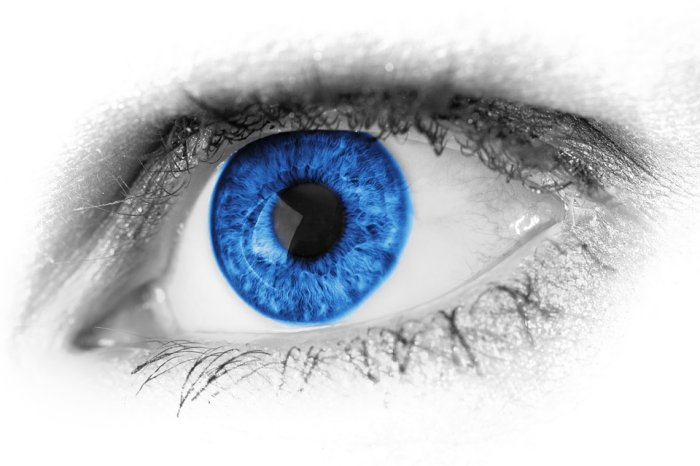
How The Genetic Mutation Affected The OCA2 Gene And Resulted In The Birth Of Blue Eyes
Researchers from the University of Copenhagen examined mitochondrial DNA and compared the eye color of blue-eyed individuals in countries as diverse as Jordan, Denmark, and Turkey.
"A genetic mutation affecting the OCA2 gene in our chromosomes resulted in the creation of a "switch", which literally "turned off" the ability to produce brown eyes," Professor Eiberg from the Department of Cellular and Molecular Medicine at the University of Copenhagen, Denmark said.

People with blue eyes have one common ancestor who appeared 10,000 years ago. Credit: CSIC
Scientists conclude that a family of blue-eyed individuals spread out from an area north of the Black Sea following the last ice age. These people were among the proto-Indo-European Aryans who subsequently spread agriculture into western Europe and later rode horses into Iran and India; Professor Hans Eiberg of the Department of Cellular and Molecular Medicine at the University of Copenhagen explained.
The OCA2 gene codes for the so-called P protein, which is involved in the production of melanin.
This pigment determines the color of a person's skin, eyes, and hair. The OCA2 does not turn off the gene entirely. Instead, it limits its action to reducing the production of melanin in the iris – effectively "diluting" brown eyes to blue.
If the OCA2 gene had been completely destroyed or turned off, human beings would be without melanin in their hair, eyes, or skin color – a condition known as albinism.
The Amount Of Melanin In The Iris Explains The Eye Color
The amount of melanin can explain the color of our eyes in the iris. Individuals with blue eyes only have a small degree of variation in the amount of melanin in their eyes.
“From this we can conclude that all blue-eyed individuals are linked to the same ancestor They have all inherited the same switch at exactly the same spot in their DNA,” Professor Eiberg said.
Brown-eyed individuals, by contrast, have considerable individual variation in the area of their DNA that controls melanin production.
The mutation of brown eyes to blue represents neither a positive nor a negative mutation.
It is one of several mutations, such as hair color, baldness, freckles, and beauty spots, which neither increase nor reduce a human's chance of survival.
"It simply shows that nature is constantly shuffling the human genome, creating a genetic cocktail of human chromosomes and trying out different changes as it does so," Professor Eiberg said.
Blue eyes are a recessive trait, and both parents must inherit the gene.
Children Can be Born With Blue Eyes But The Eye Color Can Change Later
Also, it should be noted that being born with blue eyes doesn't mean the eye color will stay the same when a baby becomes older. The human eye does not have its full adult amount of pigment at birth. Because of this, many babies have blue eyes, but their eye color changes as the eye develops during early childhood, and more melanin is produced in the iris.
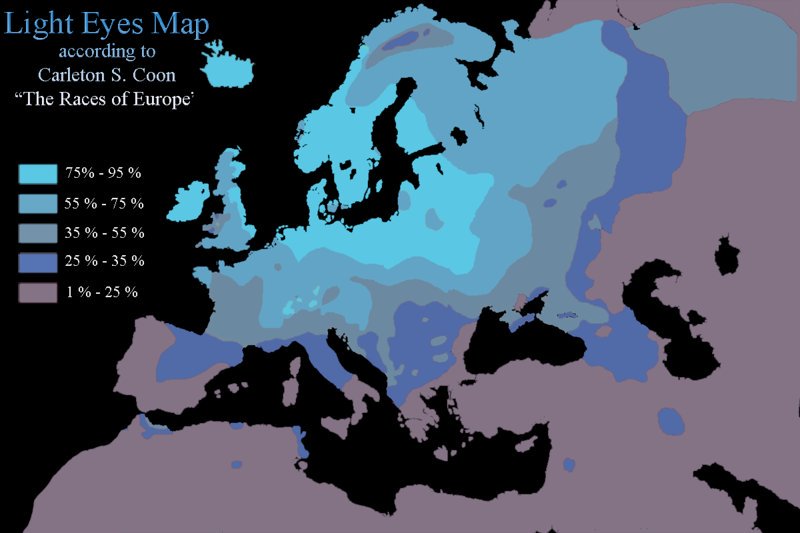
Scandinavia has most people with blue eyes.
Though blue eyes can today be encountered worldwide, a majority f these individuals can be found in Scandinavia and Baltic countries.
Most People With Blue Eyes Live In Scandinavia
It is estimated that about 95% of Europeans in Scandinavia have blue eyes. These people are also found to have a greater range of hair and skin color. Comparatively, Europe has a wider variety of hair color and skin pigment than any other continent in the world.
Why are there so many blue-eyed people in the Scandinavia and Baltic areas? According to researchers, there is a positive selective force to select for blue eyes in this region. Theories include "selection for pigmentation traits which include UV expositor causing skin cancer, vitamin D deficiency, and also sexual selection.
People with blue eyes spread slowly across the world. Ancient civilizations considered blue eyes to be a sign of gods.
The most interesting question remains unanswered – Who was the ancestor responsible for the genetic mutation that resulted in the birth of blue eyes in ancient times?
Written by Ellen Lloyd - AncientPages.com
Copyright © AncientPages.com All rights reserved. This material may not be published, broadcast, rewritten or redistributed in whole or part without the express written permission of AncientPages.com
Expand for referencesMore From Ancient Pages
-
 Ancient Script Reveals Mysterious Location Of Legendary Hanging Garden Of Babylon
-
 Ancient Roman Coins Discovered In Utah Could Re-Write History But Are They Authentic?
-
 Ancient People In Peru Had A Unique Response To The Looting And Destruction Of Their Ancestors’ Graves
-
 European Dogs Doubled In Size From 8,000 To 2,000 Years Ago – New Study Shows
-
 World’s Largest Wine Factory From The Byzantine Period Unearthed In Yavne
-
 Jurassic Sea Creature Unearthed In A Quarry Near Peterborough, UK
-
 On This Day In History: Copernicus’ s Book Banned By Catholic Church – On Mar 5, 1616
-
 Egypt Opens Two Ancient Pyramids And Unveils Newly Found Sarcophagi And Mummies
-
 2,000-Years-Old Warrior Graves With Iron Swords, Mysterious Square Structures, Unearthed In Bejsce, Poland
-
 Very Rare Ancient Roman Horse Brooch Discovered In UK
-
 Monumental Grave Of Ancient Greek Poet Aratus Located In Mersin- But It Cannot Be Opened
-
 Remains of Maurya-Era Wall Discovered In Tilaurakot, Kapilvastu, Nepal
-
 On This Day In History: The Gregorian Calendar Implemented – On Oct 5, 1582
-
 Huge Megalithic 7,000-Year-Old Site Dolmen Of Guadalperal Emerges From Dry Lake In Spain
-
 Remarkable Underground City Of Nushabad: A Masterpiece Of Ancient Architecture
-
 Graveyards Of Ancient British And French Giants Revealed In Old Documents And Journals
-
 The Name Vatican And Etruscan Goddess Vatika Of The Underworld – What Is The Connection?
-
 More Than 1, 300 Prehistoric Burial Mounds In Western Azerbaijan Have Been Systematically Surveyed For The First Time
-
 8,000-Year-Old Yarmukian ‘Mother Goddess’ Figurine Discovered In Israel
-
 1,800-Year-Old Roman Winepress Found Near Roman Fort At Gonio (Apsaros), Georgia

