
Bandelier National Monument: Unusual Ancient Ruins Of Pueblo People In The Southwest
A.Sutherland - AncientPages.com - Bandelier National Monument is an archaeological area (50 square miles (130 km2) of the Pajarito Plateau, in the Jemez Mountains and 20 miles west of Santa Fe, in north-central New Mexico, U.S.
“Spiritually, our ancestors still live here at Bandelier. You see reminders of their presence here- the homes, the kivas, and their petroglyphs. As you walk in their footstep, value the earth beneath you and show everything the same respect we do when we re-visit this sacred place," according to Pueblo people.
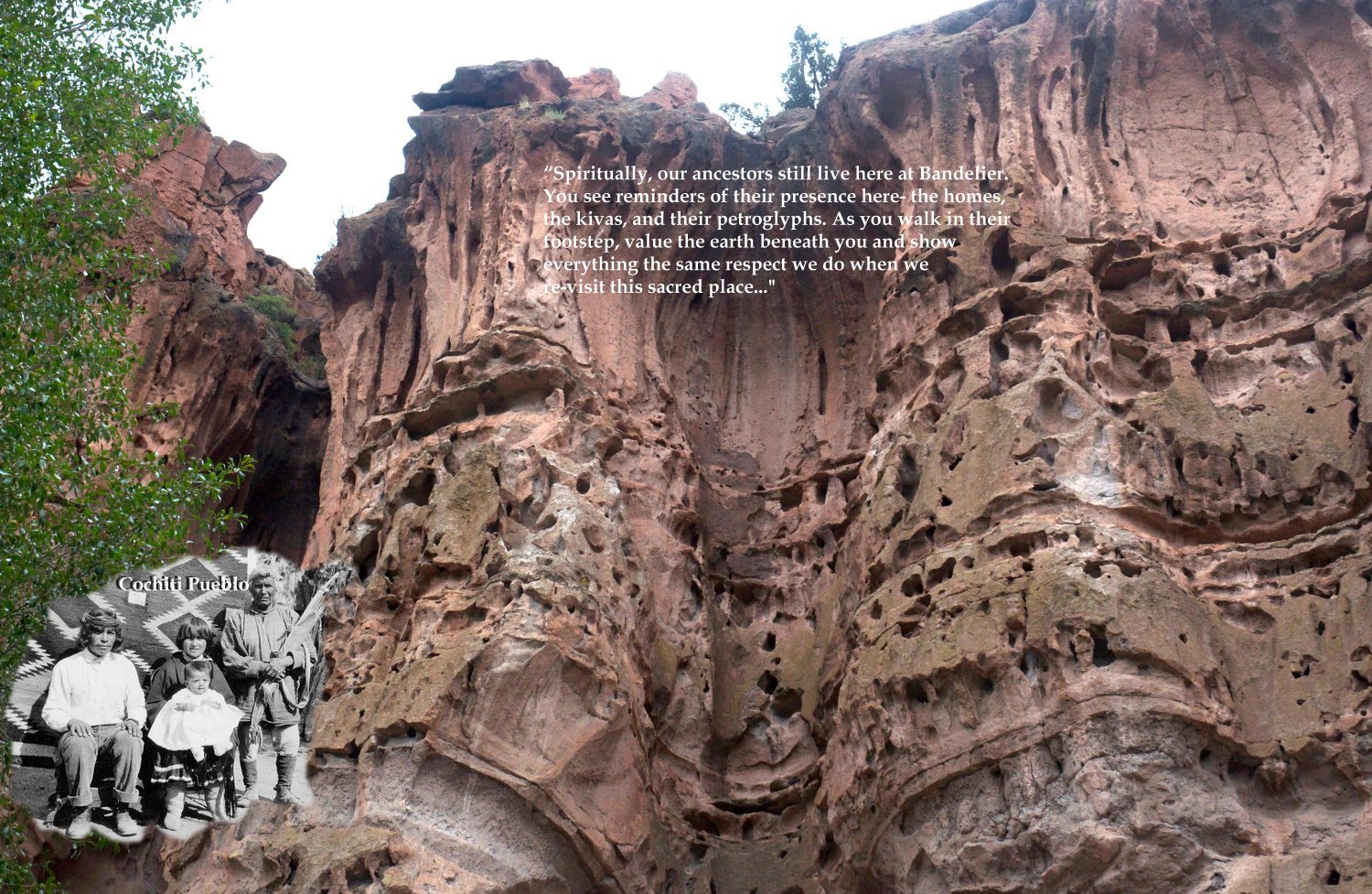
At Bandelier in New Mexico, there are relics of Native American activity that date back 11,000 years.
The most recognizable signs, however, are the remains of ancestral Pueblo settlements scattered throughout the park and its surrounding area.
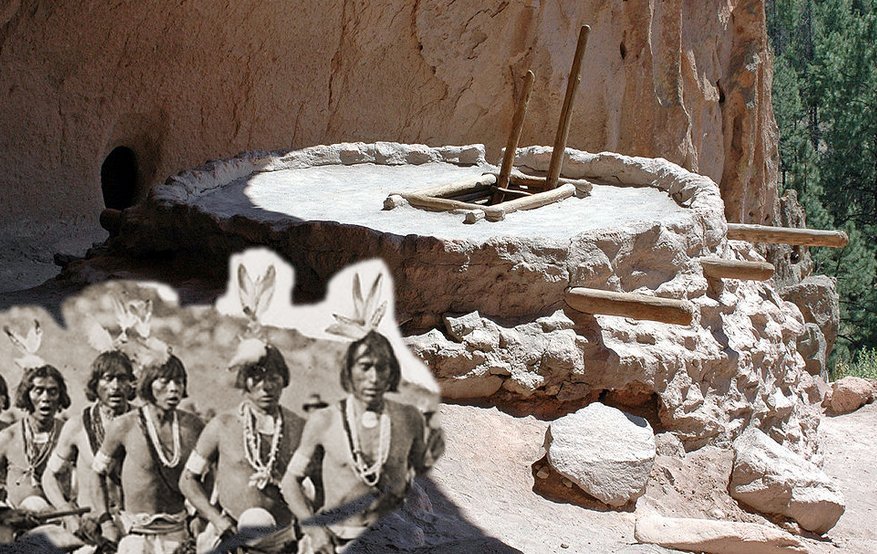
Bandelier Kiva, Bandelier National Monument
From 1100-1550 AD, Bandelier was occupied by the Ancestral Pueblo people who began to build more permanent settlements within Bandelier’s area of 32,000 acres.
The ancestral Pueblo people first arrived in the Pajarito Plateau (home of present-day Bandelier) and settled in the canyons and mesas.
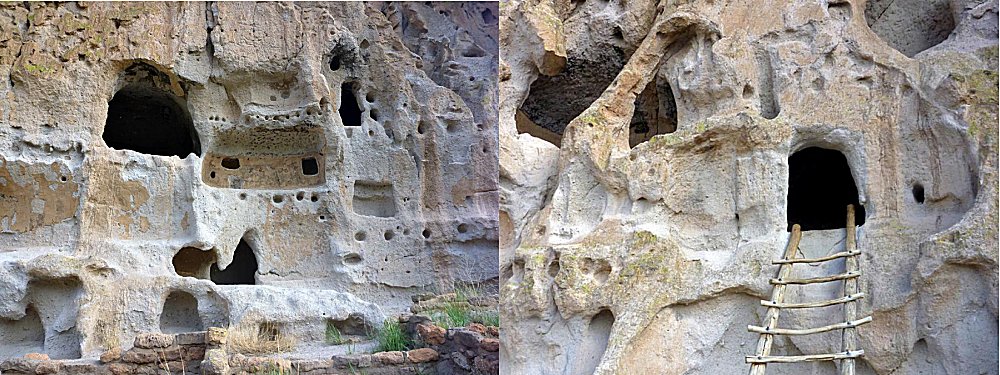
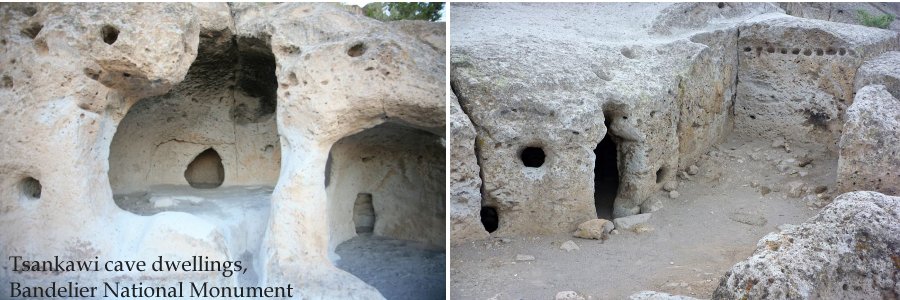
Rooms, alcoves, windows, viga holes, and caves (left); the Reproduction ladder used to access one of the cliff dwellings (right). Credits: Americansouthwest.net
They built ‘cavates’, cave dwellings carved directly into the cliffs, which are still found in canyons across the plateau; they housed families for hundreds of years.
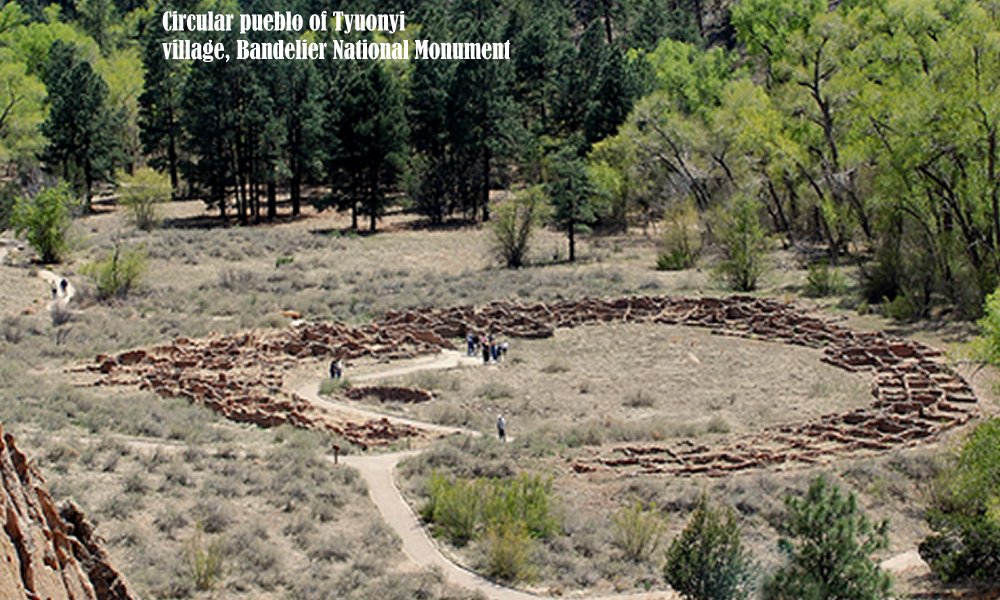
One of the largest and best-preserved settlements is called Tyuonyi, which lies in Frijoles Canyon. It was once a circular pueblo house that probably stood three stories tall and contained more than 400 rooms.
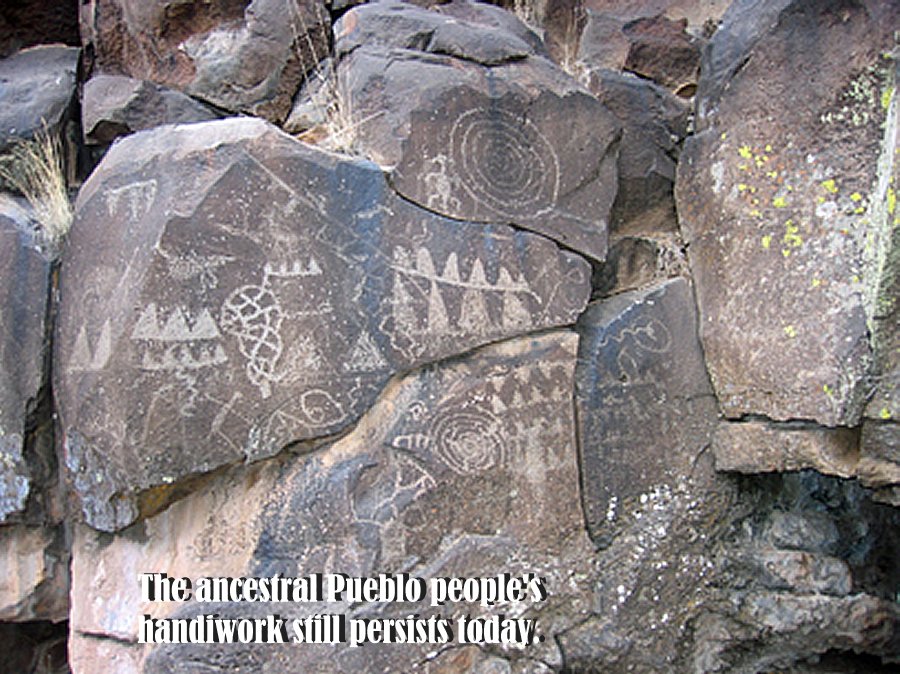
Except for the prehistoric ruins of dwellings, open pueblos of pre-Columbian Indians, there are the Pajarito Plateau’s fascinating petroglyphs and pictographs carved into the cliffs and standing masonry walls.
There was no written language among the Puebloan people. Therefore, we can only speculate about what the people were trying to say through their rock art. Some of the meanings of the figures are known among modern-day Indians and are of great importance to them.
Among the petroglyphs are figures of people, animals, birds, lightning, and other various shapes. These drawings probably have deep cultural and religious significance for the societies that created them.
However, the true meaning of these images should not be shared, according to Native people's beliefs.
The petroglyphs in the Tsankawi section of the park were carved by ancient Puebloans, the ancestors of modern-day Native American pueblos of northern New Mexico and they have an important meaning.
They pay tribute to the early days of a culture long gone that still survives in the surrounding communities located among mountains rising to 10,200 feet.
Bandelier National Monument is named for the Swiss American archaeologist, ethnologist, and traveler, Adolph F. A. Bandelier. This great researcher conducted research in the Southwest for about a decade and lived among the Pueblo Indians in Frijoles Canyon (‘Rito de Los Frijoles’).
Much of what we know today about the life of these Indians is based on Bandelier’s research.
Bandelier died in Spain but his ashes were spread in the canyon in 1980.
Written by – A. Sutherland - AncientPages.com Senior Staff Writer
Copyright © AncientPages.com All rights reserved. This material may not be published, broadcast, rewritten or redistributed in whole or part without the express written permission of AncientPages.com
Expand for referencesMore From Ancient Pages
-
 The Battle Of The ‘Cloudships’ – Strange And Unexplained Sightings In The Skies
-
 New Method Reveals Falsified And Original Manuscripts Of Famous Robert Burns
-
 Mystery Of The Stull Cemetery: A Gateway To Hell?
-
 Re-Discovered Ancient Ksâr ‘Akil Fossils Shed New Light On Human Evolution
-
 1,700-Year-Old Underground Temple Of Mithras Unearthed In East Anatolia, Turkey
-
 Ancient Stone Ram Figurine – Symbol Of Abundance And Great Courage – Unearthed In Old Cemetery
-
 Mysterious Skull Cult At Göbekli Tepe – Ancestor Worship Or Trophies Of Dead Enemies?
-
 On This Day In History: David I Becomes King Of Scots – On Apr 27, 1124
-
 What Is The Meaning Of Ankh – Ancient Egyptian Symbol
-
 Tests On Tutankhamun’s Tomb: Non-Invasive Radar Search For Nefertiti To Start Thursday
-
 Secrets Of An Ancient Greek City Revealed
-
 Ancient Indigenous Carvings On Boab Trees – Time To Rescue Ancient Art Before Trees Disappear
-
 Large Previously Unknown Roman City Discovered At The Foot Of The Pyrenees
-
 Human Migration Out Of Africa To Middle East Through Corridors Provided By Monsoons
-
 Surprising Discovery Reveals Ancient Tibetan Bowl Shows Alexander The Great – The Jewish Version And Not The Homer’s Iliad
-
 Unique Ancient Aryan Bow Reconstructed By Archaeologists
-
 Mystery Of The Seven Sages In Ancient Myths And Legends
-
 Spearheads – The Chemical Fingerprint Of Viking Weapons – New Study
-
 Deciphered Ancient Cuneiform Tablets Reveal Locations Of Long-Lost Cities And Shed Light On The Secrets Of Mesopotamia
-
 Is An Ancient Temple Dedicated To The Lioness Goddess Repit Hidden In The Cliffs Of Athribis?

