
Battle Of Assandun: The Great Battle In English History And A Brief Period Of Viking Dominion In England
A. Sutherland - AncientPages.com - The Battle of Assandun was an important historical event that gave Canute the Great (Cnut Knut den Store) the Crown of England.
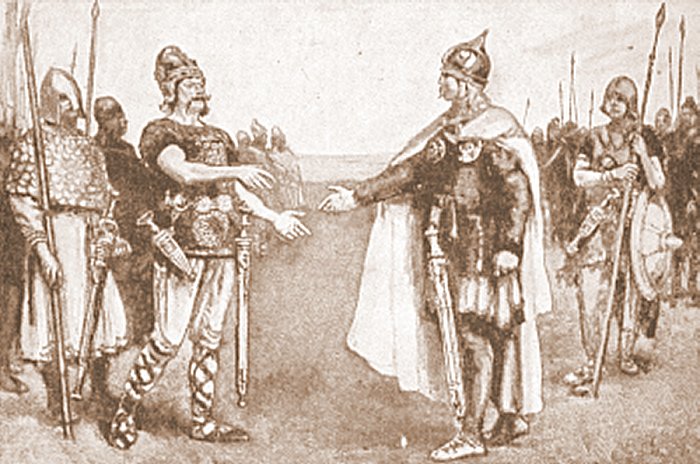 Edmund II Ironside and Canute the Great after Battle of Assandun.
It took place on October 18, 1016, and was fought between Danish armies led by Canute the Great and the English army led by King Edmund II ('Ironside').
"Then he [Edmund] assembled his troops the third time, and they went to London, all north of the Thames, and looked out through Clayhanger, and he freed the populace and drove the enemy to their ships. It was within two nights after the king passed over at Brentford, where he fought the enemy and put them to flight: but there were many Englishmen who were drowned by their own carelessness; who had gone before the army to plunder…" (Anglo-Saxon Chronicle)
The battle was victorious for the Danes and helped them to retake the English territories. For many years, historians have argued in a way that unforunately does not give or have a result regarding the location of this critical battle and whether it took place.
Was Assandun – Ashdon, near Saffron Walden in north Essex, or Ashingdon near Rochford in southeast Essex, England?
After the battle, Edmund had to sign a treaty with Canute. By this treaty, all England except Wessex would be controlled by Canute. Additionally, if one of the kings should die, the other would take all of England, that king's son being the heir to the throne.
Edmund died on November 30, and Canute the Great assumed control of his territories. He was crowned King of England in January 1017.
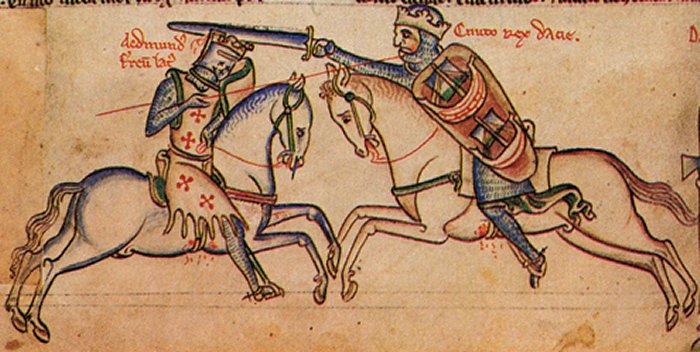 Edmund Eisenseite (left) in a duel with Knut the Great. (Representation from the Chronica Majora by Matthew Paris, around 1250). Image credit: Matthew Paris (1200–1259) - Public Domain
Thus for the first time, England became a single united kingdom, covering the same territory as it does today.
It also remained under Danish rule for the next 26 years.
Canute built a church, chapel, or similar holy site after winning a battle to commemorate the soldiers who died in battle.
A few years later, in 1020, the completion took the place of the memorial church known as Ashingdon Minster on the hill next to the presumed site of the battle in Ashingdon.
"King Canute ordered St Andrew's, "a church built of lime and stone for the souls of those slain in the Battle of Assandune 1016. It was dedicated in 1020 at a ceremony that King Canute and his officers attended. This battle was the decisive military encounter for the throne of England. Much of the church is now a 13C rebuild with a 14C tower. The rubble walls contain Roman tiles, and there are Saxon timbers in the tower."
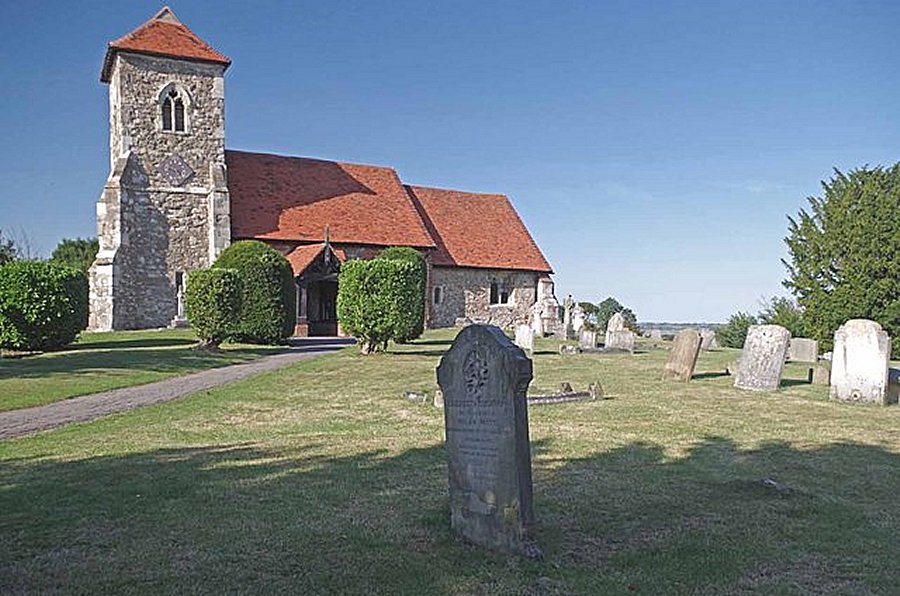 St Andrews Minster Ashingdon. There has been a church here since 1020. King Canute ordered its construction and attended the dedication. Much of the church was rebuilt in the Middle Ages. Image credit: © Copyright Glyn Baker and licensed for reuse under this Creative Commons Licence.
The church still stands to this day and is dedicated to Saint Andrew but is believed previously to have been dedicated to Saint Michael, who was considered a military saint: churches dedicated to him are frequently located on a hill.
Suppose Ashington was not the place of the battle. In that case, there is another possible location based on archaeological finds. Its location is Ashdon in the Essex area, where archaeologists unearthed Roman and Anglo-Saxon coins.
Written by – A. Sutherland - AncientPages.com Senior Staff Writer
Updated on January 21, 2024
Copyright © AncientPages.com All rights reserved. This material may not be published, broadcast, rewritten or redistributed in whole or part without the express written permission of AncientPages.com
Expand for referencesReferences:
More From Ancient Pages
-
 Mischievous Irish Pooka, Shapeshifter And Prankster Has Its Counterparts
-
 Astronomically Aligned Pyramidal Buildings Of America’s Oldest City Reveal How Its Builders Apprehended Space And Time
-
 Where Does The Expression ‘Saved By A Bell’ Come From?
-
 Valley Temple At Giza: Great Masterwork Testifies To Remarkable Engineering Skills Of Megalith Builders
-
 Bizarre Towering Pillars Of Externsteine: Myths, Legends And Sacred Rituals From Times Long Gone
-
 3,000-year-old pottery found in Papua New Guinea’s highlands
-
 Rare Pictish Symbol Stone Found Near The Battle Of Nechtansmere Site
-
 Prince John’s Plot Against King Richard The Lionheart
-
 U.S. Bible Museum Says Five Dead Sea Scrolls Fragments In Their Collection Are Fake
-
 Lost Kingdom Of Cleopatra – Legendary Lost City Of Heracleion
-
 ‘Dates Add Nothing To Our Culture’: Everywhen Explores Indigenous Deep History, Challenging Linear, Colonial Narratives
-
 Templo Mayor – Sacred Aztec Complex Dedicated To Gods Tlaloc And Huitzilopochtli Who Were Usually Appeased With Human Sacrifices
-
 Collection Of 59 Well-Preserved 26th Dynasty Coffins Unearthed In Saqqara Necropolis, Egypt
-
 Rare Phoenician Necropolis Discovered In Andalucia, Spain Is Extraordinary, Scientists Say
-
 12,000 Years Ago Siberian People Possessed Technique To Soften Ivory And Create Toys Or Art Items
-
 Mysterious Camerano Underground City – Secret Meeting Place For Knights Templar?
-
 Ancient Roman Coins Thought To Be Fakes Are Authentic – Experts Say
-
 Clay-Jar Tombs With Child Corpses – Unearthed In Northwest Iran
-
 Vikings’ Encounters With Peculiar White-Dressed Humanoids And Cave Dwellers In Unknown Lands Described In Norse Sagas
-
 Neanderthal Cave Engravings Identified As Oldest Known, More Than 57,000 Years Old

