
Qumran: The Dead Sea Scrolls And Their Connection To Enigmatic Essenes
A. Sutherland - AncientPages.com - In West Jordan in 1947, near the ruins of Qumran - also known as Khirbet Qumran - clay pots filled with ancient scrolls were found stored in eleven caves located 13 miles east of Jerusalem, Israel.
The texts are written using carbon-based ink and are mostly in Hebrew, with some in Aramaic (a Semitic language allegedly spoken by Jesus) and in Greek.
Preliminary analysis showed the texts belonged to the Essenes, members of a religious sect or brotherhood that flourished in Palestine from about the 2nd century BC to the end of the 1st century AD.

Qumran Caves, where the Deas Sea Scrolls were discovered. Credit: Lux Moundi - CC BY 2.0
However, a later review of these results has raised additional questions related to the scrolls, considered one of the greatest archaeological events of the twentieth century. More than half a year passed between the day of the discovery of the scrolls by a young Bedouin shepherd searching for a stray goat in the Judean Desert and the first analysis of the documents.
In the meantime, the young man tried to sell the parchment rolls, and later war between Egypt and Israel (1947-1949) made textual analysis of them even more difficult.
For the first 40 years after their discovery, the study of the thousands of text fragments was limited to a dozen international scholars, all great experts in their respective fields.In January 1948, one of the manuscripts was identified as a version of the book of the prophet Isaiah. This event prompted an expedition to search the caves with secrets buried in the sands of the barren Judean Desert. The caves were finally located, but it was clearly visible that the place was thoroughly plundered.
Based on the fragments that remained, archaeologists concluded that between 200 and 250 scrolls had originally been hidden or stored in the caves. In ten neighboring caves, still more manuscripts and their fragments were found.
As archaeologists determined, a few of the caves at Qumran, seemed to have functioned as permanent libraries with built-in shelves. Was the place once a large library of manuscripts?
The scrolls contain a large variety of writings: fragments of every book of the Old Testament (except the Book of Esther), rules for religious rituals, texts on the preparation of the Qumran sect for war at the End of Time, calendars, horoscopes and much more.
Archaeological experts compared the biblical content of the scrolls and the caves' location (close proximity to the ruins of Qumran), which had been described by the Roman scholar Plinius (24-68 AD) as the location of an Essene religious settlement.
And so, they found a connection between the scrolls and the Essenes - an enigmatic brotherhood of men and women - forerunners of later monastic orders, who lived in isolation from other members of the Jewish faith, practiced abstinence, abjured personal possessions for the good of the group.
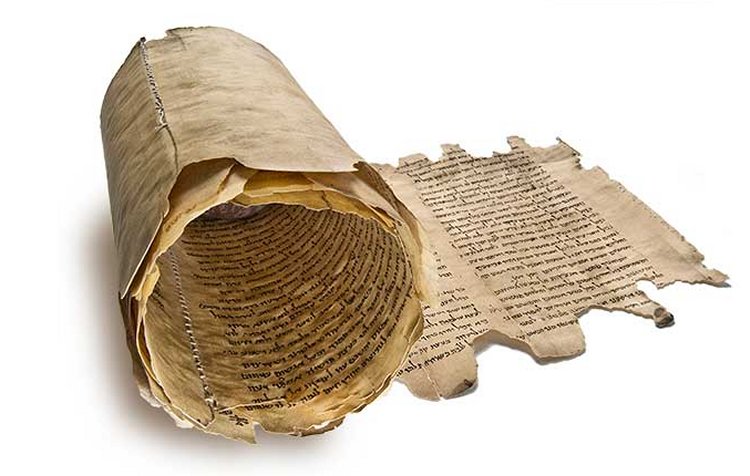
The facsimile of the Manual of Discipline. Credits: Facsimile Editions
Today we know that approximately 500 different scribes produced a collection of 931 documents (or fragments of texts) that were successfully recovered.
These texts were written in Hebrew, Aramaic, Nabatean or Greek.
The scrolls were dated between the third century BC and the first century AD. The unusually large number of scrolls and the number of scribes involved, along with the age of some of the texts, raised several important questions regarding the extent of the Essene complex.
During excavations, archaeologists found Roman coins that could date the site's destruction to the time of the Jewish Rebellion (66/67 AD); they also identified a storage room filled with pots, clay bowls, a kiln, millstones, and cisterns connected with the Essene practice of ritual bath.
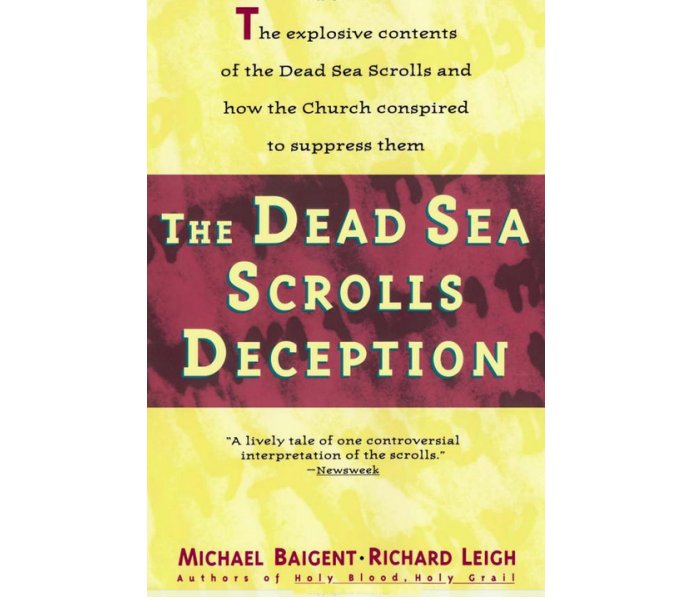
"The oldest Biblical manuscripts in existence, the Dead Sea Scrolls were found in caves near Jerusalem in 1947, only to be kept a tightly held secret for nearly fifty more years, until the Huntington Library unleashed a storm of controversy in 1991 by releasing copies of the Scrolls. In this gripping investigation authors Baigent and Leigh set out to discover how a small coterie of orthodox biblical scholars gained control over the Scrolls... Read more"
There was also a dining room and scriptorium, a long narrow room that contained two inkwells and several writing benches, probably used by scribes. The place was rather a workshop with no signs of private quarters or living spaces, and archaeologists believe that many of the Biblical scripts found in the caves were copied.
Still, not much is known about the Dead Sea Scrolls and the place where they were discovered. There are also many controversies.
One of these issues is, for example, who wrote the Dead Sea Scrolls and then hid them in the caves around Qumran. Some scholars believe that the Essenes were not responsible for the Dead Sea Scrolls at all, but the manuscripts were written by priests of Jerusalem's Second Hebrew Temple and later transported to Qumran and safely hidden from the Romans.
But also, this theory has many opponents.
Was the Vatican behind a plot to suppress the release of the scrolls to the public out of fear that they contained dangerous material related to early Christianity?
Although all of the manuscripts discovered in Cave 1 were published between 1950 and 1956, their publication process has often been considered as rather slow. In the early 1990s and early 2000s, more scroll documents were released, including the collection of Biblical scrolls.
How large was the complete 'library' of the Dead Sea Scrolls? How many documents are missing because they lie still buried or hidden somewhere on the northwestern shore of the Dead Sea?
Will they ever be found?
Written by – A. Sutherland AncientPages.com Staff Writer
Copyright © AncientPages.com All rights reserved. This material may not be published, broadcast, rewritten or redistributed in whole or part without the express written permission of AncientPages.com
Expand for referencesMore From Ancient Pages
-
 Mayan Underwater Tunnels With Bones Of Humans, Elephant-Like Creatures, Tigers, Bears, Tigers And Extinct Horses, Rediscovered In Yucatan
-
 Neanderthals Weaned And Raised Their Children Similarly To Modern Humans
-
 Rare Bronze Oil Lamp With A Face Cut In Half Unearthed In Israel
-
 Mysterious Ancient Structures Hidden Under The Sand In The Sahara Desert Could Re-Write History Of Ancient Egypt
-
 Marquis Of Haihun’s Tombs: Dressing Mirror With Confucius’ Portrait Re-Identified
-
 Has A 12,000-Year-Old Underwater City Been Discovered Off The Coast Of Louisiana?
-
 New Moai Statue Found On Easter Island
-
 Wooden Coffin With Greco-Roman Mummy Wearing Mask Depicting Sky God Discovered In Egypt
-
 Medieval Ring Found In Piast Stronghold Near Gniezno, Poland – Is A Unique Christian Artifact
-
 Unique Medieval Horsemen Sculptures Made By Unknown Creators In India – Puzzling Discovery In The Himalayas
-
 Paleolithic Standing Bird Figurine – East Asian 3-D Art – Recovered From Refuse Heap
-
 Italian Sailors Knew Of America 150 Years Before Christopher Columbus – Ancient Documents Reveal
-
 Children Of Lir And Aoife’s Curse – Celtic Legend That Inspired The Swan Lake Ballet
-
 Has a 2,000 Year Old Podium Been Found in the City of David?
-
 Mysterious 3,000-Year-Old Underwater Urartu Castle Discovered
-
 Mysterious Melchizedek: ‘King Of Righteousness’ And Heavenly High Priest In Bible And Dead Sea Scrolls
-
 Amazon Forest Communities Disappeared Long Before 1492 Arrival Of Europeans
-
 Viking Treasures Discovered In Chamber Grave In Denmark
-
 Tomography And Radiocarbon Dating Used To Examine Australian Aboriginal Knife
-
 Osiris Statuette Discovered During Restorations Of The King Djoser Step Pyramid In Saqqara, Egypt

