
Walls Of Uruk Built By Sumerian King Gilgamesh 4,500 Years Ago
A. Sutherland - AncientPages.com - In Mesopotamian mythology, Gilgamesh is a demigod of superhuman strength who built the city walls of Uruk to defend his people from external threats, and traveled to meet the sage Utnapishtim, who had survived the Great Deluge.
Gilgamesh is usually described as two-thirds god and one-third man and is said to have lived an exceptionally long life. The Sumerian King List records his reign as 126 years.
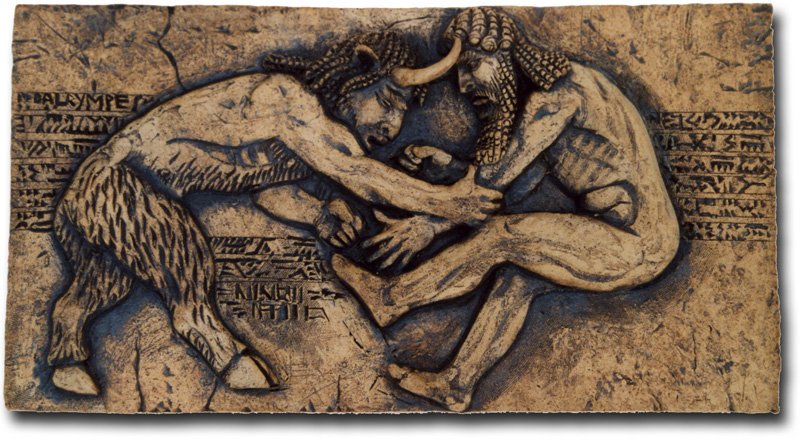
The humans would turn their backs on the gods if they did not tame Gilgamesh so the gods created the King a massive playmate, Enkidu; part-man, part-beast. Image credit: Project Gilgamesh
Known as 'Bilgames’ in the Sumerian, 'Gilgamos’ in Greek, and associated closely with the figure of Dumuzi from the Sumerian poem The Descent of Inanna, Gilgamesh is widely accepted as the historical 5th king of Uruk whose influence was so profound that myths of his divine status grew up around his deeds and finally culminated in the tales found in The Epic of Gilgamesh.
The Walls Of Uruk
According to the Sumerian King List, Uruk was founded by King Enmerkar around 4500 BC. It was the largest settlement in southern Mesopotamia, if not the world.
It was a true city dominated by monumental mud-brick buildings decorated with mosaics of painted clay cones embedded in the walls, and extraordinary works of art.
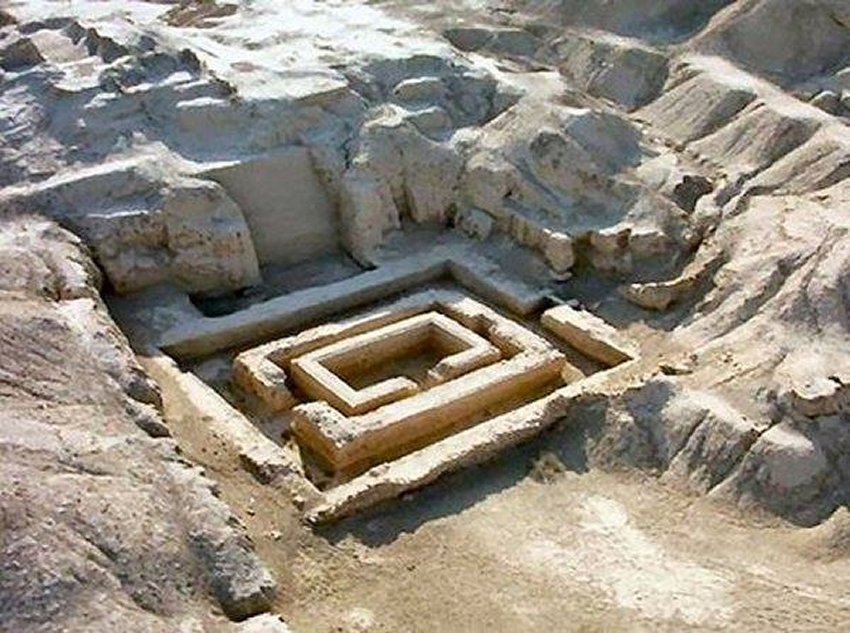
Large-scale sculpture in the round and relief carving appeared for the first time, together with metal casting using the lost-wax process.
At this time Uruk was surrounded by a massive wall, which according to tradition was built on the orders of King Gilgamesh who was later remembered as a great hero.
In the context of the ancient king who built them, they represent the immortality he achieved through his acts. The walls of Uruk symbolize the great accomplishments of which mortals are capable.
Gilgamesh – An Ancient Hero Whose Deeds Live On
In The Epic of Gilgamesh, the great king is thought to be too proud and arrogant by the gods and so they decide to teach him a lesson by sending the wild man, Enkidu, to humble him. Enkidu and Gilgamesh, after a fierce battle in which neither are bested, become friends and embark on adventures together.
When Enkidu is struck with death, Gilgamesh falls into deep grief and, recognizing his own mortality through the death of his friend, questions the meaning of life and the value of human accomplishment in the face of ultimate extinction.
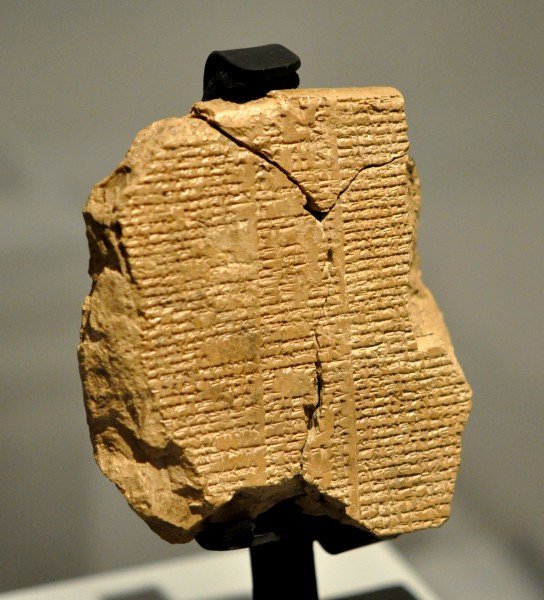
A newly discovered partially broken tablet V of the Epic of Gilgamesh: "the episode of the journey of Gilgamesh and Enkidu." Image credit: Osama Shukir Muhammed Amin
Casting away all of his old vanity and pride, Gilgamesh sets out on a quest to find the meaning of life and, finally, some way of defeating death. In doing so, he becomes the first epic hero in world literature. The grief of Gilgamesh, and the questions his friend's death evoke, resonate with every human being who has wrestled with the meaning of life in the face of death.
Although Gilgamesh ultimately fails to win immortality in the story, his deeds live on through the written word and, so, does he.
Gilgamesh became the hero of many later stories and epics.
Written by – A. Sutherland - AncientPages.com Senior Staff Writer
Copyright © AncientPages.com All rights reserved. This material may not be published, broadcast, rewritten or redistributed in whole or part without the express written permission of AncientPages.com
Expand for referencesMore From Ancient Pages
-
 Secrets Of The Magnificent 3000-Year-Old Peebles Hoard Revealed
-
 Troll Cross – Protection Symbol Believed To Ward Off Evil Powers
-
 On This Day In History: John Dee, English Mathematician, Occultist, Astrologer, Astronomer Was Born – On July 13, 1527
-
 Mysterious Ancient Village In A Prehistoric Anomalous Zone – Dangerous Underground Secret – Part 2
-
 Underground City And Pyramid Discovered At Tiahuanaco, Bolivia
-
 Ancient People In The Tibetan Plateau Had More Cultural Exchanges Than Previously Thought
-
 Why Was The World’s Oldest Known Rune Stone At The Svingerud Grave Deliberately Broken Into Pieces?
-
 A 500-Year-Old Funerary Bundle And Pottery Probably Belonging To Ychsma Culture – Unearthed Near Lima, Peru
-
 Apkallu – Seven Antediluvian Sages Created By God Enki – Were They The Watchers?
-
 Pergamon – One Of ‘Seven Churches Of Asia’ With Great Library And Sophisticated Water Supply System
-
 Unsolved Enigma Of The Inga Stone And Its Mysterious Ancient Undeciphered Signs
-
 Scientists Reveal What Egyptian Faience Have To Do With Gold
-
 Phoenicians: Powerful Traders And Their Remarkable Seafaring Achievements
-
 Huge Unknown Ancient Lost World Discovered Inside Giant Sinkhole In China
-
 Pre-Incan Tombs Of The Chancay Culture Discovered In Lima, Peru
-
 Unique Ancient Artifacts Discovered In Melting Ice Patches In Norway
-
 Surprising Discovery In Valsgärde Viking Boat Graves – Scandinavian’s Oldest Down Bedding Found
-
 Nammu: Sumerian Goddess Who Got The Idea To Create Mankind In The Image Of Gods
-
 Ancient Wooden Slips Inform About China’s First Emperor’s Search For Mysterious Elixir Of Immortality
-
 Meteora – A Sanctuary Of Harmony And Quietness “Hanging” In The Sky

