
Yokai Kitsune: Charming And Cunning Liar With Double Nature In Japanese Folklore
A. Sutherland - AncientPages.com - One of the most important and famous figures in Japanese mythology is Kitsune (‘fox’).
‘Kitsune’ is included in a large group of creatures known as Yokai (yōkai – demons, goblins, spirits, apparitions, leprechauns,) that are feared, admired, and worshiped almost as deities.
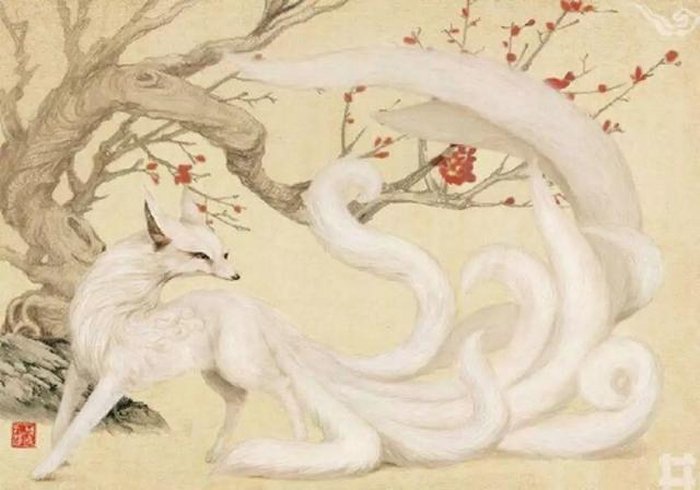
These demonic entities are believed to belong to the supernatural world, and they move between their world and the real one. Supernatural forces inhabit virtually every piece of their country, and they have shaped the Japanese culture.
Can We Consider Kitsune As Good Beings?
It seems we can, but we have to be very cautious because kitsune, like many other Yokai, has a dual nature.
Kitsune is a charming and cunning liar that can demonstrate the benevolent nature as a guardian or a devoted companion, and another time tends to misbehave.
But we must not forget that kitsune can easily show the other side of its nature, which is elusive and ruthless. Kitsune likes mischief, pranks and can become a dangerous shapeshifter or soul-possessed enemy demon.
Ancient Japanese literature, historical sources, and local folk tales indicate that this creature exists and represents two opposing aspects of the world, the good and the evil.
You can admire and worship the kitsune, but please remember that the kitsune symbolizes the laws of nature. Therefore, for your own safety, you must also keep a certain distance to it and fear it, too.
Kitsune And The Deity Inari
In the beliefs of the Japanese people, some of the most prominent kami are Amaterasu, Izanagi, Izanami, Susanoo, and Inari, the Shinto deity.
Inari in the Japanese beliefs is the kami (a spirit with holy powers) of the rice fields, and it existed since at least the Nara period (710–784 AD) and had many other responsibilities as a deity of fertility, farming, fishing, cultivation, productivity, prostitution, and the martial art.

A connection between Inari and kitsune has started about the 11th century. This significant cult has about forty thousand shrines scattered across Japan, all decorated with images and statues of these holy foxes guard the entrances to the deity’s temples.
As divine messengers of Inari, they act as a bridge between the human and celestial worlds.
Many early Japanese tales of kitsune can be traced back to China, where the creature was also known for its shape-shifting talents, most notoriously taking on the guise of beautiful, seductive women. Still, they could also suddenly emerge as an older man.
Divinity And Colors of Foxes
In folk beliefs, most kitsune can be red, black, gold, and silver (or white). But not only white (silver) Inari foxes had an aspect of divinity.
Kinko and Ginko (gold and silver kitsune) are two in one as a unity, and incarnation of Yin-Yang dualism. While Kinko is the manifestation of Yin representing the Sun, Ginko, on the other hand, is the manifestation of Yang representing the Moon.
On their backs, they carried the Buddhist goddess Dakini (sacred female spirit in Hinduism and Vajrayana Buddhism).
A white fox – usually understood as a harbinger of death was also Dakini’s private messenger.
Kitsune Likes To Feed On Life Energy Of People
According to mythology, Kitsune (known by different regional names) is a multitalented spirit mentioned in the earliest Japanese texts.
 Statue of kitsune at Inari Temple in Tōdaiji in Nara, Japan. Source
Mythological sources confirm two types of kitsune: the ‘zenkos,’ also known as ‘Inari Foxes,’ who are the deity’s messengers; the second group represents ‘yako’ (wild foxes) that can be bad and even evil, and associated with chaos. They are said to feed on the life energy of people or their spirits.
They had transformation ability and most often took the form of a beautiful young woman or monk. However, the length of the transformation was dependent on the age of kitsune. Foxes that were at least five hundred years old could last in any form for a very long time.
Young, inexperienced kitsune could not wholly transform, and their tails were often sticking out from under their clothes.
See also:
Nurikabe: Trickster That Manifests Itself As Invisible, Impassable Wall In Japanese Old Beliefs
Demon Oni: Cruel Harbinger Of Disease And Misfortune In Japanese Folklore
In the ‘Nihonshoki’ - the first official source of history of Japan, and even an essential reference for Japanese myth – the creatures appear as omens, either good or bad.
It sometimes happened that their malice was so painful that as a consequence, the creatures led the unfortunate person to mental illness and even death.
In Japanese mythology, the fox could have another tail every hundred years, and those who have lived for a thousand years had as many as nine tails and possessed the ability to see as far as possible.
The more tails a kitsune has, the older, wiser, and more powerful it is.
Kitsune And Good Harvest
An ancient belief says that farms that always were successful with a good harvest must have any unique association with foxes, which in some way, could contribute to the people’s wealth. These people were believed to be the so-called ‘kitsune-mochi families’ (the owners of kitsune. In consequence, they were protected by yokai spirits, who cared for the family’s good harvest and wealth of the household and warded off evil spirits.
Because of their potential power and influence, some people make sacrifices to kitsune as to a deity by offering fried soybean curd at Inari shrines, a food, which is a favorite of foxes.
Written by – A. Sutherland - AncientPages.com Senior Staff Writer
Copyright © AncientPages.com All rights reserved. This material may not be published, broadcast, rewritten or redistributed in whole or part without the express written permission of AncientPages.com
More From Ancient Pages
-
 Excavations Reveal New Artifacts That Change History Of Ancient City Of Pergamon
-
 New Tool-Making Timeline For East Asian Hominins – Study
-
 Bacabs: Four Atlantean Gods Were Giants And Sons Of Itzámna, Maya God Of Heaven And The Sun
-
 Hidden Silver Casket With Bones Of 13th Century Saint Found
-
 Sailing With The Phoenicians: Great Traders, Sailors And Navigators
-
 Blame The Neanderthals For Your Lower Back Pain – Scientists Say
-
 Very Rare Discovery: Viking Age Mortuary House Unearthed In Central Norway
-
 Why Was Alexander A Great Military Genius?
-
 LIDAR Discovers Huge Abandoned Zapotec City With Temples, And Ball Courts In Oaxaca, Mexico
-
 Medieval Mythbusting – New Research Rewrites History Of Glastonbury Abbey
-
 Vikings Cared Deeply For Their Animal Companions – Shared Human And Horse Burials Reveal
-
 Who Made The Mysterious Ancient Cave Paintings And Inscriptions In Oklahoma 2,500 Years Ago?
-
 On This Day In History: Battle Of Nineveh Was Fought – On Dec 12, 627 AD
-
 Giant Thousand-Year-Old Urns Discovered In The Amazon City Of Fonte Boa
-
 Ancient Egyptian Blue Used To Create New Nanomaterial 100,000 Times Thinner Than A Human Hair
-
 Has The Mystery Of The Hobbits Finally Been Solved?
-
 Ancient Assyrian Tomb With 10 Skeletons And Ceramic Sarcophagi Unearthed In Iraq
-
 Three Judges Of Souls Await You On Chinvat Bridge – Gateway To Unknown Realms In Zoroastrian Beliefs
-
 Xibalba: Nine-Leveled Underground Place Of Fear Ruled By Lords Of Death In Maya Beliefs
-
 Rare Roman Brooch And A Miniature Sword – Unearthed

