
Why The Aztecs Called Themselves ‘Mexica’
Conny Waters - AncientPages.com - Originally, the tribe we all know today as Aztecs, was once known as the Mexica, from which the modern name of the country of Mexico is derived.
When Aztecs found their new homeland, they changed their name to Mexica, ‘people from Mexico’.
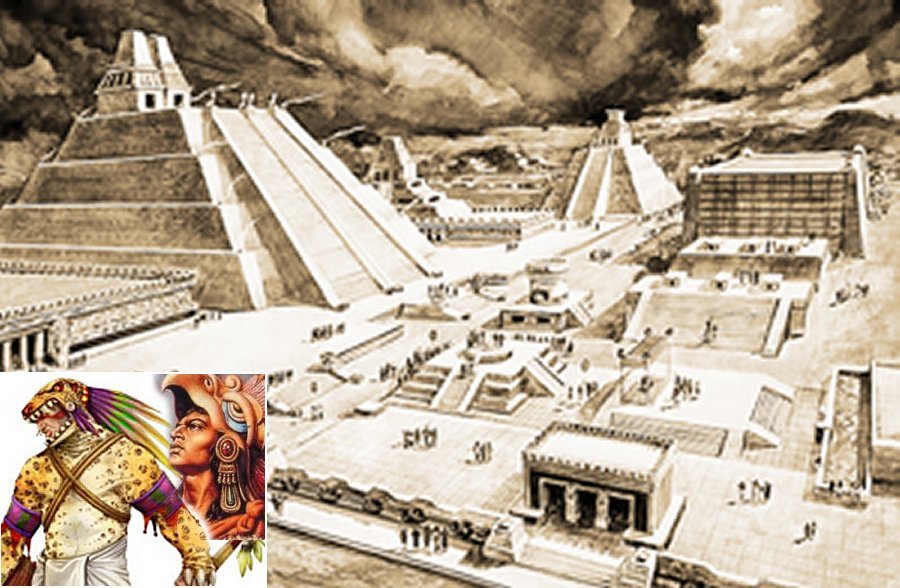
The legend says the Aztecs came from Aztlan, which is the place of their origin, but this legendary homeland still remains unidentified. In Nahuatl language, the Aztecs -means the people who came from Aztlan and they really believed they once resided in this mythological or semi-mythological place.
The term Azteca ('Aztecah') originally meant "people of the Aztlan" and referred only to a small tribe that – after long wandering (as the last of all peoples in Central America) finally settled at Coatepec (in Nahuatl: ‘The Hill where the Snakes are‘) on the Mexican Plateau near Tula.
The starting point of the Aztec origin myth is a place known to the Mexica as Chicomoztoc, a place from which they emerged from one of seven caves. Chicomoztoc, however, was only the first stage of the supposed history of the Mexica before they finally found themselves in their historically known territory and established a regional power.
The Mexica are the source from which most of the accounts of the Aztec origin myth were recorded.
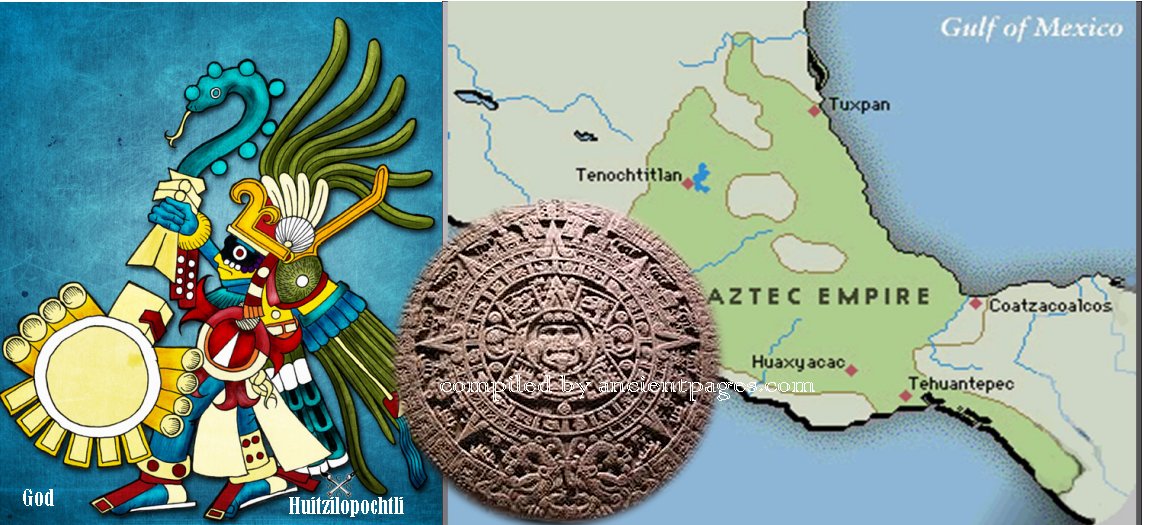
It was Alexander von Humboldt, a Prussian geographer, naturalist, explorer, who named the Mexica - the Aztecs. He put together the name “Aztlan” and “tec(atl)” where Aztlan “('Place of the Herons') was the mythical homeland of the Mexica, and -teca(h) literally means ‘people of’. Today the name 'Aztec' refers to not only the Mexica but also to the Nahuatl-speaking peoples of the Valley of Mexico and its surroundings.
Experts on Mexican history including Dr. Alejandro Villalobos, the people we call today Aztecs, became the Mexica when their god Huitzilopochtli appeared in a dream to four priests (Teomama). According to a legend, they took this name because Huitzilopochtli was also – Mexi. So, Mexica also means ‘sons of Mexi or ‘sons of Huitzilopochtli’.
In the Aztec religion, Huitzilopochtli was the national god of the Mexicas of Tenochtitlan. He was the god of war, sun, and human sacrifice and the patron of Tenochtitlan. The Mexicas founded the city of Tenochtitlan, which would eventually become the capital of the Aztec Empire.
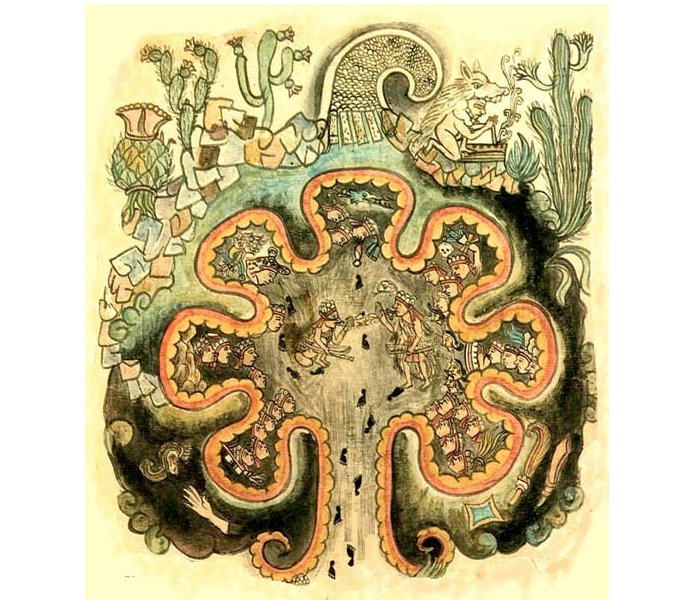
The seven caves of Chicomoztoc. Image via wikipedia
The Aztecs/Mexica are indeed mysterious people, especially regarding their origin. There are countless theories trying to explain, who they really were.
See also:
Aztecs: Facts And History About The Ancient And Powerful Mesoamerican Civilization From Aztlán
Aztec Empire: ‘Tlatoani’ – The Ruler With The Ultimate Power In The Land
Fearsome Aztec Eagle Warriors And Jaguar Warriors Of Mesoamerica
The Toltec theory of the first wave of Mexica is that they arrived in central Mexico states around 540 BC from what is now the Southwestern US. "The Aztec Calendar Handbook," says that the so-called Aztlan and the legendary seven caves often mentioned in legends of these people was a site known today - Kanab, Utah.
Others believe the group originated in the old Tule lakes in northeastern Siskiyou County and northwestern Modoc County in California, along the border with Oregon. Still, some others propose the mythical Aztlan might be eastern Oakland.
Perhaps we’ll never know where the Mexica’s Aztlan was located but they confirmed their existence historically. Their powerful empire was founded in Tenochtitlan on an island in Lake Texcoco in the Valley of Mexico, on June 20, 1325.
Tenochtitlan was not created accidentally. According to legend, the wandering Mexica observed an eagle devouring a snake while sitting on a cactus, a sign they had supposedly been informed they would see by their patron god Huitzilopochtli upon leaving Atzlan.
Written by Conny Waters – AncientPages.com Staff Writer
Copyright © AncientPages.com All rights reserved. This material may not be published, broadcast, rewritten or redistributed in whole or part without the express written permission of AncientPages.com
More From Ancient Pages
-
 We Dated A Sacred Aboriginal Women’s Site Used for Birthing Ceremonies And Discovered 7,000 Years Of Tool Making
-
 Exceptional Collection Of Well-Preserved Stucco Masks Of The Mayan Kingdom Reveal Their Secrets
-
 Were Mysterious Ancient Man-Made Earthworks In The Amazon Forest Ritual Communication Spaces?
-
 Secret Group Searching For Ancient Giants’ Skeletons In NZ Worries Archaeologists
-
 Smallest Arm Bone In Human Fossil Record Illuminates Homo Floresiensis Origin
-
 Fascinating Discovery – First Female Viking Grave Discovered In Swedish Mountains
-
 ‘Homo Erectus’ From Gongwangling Could Have Been One Of The First Human Beings 1,6 Million Years Ago
-
 5,000-Year-Old Russian Skull Offers Evidence Of Brain Surgery Made With Stone Scalpel
-
 What Is The Meaning Of Ankh – Ancient Egyptian Symbol
-
 Mayapan: How The Last Big Mayan City Met Its End
-
 TB Was Transmitted in South America – DNA Study Shows How It Happened
-
 4 Things Ancient Greeks And Romans Got Right About Mental Health
-
 Resourceful Neanderthals Could Dive 13ft If Necessary To Collect Shells
-
 Catastrophic Final Flooding Of Doggerland By The Storegga Tsunami – New Study Results
-
 Tusayan Pueblo Ruins And Split Twig Figurines Tell Story Of People Who Once Inhabited The Grand Canyon
-
 Strange 1,000-Year-Old Artifact Melted Out Of The Ice Identified With Help Of Photo!
-
 Hidden Byzantine Hoard Offers Evidence Of A Dramatic Historial Event In The Levant
-
 Bulgaria’s Reliefs From Ancient Thracian Sun Shrine – Restored
-
 The Hittites, Mysterious People Of A Thousand Gods – Collapse Of The Hittite Empire
-
 On This Day In History: Vädersol Painting Depicting ‘Sun Dog’ Phenomenon Observed Over Stockholm – On Apr 20, 1535

