
6,000-Year-Old Vast Settlement With Tools And Granite Structures Unearthed In Sotta, Corsica In France
Conny Waters - AncientPages.com - A team of archaeologists from INRAP (French National Institute for Preventive Archaeological Research) recently unearthed two Neolithic settlements of which one has well-preserved structures.
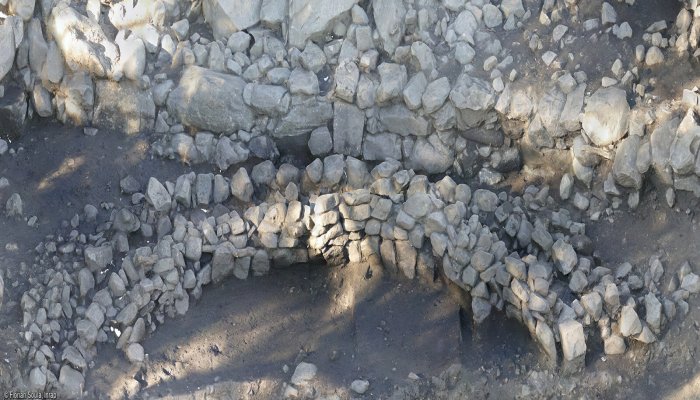
The excavataed arc was the best preserved of its kind at the site, experts said. Image credit: Florian Soula INRAP
INRAP researchers inform that the remains of this vast settlement are located on the slopes of the southern flank of Punta Campana, in Sotta, and include a large number of ancient artifacts.
In the first settlement that dates to the beginning of the fourth millennium B.C to about 6,000 years ago, researchers found a stone structure filled with remains of an obsidian cutting workshop. This part of the excavated place was found to be partially eroded.
The second settlement dates to the third millennium BC., about 4,000-5,000 years ago, it was better preserved, and there, the team uncovered a system of terraces, topped with an approximately 3-foot tall or fortified wall made of granite blocks, according to researchers. The structures were excavated between November 2022 and March 2023,.

General view of a bastion being excavated in Sotta (Southern Corsica) in 2023. © Florian Soula, Inrap
“The top of the excavation right-of-way presents a more complex organization, with a "bastion" supported by an imposing terrace wall, fully preserved and measuring about 0.9 to 1.2 m in height compared to the level of circulation preserved. This wall is built of large granite blocks with an upper base of blocks laid flat,” according to INRAP press release.
On the first terrace below it was a stone arc also made from granite blocks. The building techniques used in the arc indicate it was used as some kind of roof, but experts are investigating its exact purpose, they said. The excavataed arc was the best preserved of its kind at the site.
Within the terraced structure, researchers discovered a corridor and staircase that probably functioned as a passageway to the upper level of the system. .
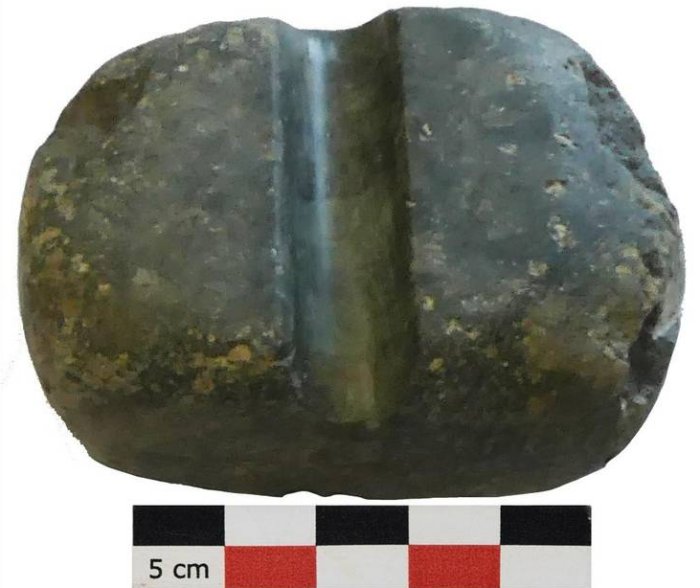
Among the smaller remains were artifacts indicating artisan practices in daily life, researchers said. Florian Soula INRAP
Within the corridor, several vases were unearthed. A pear-shaped vase was among several vases discovered on the paving inside the wall of the terraced structure
Also, two other similar terraced systems were found at the site; but for now, their purpose is unclear. Possibly they were used for food storage, metallurgy, or other artisans' activities.
The excavating team discovered many unusual artefacts at the Neolithic site and particularly, in the terraced section. These include thousands of unusual copper and other metal artifacts, obsidian, quartz, pieces of flint, wheels, arrowheads; axes, and other metal objects.
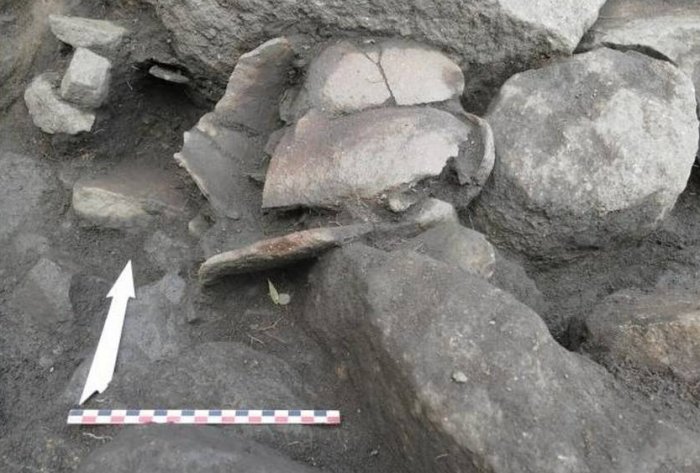 A storage vase was also found among the artifacts, experts said. Florian Soula INRAP
Some remains show traces of melting that took place at the site. There were also cattle teeth and rare cranial skeletal remains that seemed to have been burned, INRAP informed.
Other artifacts gave experts greater insight into life during the Neolithic era and at the settlement in particular. Among the smaller remains were artifacts indicating artisan practices in daily life, researchers said.
The artifacts indicate the presence of intense and/or long-term activities concerning all aspects of daily life and economy of Neolithic societies.
Further studies will no doubt will help to obtain give a greater view into ancient life of the ancient societies in Sotta on the island of Corsica.
Written by Conny Waters - AncientPages.com Staff Writer
More From Ancient Pages
-
 Rare 1,850-Year-Old Bronze Zodiac Coin Discovered During Underwater Survey Off Israel’s Coast
-
 Mysterious Ancient Inscription With Unknown Language Found Near Lake Bashplemi, Georgia
-
 Rare Ancient Roman Sun Hat On Display For The First Time Ever At Bolton Museum
-
 Humans Used Northern Migration Routes To Reach Eastern Asia
-
 On This Day In History: Siege Of Belgrade – Hungarian Battle Victory – On July 4,1456
-
 Why Didn’t Alexander The Great’s Body Show Signs Of Decomposition For Several Days? A Never-Before Suggested Explanation – From Scientists
-
 First-Ever DNA Study Of The Scythian Saka ‘Golden Man’ Solves Ancient Mystery
-
 Can Stonehenge Be Saved From Bulldozers Or Have Druids Been Defeated?
-
 New Mexico Mammoths Offer Evidence Of Early Humans In North America Much Earlier Than Previously Thought
-
 Ancient Greek Amethyst Ring To Ward Off A Hangover Discovered At The World’s Largest Byzantine Wine Factory In Yavne, Israel
-
 Remarkable Massive Statues Of Pharaoh Amenhotep III Discovered In Luxor
-
 Magnificent Treasures From Bronze Age And Roman Era Found In South Wales And Powys
-
 ‘Supernatural’ Sized Daughter Of Thera: Rare Masterpiece Of Greek Antiquity Revealed To The Public
-
 Huge Ancient Underground Stone Circle Discovered Inside Cornwall Neolithic Henge
-
 On This Day In History: Vespasian Was Elected The Roman Emperor – On July 1, 69 A.D.
-
 Pomerania’s Remarkable Find: 6,000-Year-Old Limestone Venus Figurine Represents Fertility Symbol Of Central And Eastern Europe
-
 Is The Hashtag World’s Oldest Symbol And First Communication Attempt?
-
 Lost Ancient Bronze Age City Of Semiyarka Discovered In The Eurasian Steppe
-
 Genome Study Reveals How Human Populations Adapted, Survived, And Diversified In The Himalayas
-
 LIDAR Advanced Technology Spotted Rare Pre-Columbian Florida Village – Highly-Prized Producer Of Beads

