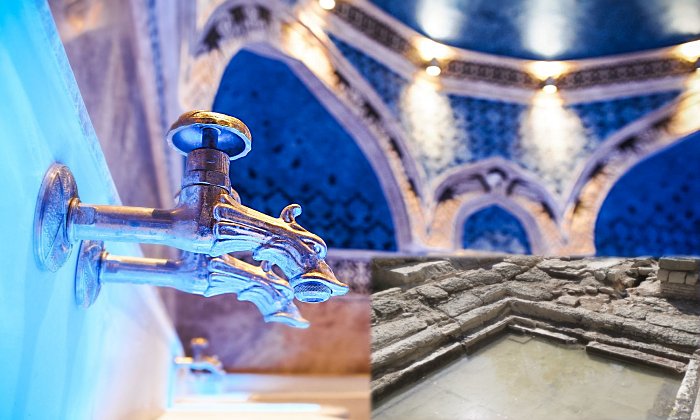
AncientPages.com - As Pompeii’s House of the Vettii finally reopens after a long process of restoration, news outlets appear to be struggling with how to report on the Roman sex cultures so well recorded in the ruins of the city.
The Metro opened with the headline “Lavish Pompeii home that doubled as a brothel has some interesting wall art”, while the Guardian highlighted the fresco of Priapus, the god of fertility (depicted weighing his oversized penis on a scale with bags of coins) as well as the erotic frescoes found next to the kitchen.
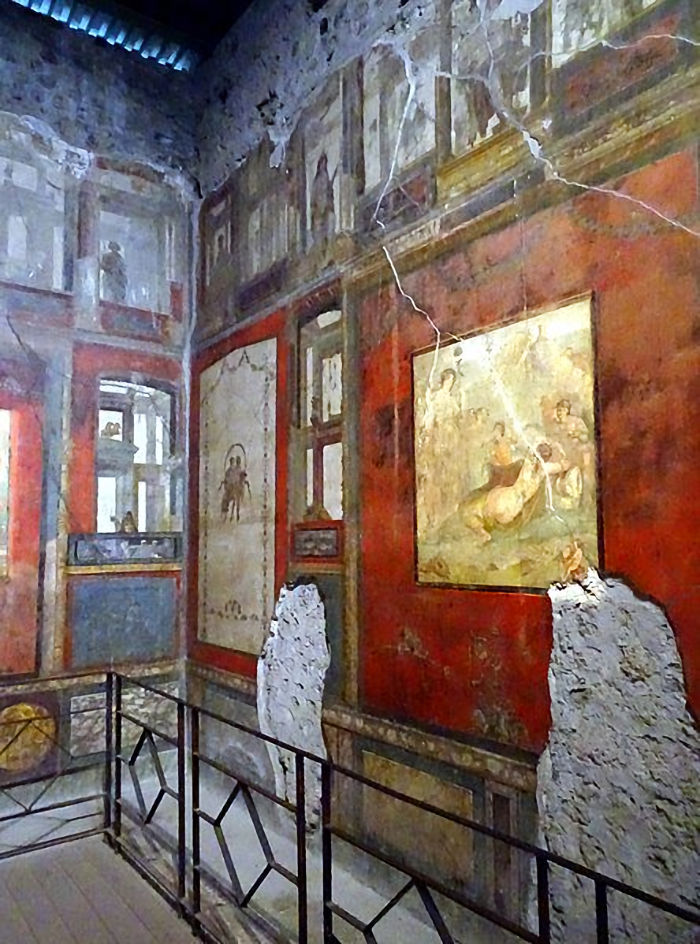
Pompeii House of the Vettii. Credit: Ad Meskens/Wikimedia Commons, CC BY-SA
The Daily Mail, on the other hand – and arguably surprisingly – said nothing about the explicit frescoes and instead centred its story on the house’s “historic hallmarks of interior design”.
As a scholar who researches modern and contemporary visual cultures of sexuality, I was struck by how the heavy presence of sexual imagery in the ruins of Pompeii seems to confound those writing about it for a general audience.
Rethinking Roman sexuality
As a gay man and a researcher on sexuality, I am all too familiar with the ways modern gay men look to ancient Rome in search of evidence that there have always been people like us.
It is now clear among the research community that such straightforward readings of homosexuality in classical history are flawed. That is because same-sex relations among Romans were lived and thought about in very different ways from our own.
Roman sexuality was not framed in terms of the gender of partners but in terms of power. The gender of a free man’s sexual partner was less relevant than their social position.
Socially acceptable Roman sexuality was about power, power was about masculinity – and Roman patriarchal sex cultures were assertions of both. An adult free man could have sex as the penetrating partner with anyone of a lower social status – including women or slaves and sex workers of both genders.
Despite this, I understand how politically important and strategic it was for the early homosexual movement to invent its own myth of origin and to populate history with figures that had been – they thought – just like us.
The flip side of modern notions of homosexuality being read into Roman history, is the way in which the widespread presence of sex in ancient Roman (including in the graffiti and visual culture preserved in Pompeii) has been disavowed or – at least – purified by mainstream modern culture.
Pornography in Pompeii
This phenomenon started when sexually explicit artefacts were first discovered in Pompeii, propelling archaeologists to preserve them due to their historical value, but to keep them hidden from the general public in “secret museums” on account of their obscene content.
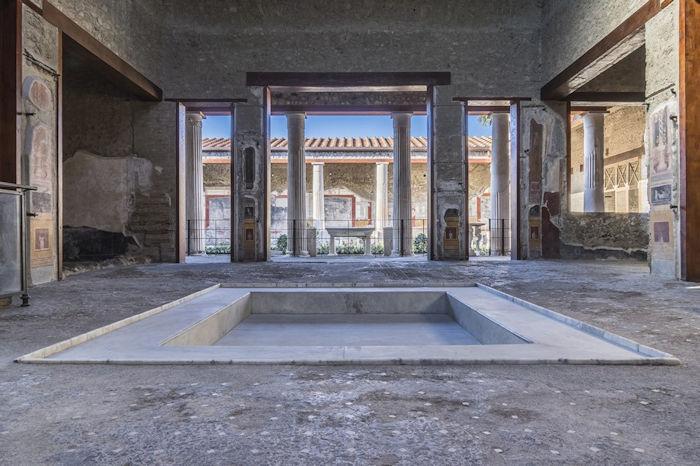
The restored House of Vetti is now opened to the public. Image credit: CASA DEI VETTI
Indeed, the coinage of the word “pornography” was a result of the archival need to classify those Roman artefacts. The term “pornographers” was first used to designate the creators of such Roman images in Karl Otfried Müller’s Handbook of Archaeology of Art (Handbuch der Archäologie der Kunst), from 1830.
The news coverage around the reopening of the House of the Vettii is one such example of mainstream modern culture sanitising Roman history.
When focusing on the fresco of Priapus, for instance, news outlets are quick to claim that the god’s oversized penis was merely a metaphor for the wealth accumulated by the men who owned the house. The pair had made their fortune selling wine after being freed from slavery.
This reading of the fresco, while not necessarily incorrect, overlooks the more complex – and for that reason, more interesting – role of phallic imagery in Roman culture.
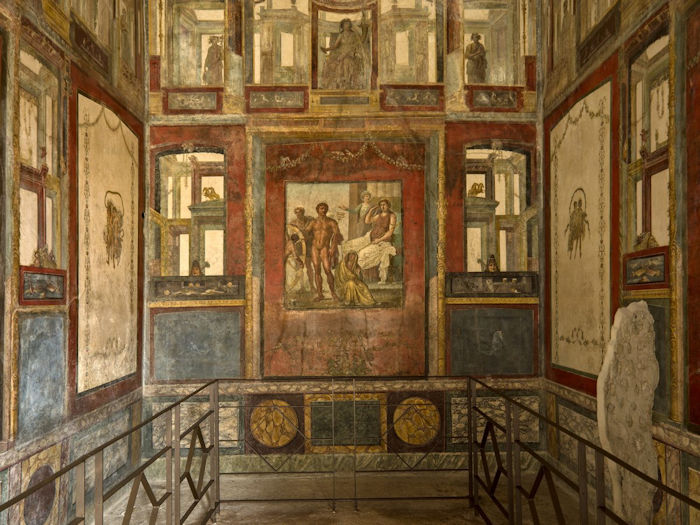
Image credit: CASA DEI VETTI
As classicist Craig Williams writes, the images of a hyper-endowed, hyper-masculine Priapus that were widespread in Roman culture functioned not only as a source of identification but also as an object of desire for Roman men – if not to be penetrated by the large phallus, then at least to wish it was their own.
Priapus, with his large manhood and unquenchable desire to dominate others through penetration was, Williams tells us: “Something like the patron saint or mascot of Roman machismo.”
What’s missing from the story?
News coverage of the erotic frescoes found in a smaller room of the house has been similarly too straight forward in claiming them as evidence that that room was used for sex work.
While some scholars have certainly argued that perspective, others believe it unlikely. Some academics suggest that the erotic frescoes in that room (which probably belonged to the house’s cook) had more likely been commissioned as a gift to the Vettii’s favourite slave and very much fit the wider aesthetic of quirky excess that marks the house as a whole.
In a culture where sex was not taboo but instead promoted as a sign of power, wealth and culture, it is fair to suggest that erotic images wouldn’t just belong in brothels. Sex was everywhere in Rome, including in literary and visual arts.

The ancient house, with its famed frescos and 12 mythological scenes, has been restored. Image credit: CASA DEI VETTI
When reading the recent news stories, I could not help but think that their interpretations, while not wholly wrong, were too skewed into presenting the explicit frescoes as either metaphors for something more noble, or as something that was restricted to a specific site of Roman life – the brothel.
Perhaps these readings are privileged over others because we’re reluctant to accept that sex in ancient Roman culture – a culture we so often mythologise as our “origin” – was performed in ways that we are uncomfortable with.
Written by João Florêncio, Senior Lecturer in History of Modern and Contemporary Art and Visual Culture, University of Exeter
Provided by The Conversation
This article is republished from The Conversation under a Creative Commons license. Read the original article.