Jan Bartek - AncientPages.com - A groundbreaking genetic study has completely rewritten the history of Pacific migration, revealing that the original settlers of Hawaii made an astonishing 7,000-kilometer journey from Easter Island.
The study uncovers not only the epic voyages of ancient seafarers but also critical "genetic bottlenecks" that severely impact the healthcare and disease risks of modern Native Hawaiians.
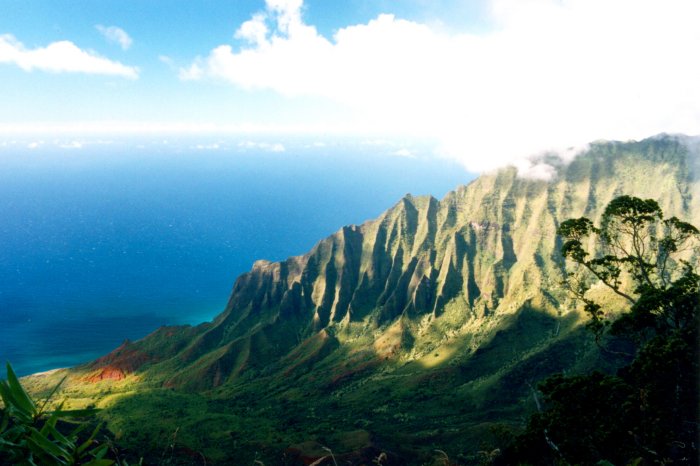
Nā Pali Coast State Park, Kauai, Hawaii. Credit: Jeff Kubina - CC BY-SA 2.0
For centuries, the settlement of Polynesia has fascinated historians, anthropologists, and archaeologists alike. Although no written records exist of these massive maritime undertakings, researchers from Stanford Medicine and the University of California, San Diego, decoded this history by analyzing the genomes of modern-day Polynesians.
The research team found clear genetic evidence that ancient sailors from this region settled a distant land. To their surprise, the destination was Hawaii, located 7,000 kilometers away and among the most remote Polynesian islands from Easter Island.
“What we uncover in this paper is where the native people of Hawaii had come from,” said Alexander Ioannidis, PhD, assistant professor of genetics and of biomedical data science, and co-senior author of the study. “Hawaii is the only Polynesian island in the Northern Hemisphere, so it’s a long way from everything.”
The other co-senior author is Keolu Fox, PhD, an associate professor of anthropology at the University of California, San Diego, and a Native Hawaiian.
Polynesia includes more than 1,000 islands across a Pacific Ocean area comparable in size to North and South America combined. Hawaii, a tropical island, is as distant from temperate Easter Island in the South Pacific as San Francisco is from Lima, Peru.
Founder Effects
Genetic bottlenecks are called founder effects when a small group separates from a population to establish a new one. This smaller gene pool can increase the frequency of rare genetic variants, sometimes linked to disease. Founder effects have been extensively studied in populations of European descent, such as the Amish, Ashkenazi Jews, and Finns, leading to standard screenings for specific genetic conditions.
The new study identifies an even stronger founder effect among Native Hawaiians that has previously been overlooked.
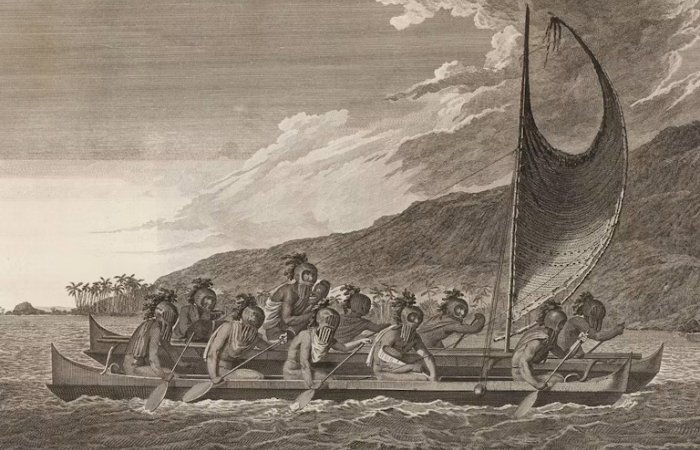
Priests traveling across Kealakekua Bay for first contact rituals: Public Domain
“What we discovered is that in Eastern Polynesians, including Native Hawaiians, founder effects are more than an order of magnitude—over 10 times—greater than those observed in well-studied populations of European descent,” Ioannidis said.
This is because Native Hawaiians are at the end of a long series of genetic bottlenecks, as their ancestors repeatedly sent small groups, sometimes only a few hundred individuals, to settle new islands over several centuries.
An earlier genetic study by the researchers traced the settlement of Polynesia from Samoa to Fiji and Tonga, then gradually eastward to the Cook Islands, the Society Islands (including Tahiti), Mangareva, and ultimately Easter Island around the year 1210. However, the longest journey remained.
“We thought Easter Island was the end when we were first doing that study, but now it looks like it was part of this path to Hawaii, which is really incredible,” Ioannidis said. “By the time you’ve gotten all the way to Hawaii, you’re at the end of a series of founder effects, so it’s really intense.”
Encoded Genealogy
The researchers made their latest discovery by analyzing the genomes of more than 1,000 individuals across Polynesia.
“People on the islands today have encoded in their genomes essentially the genealogy of all of their ancestors,” Ioannidis said.
They focused on genome segments of Polynesian ancestry, excluding more recent European and Asian contributions. By comparing the length of identity-by-descent chromosomal segments shared among individuals from different islands, they determined that longer shared segments indicate a more recent common ancestor.
The researchers found that Hawaiians share the most Polynesian ancestry with people on Easter Island, followed by those on Mangareva, located nearly 3,000 kilometers west of Easter Island. Ioannidis noted that it is logical for an ultravoyaging culture capable of reaching Easter Island from Mangareva to have also settled Hawaii. (An earlier study by the researchers found that members of the same ultravoyaging population also reached South America and came in contact with Native Americans.)
The team also conducted a detailed genomic analysis of individuals from Tahiti, which has the largest genomic dataset. By comparing identity-by-descent segments within this population, they estimated that the founding generation consisted of approximately 800 people who arrived about 34 generations ago, around the year 1070. (This estimate refers to a single reproductive-age generation and does not include children or elders who may have accompanied them.)
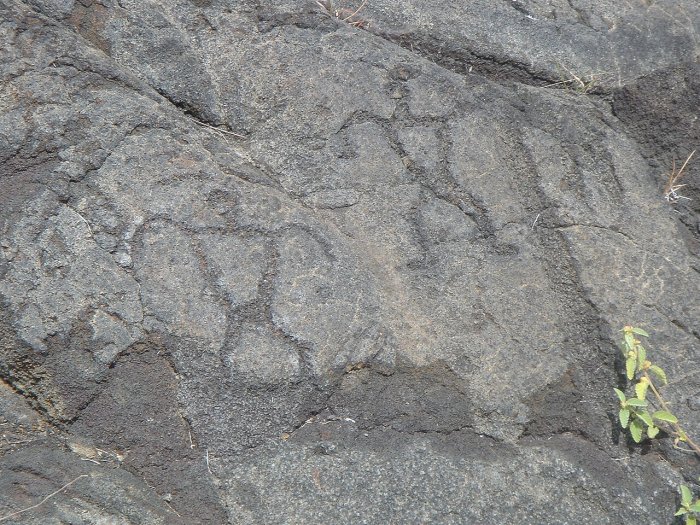
Petroglyphs at Hawaii Volcanoes National Park. Credit: Staecker - Public Domain
“Archaeologists and others have long wondered how many people founded these islands. That’s not something that you can determine definitively from archaeology, but we can determine it from genetics,” Ioannidis said.
The genomic analysis also revealed rapid population growth on Tahiti after initial settlement, followed by a significant decline in the 1700s after European colonial contact.
The researchers are working on similar reconstructions for Easter Island and Hawaii, which will require more genomes.
However, large-scale genomic studies are urgently needed to identify clinically relevant variants that may be unusually prevalent among Polynesians.
The researchers analyzed three variants recently linked to autosomal recessive conditions among Eastern Polynesians: ADAMTSL4, associated with dislocated lens; PDE6B, linked to progressive vision loss; and FAN1, which can cause kidney failure.
These variants are exceedingly rare globally and are scarcely represented in international genome databases, yet 2% to 3% of the Eastern Polynesians studied carry them. This prevalence meets standard thresholds for genetic screening recommendations.
See also: More Archaeology News
“We should be doing more sequencing and trying to characterize more of these conditions among Native Hawaiians,” said Ioannidis, noting that the Native Hawaiian population is nearly twice the size of the Amish population, yet still lacks genetic testing guidelines. “We don’t have recommendations for genetic testing, and there’s no reimbursement from insurance because these are conditions we don’t even know about.”
“This is a population that should be getting research resources and attention from geneticists even more urgently.”
The study was published in the journal Science
Written by Jan Bartek - AncientPages.com Staff Writer