
Ancient Symbol Hamsa: It’s Meaning And History Explained
Ellen Lloyd - AncientPages.com - Hamsa is an ancient, powerful symbol that is often carried as an amulet to invoke the hand of God, or to counteract the Evil Eye. Tracing the roots of this ancient symbol is not easy because Jewish, Christian, and Muslim scholars cannot agree on the interpretation of Hamsa.
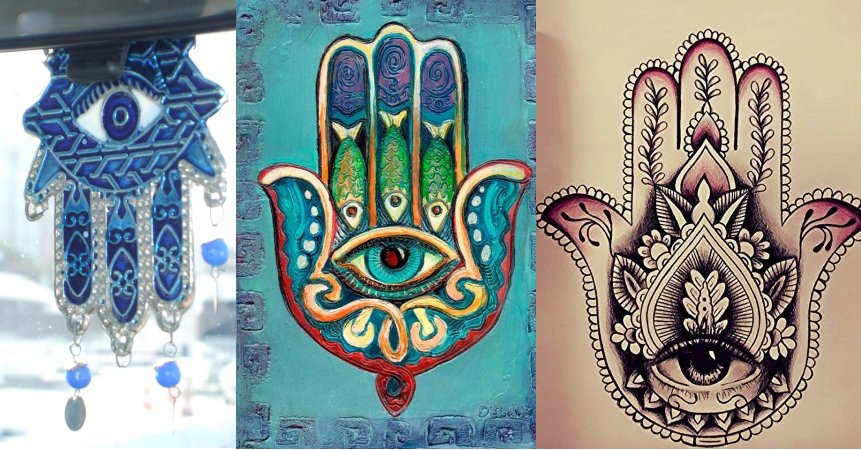
Ancient Symbol Hamsa
Depicted as an eye embedded in the palm of an open hand, the Hamsa symbol has had numerous other names throughout the ages. Some scholars think the symbol is of Pagan origin and was later adopted by other religions. It’s possible the Hamsa symbol originates from Mesopotamia, ancient Egypt, or Cartage, where a Punic and Phoenician goddess Tanit was worshipped.
Hamsa Symbol Protects From Harm Caused By The Evil Eye
Hamsa is a universal protective sign and we encounter it in faiths. It is believed the symbol brings its owner happiness, luck, health, and good fortune. Hamsa offers protection from harm caused by the evil eye. As previously mentioned in Ancient Pages, there is an ancient, superstitious, and almost universal belief that certain people possess the supernatural power to cause disaster, illness, calamity and even death.
They have the ability to do it with a gaze or stare that gives an unpleasant emotion. The evil eye is widely feared in many parts of the world.
This is why the Hamsa symbol can be found today throughout the Middle East. Wearing charms or amulets is technically against Qu’ran law, but in Islamic countries, one can often see plaques or other items that depict the Hamsa symbol. There are Hamsa bracelets, necklaces, pendants, door-knocker, and many other objects depicting the powerful symbol.
By wearing it or keeping it at home, people believe they can protect themselves from negative influences that are otherwise outside their control. The hand can be depicted with the fingers spread apart to ward off evil, or as closed together to bring good luck.
Hamsa Symbol Used By Jews, Muslims And Christians
The Hamsa symbol is especially popular among Jews and Muslims. The Hamsa is variously known as the Hand of Fatima (Mohammed’s daughter) and the Hand of Merriam (Moses’ sister) suggests, which is why the amulet carries significance to both Jews and Muslims. It is also sometimes referred to as the Hand of Mary representing Mary, mother of Jesus.
The word, "Hamsa," derives its name from the five fingers on the hand. The earliest use of a Hamsa predates Islam, although the name Hamsa is Arabic. It is one of the national symbols of Algeria and appears in its emblem.
According to one theory, ancient Egyptians carried an amulet with two fingers that represented Isis and Osiris and the thumb, their child Horus. The amulet was used to invoke the protective spirits of parents over their child.
Other researchers suggest that between 1550 – 330 B.C., the Phoenicians used an image of the hand to represent Tanit, patron goddess of their capital city Carthage and controller of the lunar cycle. Some have suggested Tanit may have been one of the Greek goddesses such as Hera and Athena.
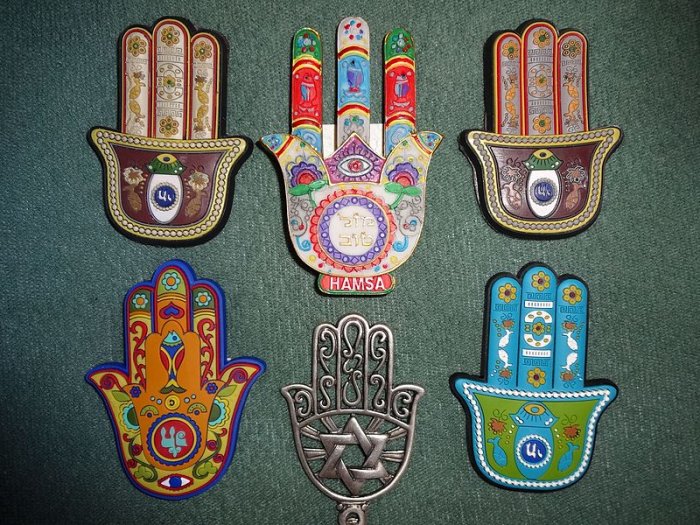
Examples of Hamsa - Credit: Wikipedia
In Hebrew, the number five is "hamesh" and "Hamesh" is representative of the five books of the Torah. It also symbolizes the fifth letter of the Hebrew alphabet, "Het", which represents one of God's holy names, and further reminds Jews to use their five senses when praising God. Some Sunnis interpret the five fingers of the Hamsa as representing the Five Pillars of Islam.
Today, many Jews and Arabs wear the Hamsa to demonstrate the common ground shared by them and the common source from which their religions spring. In the modern world, Hamsa has become a symbol of hope and peace.
Written by - Ellen Lloyd – AncientPages.com
Copyright © AncientPages.com All rights reserved. This material may not be published, broadcast, rewritten or redistributed in whole or part without the express written permission of AncientPages.com
Expand for referencesMore From Ancient Pages
-
 Blackfoot People Carry DNA From Unknown Ancestors Who Came To America 18,000 Years Ago
-
 The Legend Of Little Deer – Interesting Cherokee Tale Of How Disease And Medicine Began, And Why The Native Americans Respect All Life
-
 Previously Uncounted Copies Of Newton’s Groundbreaking ‘Principia’ – Discovered
-
 Stunning Ancient Lod Mosaic With Message Of Approaching Danger To The Ship At Sea
-
 Hollow Bones That Let Dinosaurs Become Giants Evolved At Least Three Times Independently
-
 Maize-Based Diet Of Ancient Maya, Vulnerability To Drought And Collapse Of Society
-
 Archaeologists Discover Mysterious Floor Made Of Bones In Alkmaar, Netherlands
-
 New Last Ice Age Findings In Palawan Cave
-
 Middle Iron Age And Roman Period Buildings And Relics Discovered In Bedfordshire, UK
-
 Agriculture In North America Led To Changes In Age-Independent Mortality
-
 Viking Era Sword Discovered By Young Girl
-
 17 Mysterious Miniature Coffins In Scotland Remain An Unsolved Enigma
-
 Uncovering The Lost Indigenous Settlement Of Sarabay, Florida
-
 Native Americans And European Legends Tell Peculiar Beings From The Sky Still Live On The Earth
-
 Earliest Evidence Of Humans Using Fire To Shape The Landscape Of Tasmania
-
 Seafaring Hunter-Gatherers Reached Malta And Other Remote Islands Thousands Of Years Before The First Farmers
-
 People Who Carry Neanderthal Gene Variants Have Greater Pain Sensitivity
-
 Mysterious Shasu – Bandit Canaanites Or Israelites?
-
 Extraordinary Kite-Shaped Pictish Ring Found At Moray Fort In Scotland
-
 5,000-Year-Old Russian Skull Offers Evidence Of Brain Surgery Made With Stone Scalpel

