
Kültepe: Once Part Of The Kingdom Of Hittites And The Center of a complex network of Assyrian trade colonies in the 2nd millennium B.C.
A. Sutherland - AncientPages.com - Mysterious Kültepe was once part of the kingdom of the Hittites. Excavations revealed ancient artifacts, clay tablets, and intriguing prehistoric structures. Kültepe still has much to reveal.
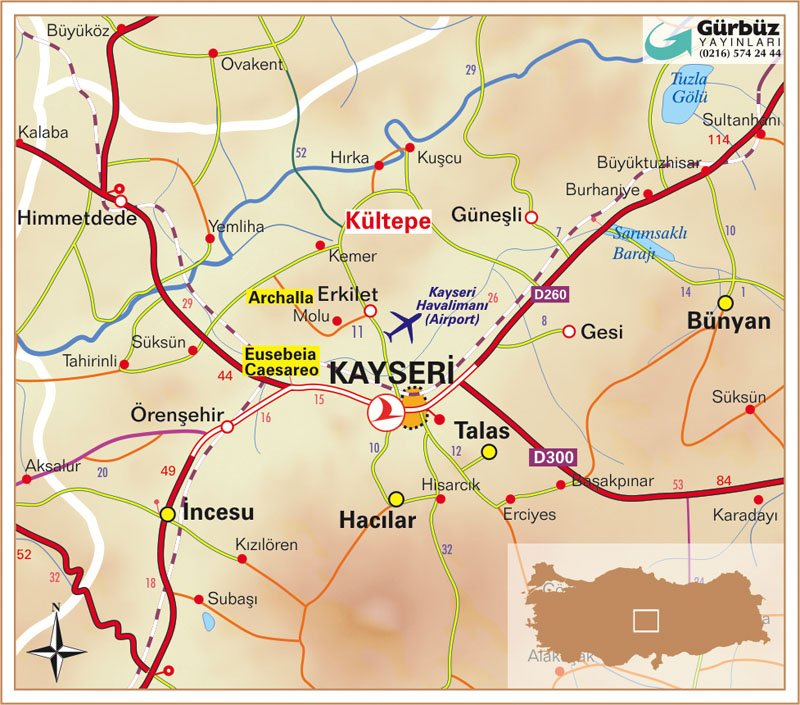
Kültepe, in Turkish means “Ash Hill,” is an archaeological site located in the Kayseri Province. In the past, it was the capital of the ancient Kingdom of Kanesh and the center of a complex network of Assyrian trade colonies in the 2nd millennium B.C.
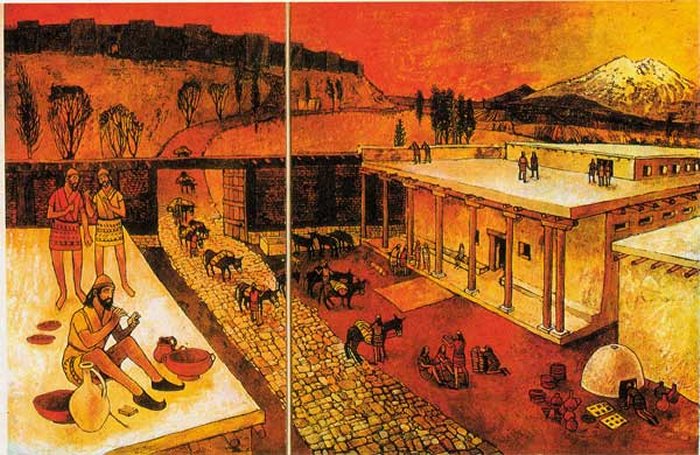
Artistic impression of what the city looked like in the past.
The place became a key center of culture and commerce between Anatolia, Syria, and Mesopotamia by the end of the 3rd millennium B.C. and especially during the first quarter of the 2nd millennium B.C.
Over 20,000 Clay Tablets From Cappadocia Discovered
In 1948, archaeologists started to excavate the site and they discovered tens of thousands of archaeological and textual finds.
According to UNESCO, Kültepe is not only a site of utmost importance for Anatolian archaeology, but also for world archaeology. The private archives of the Karum residents have yielded 23,500 clay tablets and envelopes to date.
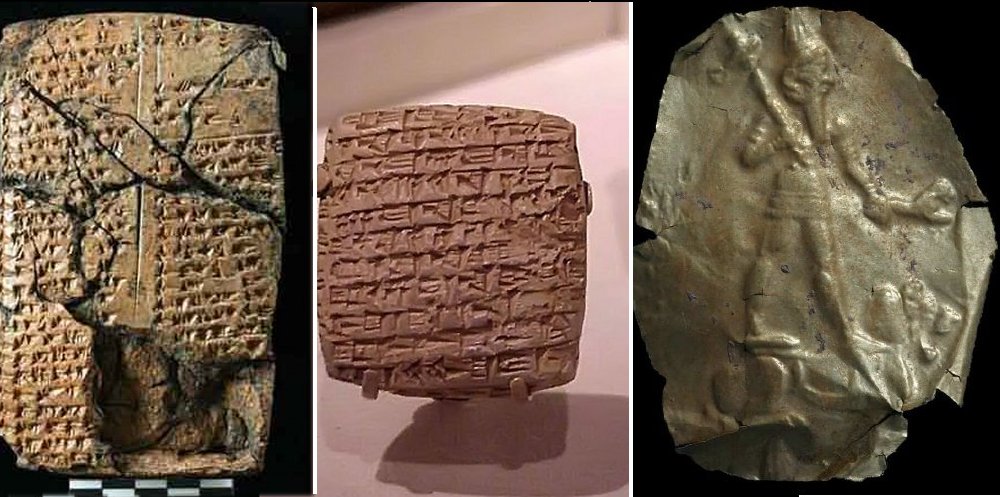
Left: Clay tablets discovered at Kültepe; Right: A Hittite God from Kültepe
These are the earliest written documents that illustrated ancient Anatolian history. Life, society, and economy at this site, even the family affairs and personal relationships of its inhabitants, were recorded on clay tablets in the Old Assyrian dialect of the Akkadian language using the cuneiform (wedge-shaped) script, the knowledge of which came into Anatolia with Assyrian merchants.
Unlike royal or temple archives discovered in other ancient centers, the cuneiform archives of Kültepe-Kanesh represent the single largest body of private texts in the ancient Near East. They were kept in archive rooms, neatly arranged inside clay vessels, wooden chests, wicker baskets, or sacks.
Ancient City Of Kültepe Was Destroyed By Fire
The fire which eventually destroyed the city must have started suddenly; as the excavations revealed many documents were still in their envelopes before the merchants could dispatch their recently written letters or open those newly received. The inhabitants left most of their possessions behind to be found by modern archaeologists.
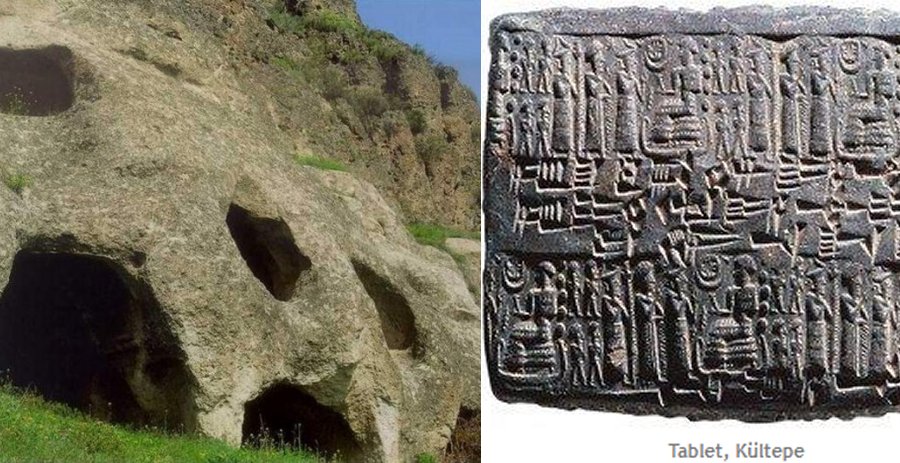
Kültepe - historically very important site - has been successfully excavated since 1948 and still, new excavation works are organized on the Kültepe Kaniş/Karum mound that can shed light on ancient and the very early stages of trade in the region. At present most works focus on the Hittite palace at Kültepe and its surroundings.
The main goal for researchers is to investigate the first eras when the trade started 6,000-7,000 years ago in Kültepe.
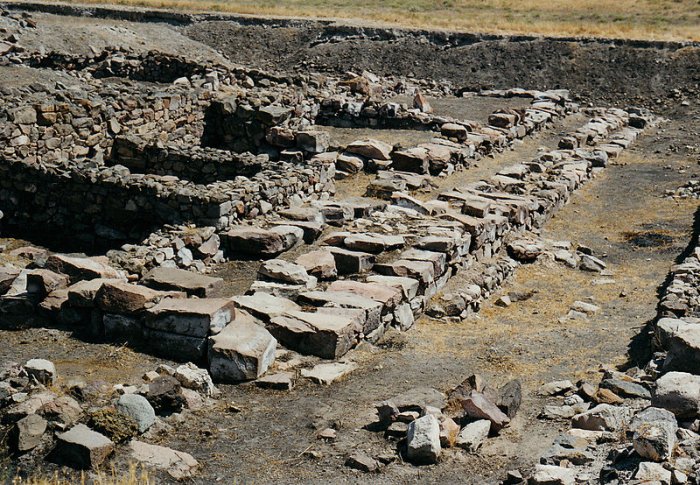
Hittite palace at Kültepe by Klaus-Peter Simon
The trade hub in this region was crucial for Anatolia for the Middle East as well. In the meantime, the works concentrate on the area dated to 4,500 years ago with the remains of a furnace from 4,500 years ago and also some pieces of an idol made of marble and known as the Kültepe Idol.
Several such idols were unearthed inside the sanctuaries in the palace and in neighboring places inhabited by upper-class people and also lower-class people.
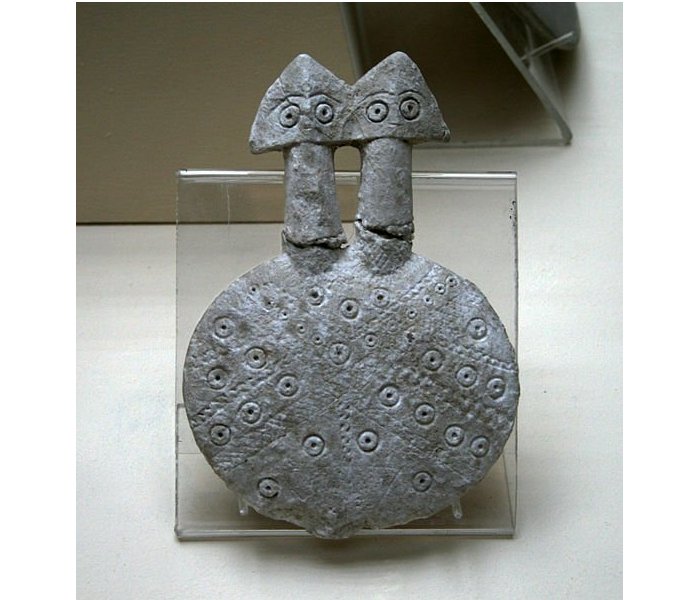
Kültepe Idol. A two-headed mother goddess figurine from Kültepe, an archaeological site in Turkey. This figurine is part of a larger group of flat marble goddess figurines found in Kültepe. Artifact located at the Museum of Anatolian Civilizations, Turkey. Image credit: Noumenon.
The region of Kültepe is a very old place with a history going back millennia and many archaeological findings attest to this history.
The place was inhabited continuously from the Chalcolithic to Roman times, and flourished as an important Hattic center, Hittite and Hurrian city, containing a large merchant colony dated to the Old Assyrian Empire from ca. 21st to 18th centuries BC.
It is a very old place. Today, Kültepe is an archaeological site, about 20 km southwest from the center of Kayseri. Once, it was the capital of the ancient Kingdom of Kanesh, a residental area of indigenous people, and its market place Karum was established in 1950-1650 B.C. by Assyrian colonies. A part of Karum was inhabited by both foreign and native traders who conducted their business.
Kültepe's geographical location contributed much to the place's flourishing period by the end of 3,000 BC to the first quarter of 2,000 BC. Kültepe's culture, politics, and trade thrived between Anatolia, Syria, and Mesopotamia. Today’s Kültepe was established by Hittites in 2000 BC.
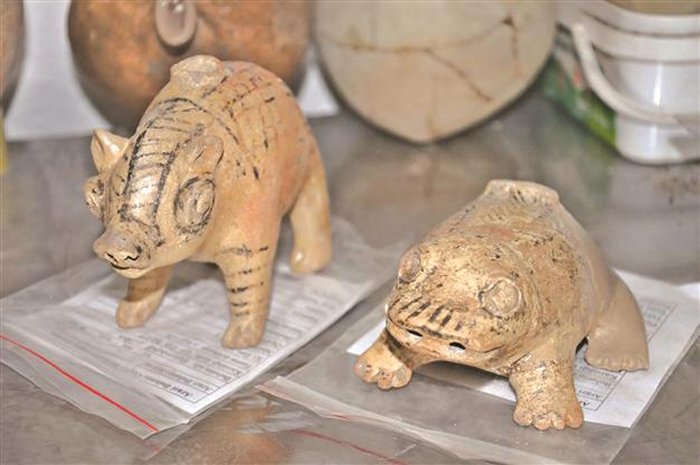
Artifacts from Kültepe. Image credit: Hurriyet Daily News
Thousands of clay tablets mention seventeen local city-kings who rose up against the famous Naram-Sin of Akkad (ruled c.2254-2218 BC).
It is the site of the discovery of the earliest traces of the Hittite language, and the earliest attestation of any Indo-European language, dated to the 20th century BC. Other tablets mention the conquest of the city of Assur by the kings of Eshnunna, the fall of Assur, and Hammurabi of Babylon.
Written by – A. Sutherland - AncientPages.com Senior Staff Writer
Copyright © AncientPages.com All rights reserved. This material may not be published, broadcast, rewritten or redistributed in whole or part without the express written permission of AncientPages.com
Expand for referencesMore From Ancient Pages
-
 ‘Bone Biographies’ Reveal Lives Of Medieval England’s Common People And Illuminate Early Benefits System
-
 Pi-Ramesse: Pharaoh Ramesses II’s Great Capital Surprisingly Identified In Two Locations
-
 Atlit Yam – Fate Of The 9,000-Year-Old Underwater Megalithic Site With A Huge Stone Circle
-
 Another Franklin Expedition Crew Member Identified
-
 Controversial Ancient Takenouchi Documents Could-Re-Write Our History – Story Of Gods, Lost Continents And Ancient Sages
-
 Why Is La Ferrassie Man A Unique And Famous Neanderthal?
-
 Gigantic Bird Ziz Is One Of Participants At Messianic Banquet At The End Of Days In Jewish Folklore
-
 82 Mysterious 3,000-Year-Old Pits Discovered In Sweden – Bronze Age Cooking Pits And Ancient Ceremonial Center?
-
 Lost Ancient City And Its People Who Vanished Without A Trace In The Western U.S. – An Archaeological Mystery
-
 Ancient Egypt: The Eldest Sons Traditionally Held Significant Power And Authority – New Study
-
 California’s Mysterious Ancient Wisdom Teacher And His Puzzling Connection To The Stars
-
 Evidence For A Divergence Between Eastern And Western Mediterranean Indo-European Languages Finally Provided By Ancient Genomics Study
-
 ‘Venus of Willendorf’: New Theory On ‘Venus’ Figurines – Proposed
-
 Sodré Astrolabe, Found On Portuguese Armada Shipwreck Is The Oldest In The World
-
 Mystery Of Ancient Carved Shiva Lingas In India And Cambodia
-
 Evolution Puzzle – Broken Hill Skull And Homo Heidelbergensis Cast Doubt Over Modern Human Ancestry
-
 Strange Community Rules Of Essenes Preserved In The Dead Sea Scrolls
-
 Burial Of Queen Of Emma Of Normandy Discovered In Winchester Castle
-
 Eikthyrnir – Mythical Male Deer And Heidrun She-Goat Stand On The Top Of Valhalla
-
 On This Day In History: Canute Lavard Was Murdered By His Cousin, Magnus I Of Sweden – On Jan 7, 1131

