Conny Waters - AncientPages.com - In 480, Roman officials in western Asia Minor engaged in tax fraud for over a decade, leading to the introduction of the death penalty for this offense.
Today, an international team, including researchers from the University of Warsaw, is deciphering new fragments of an ancient inscription that illuminate this historical scandal. These findings enhance our understanding of ancient corruption and the period's craftsmanship.
Ancient Roman history often focuses on emperors and generals, but the daily lives of ordinary people, particularly regarding taxation, are equally compelling. Tax fraud did occur, yet ordinary citizens sometimes had influential advocates.
These stories have survived through stone inscriptions, which were common in the Roman Empire. Carving text in stone reinforced messages and highlighted the authority of the empire and its officials.
These inscriptions enable researchers to reconstruct both the content of ancient decrees and the methods of their preparation and distribution. Dr. Pawel Nowakowski from the Faculty of History at the University of Warsaw is among those studying this subject.
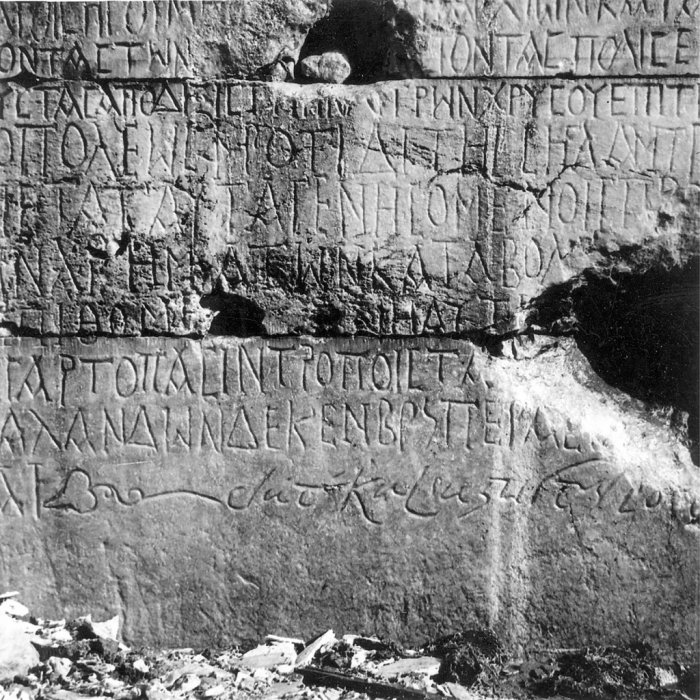
This is an archival photo showing a copy of the Mylasa inscription from the Louis Robert archives, provided by Prof. Denis Feissel. Credit: University of Warsaw
As part of the European Research Council-funded STONE-MASTERS project, he investigates ancient stonemasonry and the development of epigraphic cultures in Late Antiquity. His recent discovery contributes to our knowledge of the Late Roman Empire’s administrative practices.
Secrets Of The Stone Inscriptions
Epigraphy is the study of ancient inscriptions, involving the careful reading and analysis of texts preserved on stone and other materials.
In 2024, archaeologists in western Turkey discovered new inscription fragments. These were first believed to be a verse inscription on a local dignitary’s tombstone. However, Dr. Pawel Nowakowski and Prof. Mustafa Adak (Akdeniz University, Antalya) identified a more significant find.
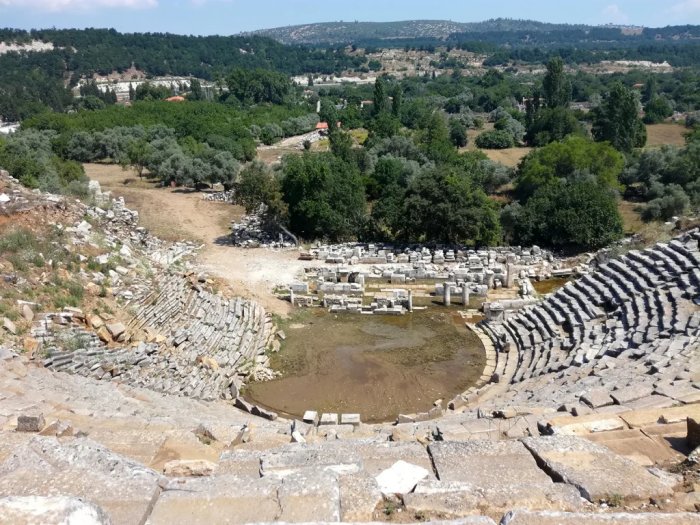
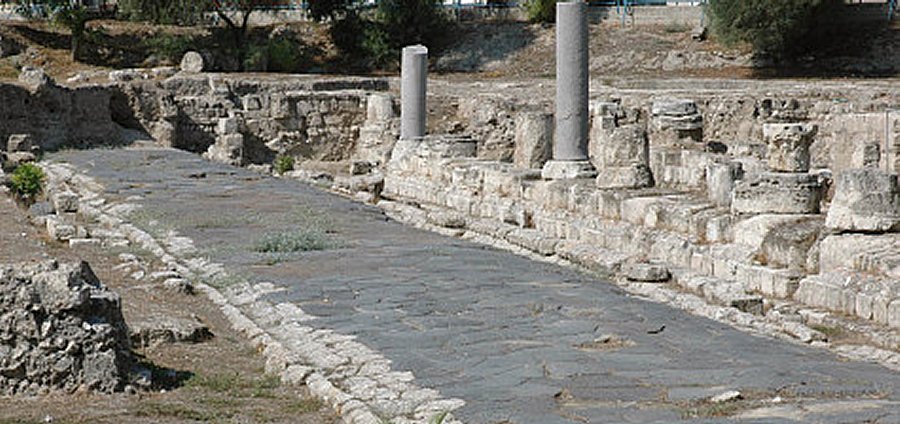
Stratoniceia in Caria. Photo by Dr. Paweł Nowakowski - University of Warsaw
"We were asked to examine several new text fragments discovered in 2024 by Professor Bilal Sögüt's team. Initially, we believed these were parts of a verse inscription, possibly a poem commemorating a deceased local dignitary or official. However, after a brief review, we realized it was an entirely different text," says Dr. Nowakowski.
Researchers analyze photographs of stone inscriptions and decipher individual letters. They enter the transcribed phrases into specialized digital databases to identify connections with known documents. If no matches are found, they rely on their expertise.
“Most of this text was already known thanks to several copies that were preserved both in Stratonicea, where our new fragments come from, and in two other cities: Mylas and Keramos,” explains the scientist.
The scientists matched the new Stratonicea fragments with texts found and analyzed in other cities since the 18th century. They identified these as missing sections of a legal decision issued in 480 by the Praetorian Prefect of the East, formally in conjunction with two other prefects.
An Ancient Tax Scandal
Recent research has revealed additional details about the ancient tax scandal. Newly discovered fragments expand the documentation of tax abuses on the estates of Placidia, daughter of Emperor Valentinian III.
"The text has attracted scholarly attention since the 18th century, following its first publication by Richard Pococke. It offers valuable insight into the management of the Roman Empire in late antiquity, especially regarding financial practices, the administration of imperial estates, and provincial governance.
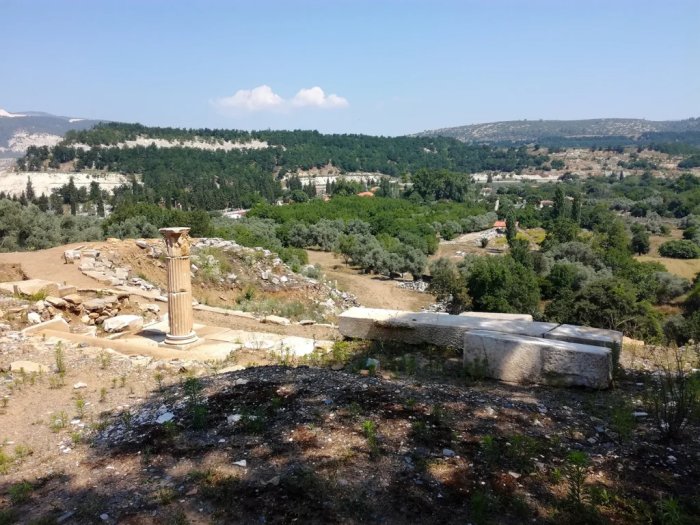
Stratoniceia in Caria. Photo by Dr. Paweł Nowakowski - University of Warsaw
The document addresses tax abuses in western Asia Minor. Officials responsible for tax collection engaged in unethical practices by issuing certificates of payment without specifying the amount or the unit of payment. They likely reported lower amounts to Constantinople while collecting higher sums from the local population, keeping the difference for themselves," the researcher says.
A Long-Term Practice
The first complaints about this issue reached the Roman central authorities around 465, prompting intervention by the praetorian prefect at that time. However, his instructions were ignored by corrupt officials. In 480, the praetorian prefect of the East, Flavius Illus Pusaeus Dionysius, imposed the harshest punishment.
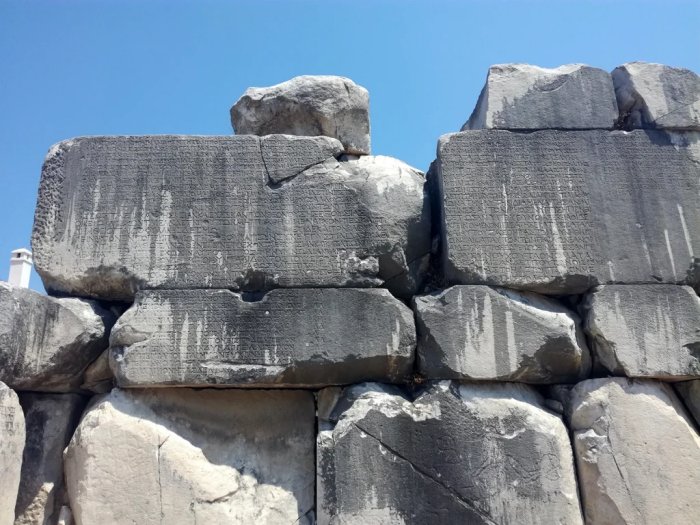
Similar inscriptions on the walls of the ancient city council building in Stratonicea. Photo by Dr. Paweł Nowakowski - University of Warsaw
He sent a special envoy to the region, warning that failure to resolve the issue within four months would result in the envoy's property being seized. The fraudsters themselves faced the death penalty, a rare measure in tax law. Between the 4th and 6th centuries, emperors and officials issued at least 11 other documents requiring proper issuance of tax certificates, indicating widespread abuse. However, only this case mentions the death penalty; others imposed heavy financial penalties. Only Justinian permitted torture or amputation of a hand, but not execution for tax offenses.
"I believe this reflects not only the seriousness of the offense, but also defiance of imperial authority, which could be seen as rebellion or lese-majesty. This explains the unusually severe punishment of death for those committing similar acts on imperial property. It may also have served as a rhetorical device to underscore the issue's importance.
Roman legal practice includes laws and penalties that were never enforced, intended only to highlight the legislator's intent. Additionally, governors and city defenders faced a fine of three pounds of gold if they continued to ignore these abuses. Notably, we know the identity of the praetorian prefect, and it is possible he did not live to see the matter resolved by his envoy.
The document was issued on August 1, 480, with a resolution deadline of December 1, 480. That same year, the prefect was sentenced to death for conspiring against Emperor Zeno. However, we can conclude that the envoy arrived and fulfilled his assignment, as evidenced by the inscription publishing the prefect's decision," the researcher explains.
The Difficult Work Of Stonemasons
Research also highlights the role of craftsmen. Stonemasons were not merely copyists; they influenced the final text of inscriptions. Variations in surviving copies show they sometimes altered word order and modified sentences.
"Thanks to this text, we gain insight into how such documents were published by the office of the praetorian prefect. Some sections in the new fragments differ from those in the Mylasa fragments, indicating a degree of local autonomy. The stonemason carving the inscription, or those preparing the initial copy on papyrus or parchment, could adjust word order or, in some cases, replace entire sections of sentences. This demonstrates that legal texts did not function as immutable law, as they do today. When we publish a document, such as a parliamentary act, the text must remain unchanged; we cannot arbitrarily alter its sections. This was an interesting conclusion," says Dr. Nowakowski.
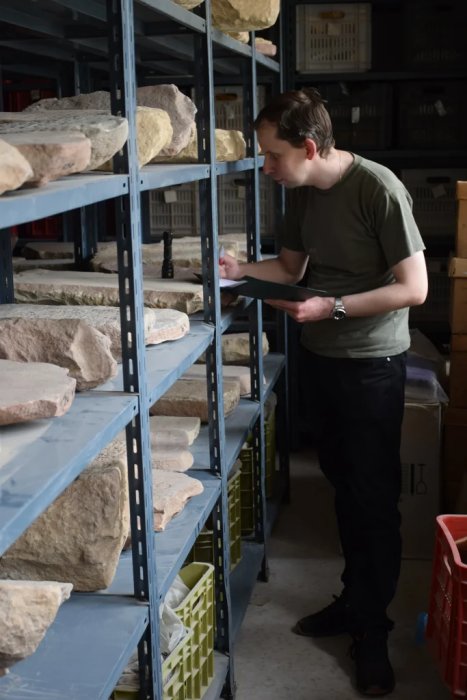
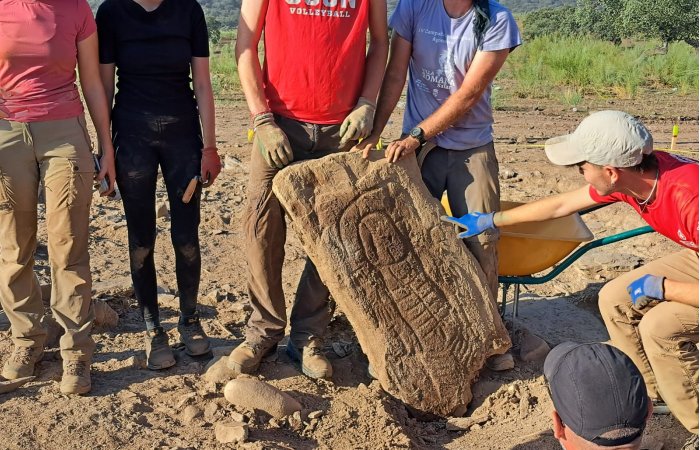
Dr. Pawel Nowakowski took part in fieldwork in Ghor es-Safi, Jordan. This work was part of a project led by Dr. hab. Dagmara Wielgosz-Rondolino from the Faculty of Archaeology at the University of Warsaw.
Ancient craftsmen demonstrated exceptional skill. At the bottom of the Greek inscription, they meticulously reproduced the Latin handwritten dating formula, creating a carved facsimile that faithfully matched the original. The main text appears in monumental script, which varied by city. As a result, there was no standard lettering pattern for publishing similar legal acts, and decisions about their display and visual form were made locally, reflecting the traditions of local craftsmen.
Priceless inscribed stones have often been handled without proper respect. Today, remnants of ancient monuments are sometimes found in unexpected locations.
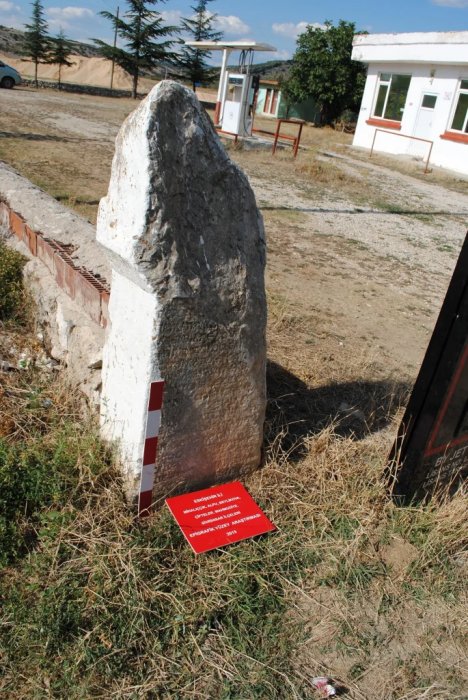
An inscription with a quote from the Odyssey (" What adventures and hardships he experienced! What sorrows he endured on the seas " in Siemieński's translation) from a gas station in Özdenk, Alpu District, brought there from Ayvalı (a village in Belkese). Photo by Dr. Hale Güney
One such inscription was discovered embedded in a pillar at a gas station in Turkey. The owner used the ancient tombstone as a decorative element for a gas pump. The stone featured an epitaph quoting the Odyssey.
See also: More Archaeology News
"Sometimes, unfortunately, a text that was already known appears as new because it was lost for some time, and then a specific stone is later rediscovered. Discovered stones usually remain in place.
In the 19th century, travelers who documented them often could not take them, so their fate varied. Many were used in new construction, to decorate properties, or even ordinary houses. Recently, I worked with a friend from Turkey on a stone for a gas station's decor. It was originally at an archaeological site, but the station owner decided to use it as decoration. They transported it by van, and now it decorates their business," says the researcher.
Source: University of Warsaw
Written by Conny Waters - AncientPages.com Staff Writer