
Vikings’ Hideouts, Harbours And Homes: How Norse Warriors Owed Their Success To Their Encampments
AncientPages.com - For many years, archaeologists and historians have provided an increasingly informed insight into the dynamic world of the vikings, chipping away at the clichés of a crazed, capricious people preoccupied with beards and bloodshed. One particular approach to understanding viking activity has been to study the encampments they set up along the coasts and rivers of western Europe, allowing them to substitute their ships for a fixed, onshore position whenever cold, fatigue, hunger, or other conditions compelled them to.
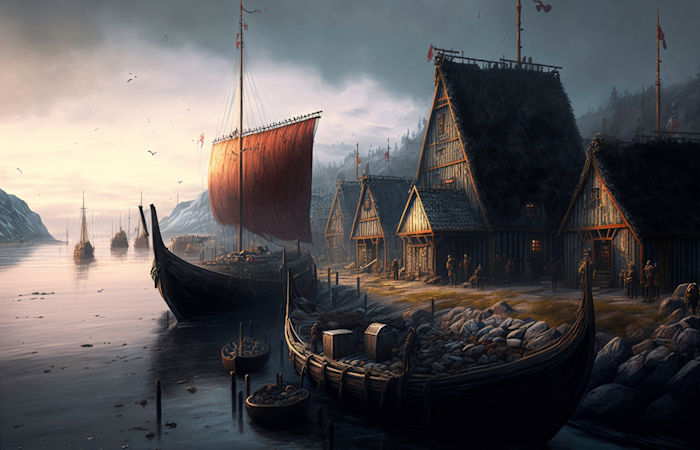
Credit: Adobe Stock - Hilde Jordbruen
Often called “winter camps” or longphuirt, more than 100 of these sites were witnessed across the Atlantic archipelago and European mainland during the ninth century alone, and their tangible remains have been uncovered in places like Repton and Torksey in England, and Woodstown in Ireland. Most recently, potential Viking encampments have also been pointed to near Zutphen in the Netherlands, as well as the Coquet Valley in Northumbria.
But where these camps have often been considered for their wider strategic roles, much less time has been spent on their everyday, practical planning and operation. New research, tying these different strands of evidence together, now reveals a far more intricate image of camp logistics, challenging notions of vikings simply waiting out the winter behind their walls in the company of their peers and plunder.
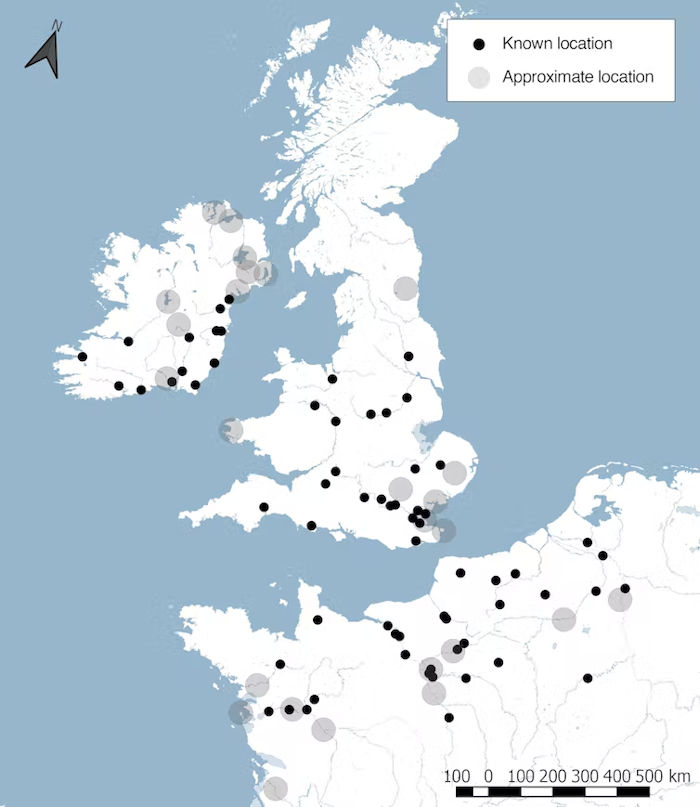
Locations of ninth-century viking camps, as found in written sources from the period. Christian Cooijmans; base map by AWMC, UNC-Chapel Hill
Safe havens
No two viking camps would have been the same, and could have lasted anywhere from just a few hours to many months or even years.
Established in hostile environments, many used islands, wetlands, and other naturally defended positions to their advantage. Others took over prior man-made structures: on the Continent, for example, the Carolingian palace at Nijmegen was commandeered by vikings in 880, only for its new occupants to set fire to it the following year. Where needed, vikings would also have built their own ramparts, as seen in Repton, where the abbey church of St. Wystan seems to have been incorporated into a new perimeter wall as a makeshift gatehouse.
But protection from attack would have only been half the battle, as the continued safety of any local food stores, livestock, and non-combatants would have been just as important to the sustainability of any such camp.

Excavation work at the encampment site of Woodstown (Co. Waterford, Ireland). Local investigations took place between 2003 and 2007. Studio Lab/NRA/ACSU
Eating local
Like any armed force, viking groups required steady, reliable sources of food and water to keep their encampments viable. Under the looming spectre of starvation and malnutrition, they diversified their methods of obtaining provisions as much as possible. As well as hunting, fishing, and foraging around the camps, evidence exists that they raised crops and tended cattle themselves.
Less unexpectedly, vikings also obtained their food through violence – or the threat thereof. Those camped outside Paris in 885-886, for example, were seen carrying off harvests and herds, while others received large amounts of flour, livestock, wine, and cider as part of regional tribute payments.
Back at the camp, this food would have needed to be prepared for consumption and storage. Accordingly, quern-stones – used to grind grain into flour – have been recovered from viking bases in both England and Ireland, and a proposed encampment at Péran in Brittany has produced several iron cauldrons and other cooking vessels. Written records also describe vikings feasting on meat and wine within the confines of their camps.
Hustle and bustle
Beyond the basics of protecting and feeding themselves, vikings engaged in a wide range of camp-bound activities, with shelters, stables, and workshops being built; ships being mended; and weapons, ornaments, and other items being crafted. To support these ongoing efforts, a steady stream of resources – including wood, stone, and (precious) metals – would have had to make its way into the camps.
Venues like these may not have been completely off-limits to outsiders, and may have even provided valuable opportunities to trade. The ninth-century Annals of St Bertin, for example, describe how vikings sought to “hold a market” on an island in the River Loire (now France). Shortly after, the Annals of Fulda also point to Frankish soldiers setting foot inside a viking camp on the River Meuse (now the Netherlands) – not to fight, but to trade. Physical traces of such commerce – including coins, silver bullion and trade weights – have been found at sites such as Torksey and Woodstown.
As well as offering vikings yet another way to obtain their supplies, occasions like these may have allowed items that were previously stolen or extorted to be returned to circulation.

A silver hoard found on the former island of Wieringen (North Holland, Netherlands), thought to indicate an established local viking presence. National Museum of Antiquities, Leiden
A place for everything
All in all, viking camps were by no means dormant or disorganised, and doubled as command posts, armouries, treasuries, granaries, prisons, workshops, markets, harbours, and homes. Hosting diverse and dynamic communities of dozens, hundreds, or at times even thousands of people, some provided support to regional viking groups well beyond the span of a single winter.
To keep camps like these up and running would have been no small feat, relying on levels of planning and discipline not commonly associated with viking activity. As a result, the success of the encampments provides a key insight into a wider viking phenomenon that was neither arbitrary nor aimless as it made landfall across western Europe.
Written by Christian Cooijmans, British Academy Postdoctoral Fellow, University of Liverpool
Provided by The Conversation
This article is republished from The Conversation under a Creative Commons license. Read the original article.
More From Ancient Pages
-
 Magnificent Large Viking Age Silver Treasure Found By Metal Detectorist On Engeløya, Norway
-
 Unexplained Historical Sighting And Archaeological Discovery Reported In Alberta By Police Officer
-
 Frightening Ancient Underground World Discovered In Tibet – Evidence Of A Lost Advanced Civilization?
-
 Bacabs: Four Atlantean Gods Were Giants And Sons Of Itzámna, Maya God Of Heaven And The Sun
-
 New Clues About The Kensington Runestone Rewrite Ancient History But One Mystery Remains
-
 Drinking Horn: Important Yule Symbol And Its Connection To Biblical Magi And Christmas
-
 Rhetorica ad Herennium: Ancient Book That Improves Your Memory Using Method Of Loci – You Can Test It Easily
-
 Svarog: God Of Cosmic Fire And Ruler Of The Sky In Pre-Christian Slavic Pantheon
-
 Author’s Encounter With A Mysterious Not Of This World Entity Inside Callixtus Catacombs
-
 Chalchihuitlicue: Beautiful, Dangerous, Changeable And Unpredictable Water Goddess In Aztec Mythology
-
 Frightening Hockomock Swamp: Unexplained Vanishings, Encounters With Unknown Creatures, And Ancient Mysteries
-
 Ancient Dragons And Dragon Kings In Myths And Legends
-
 Did An Extraterrestrial Spacecraft Land In Ancient China? Remarkable UFO Accounts From The Past
-
 Termessos: City Where History And Mythology Marked People’s Daily Lives
-
 Cursed Magical Dainsleif Sword Of King Hogni And Legendary Battle That Continues Until The Coming Of Ragnarok
-
 Apollo Punished Rivals For Their Extraordinary Musical Skills
-
 Moses’ Secret Knowledge Of Superior And Forbidden Technology – Hundreds Of Chariots Hovering Over Sinai – Part 1
-
 Weird Archaeological Discovery In Ancient Scottish Cave – A Neolithic And Celtic Mystery
-
 Mysterious Tiahuanaco Empire Established By The Sons Of The Sun – An Unknown Chapter Of Prehistory
-
 Hammurabi: The Great King Of Babylon And His Laws

