
Enormous 2,500-Year-Old Marble Statue Discovered In The Ancient City Of Sardis
Conny Waters - AncientPages.com - Sardis in Türkiye has experienced frequent changes in rule, from the Greeks and Romans to the Ottoman Empire. Despite this, archaeological research at Sardis has remained consistent. As the former capital of the Iron Age Lydian Empire, Sardis was strategically located between the Mediterranean Sea and the Anatolian plateau.
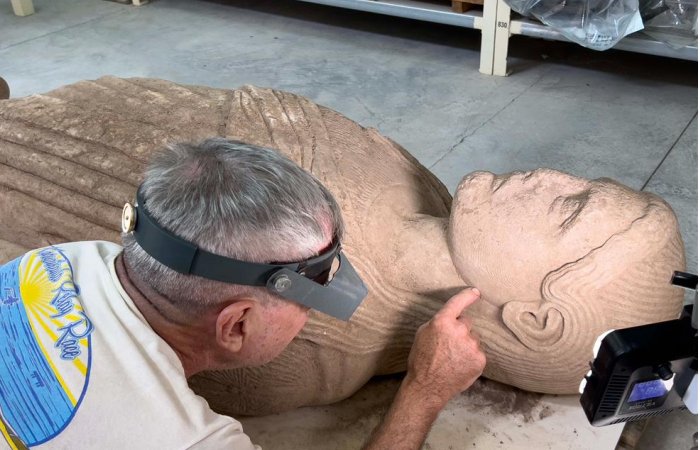
Credit: Turkish Ministry of Culture
The Lydian period is of particular interest to archaeologists and historians for its notable achievements. The Lydians are credited with inventing coinage, a major milestone in economic history. Their most renowned ruler, King Croesus, became legendary for his wealth. The Lydian Empire eventually fell to Alexander the Great, and in later centuries, Sardis became part of the Roman, Byzantine, and Ottoman empires.
Since 1958, systematic excavations at the site have yielded regular archaeological discoveries.
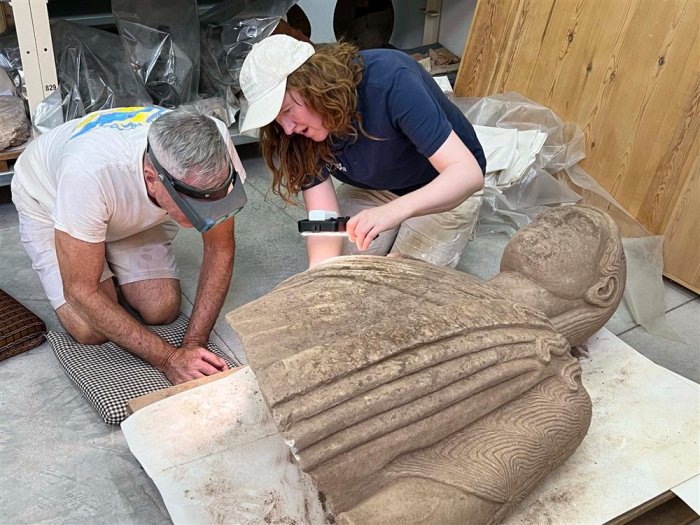
Credit: Turkish Ministry of Culture
A recent excavation uncovered a marble statue of a young man, dating back approximately 2,500 years. Officials have described this as one of the most significant recent discoveries in Anatolian archaeology.
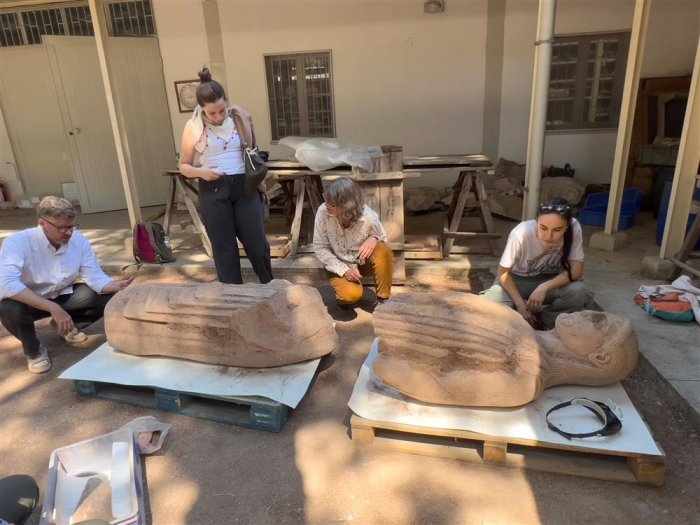
The 2.2-meter (7.2-foot) statue was found during ongoing excavations at the UNESCO World Heritage Site in Manisa's Salihli district, coordinated by Türkiye's General Directorate of Cultural Heritage and Museums.
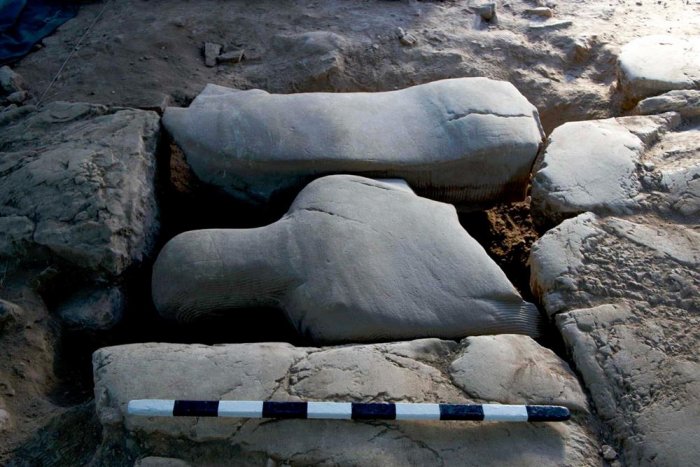
Credit: Turkish Ministry of Culture
Culture and Tourism Minister Mehmet Nuri Ersoy announced the discovery on social media, stating that the statue dates to the first half of the fifth century B.C. and is a rare surviving example of monumental sculpture from the period due to its exceptional preservation and craftsmanship.
The statue was found in two large pieces, with its feet and several smaller fragments missing. Researchers believe it originally stood as a monumental sculpture before being repurposed as paving material in the city's colonnaded street during the Roman period.
Officials noted that its face-down placement in the pavement helped preserve its facial features and fine details for centuries.
According to the Ministry of Culture and Tourism, stylistic analysis dates the sculpture to between 470 and 450 B.C.
Although the upright stance and long hair resemble sixth-century B.C. sculptures, the facial features, hand anatomy, and overall execution indicate an early fifth-century B.C. origin.
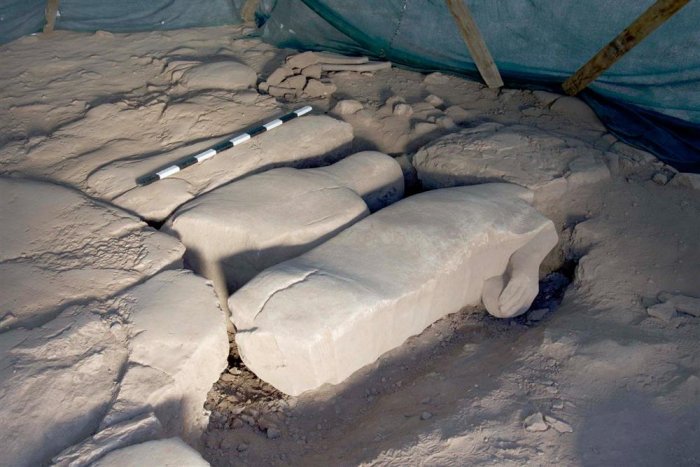
Credit: Turkish Ministry of Culture
The figure is dressed in a thick himation over a thin chiton, with an additional garment beneath featuring horizontal bands. Archaeologists note that this unique combination is not seen on similar statues from Anatolia or Greece, emphasizing the statue's local character and strong ties to Lydian culture.
The man holds a fruit in his right hand, likely intended as a votive offering to a deity. Researchers believe it may be a quince.
The statue dates to a period when Sardis served as the satrapal capital of the western province of the Achaemenid Empire.
Scholars consider the sculpture significant because it merges the developing Classical artistic tradition of the Aegean with distinctive Lydian clothing and visual culture, providing rare insight into the identity of the city's elite in the early fifth century B.C.
Credit: Turkish Ministry of Culture
Large, well-preserved marble statues from this period are rare in the Mediterranean, making this discovery especially important for Anatolian archaeology.
Researchers expect this find to offer new insights into the beliefs, daily life, and cultural interactions of Sardis' upper classes during the Persian period.
Credit: Turkish Ministry of Culture
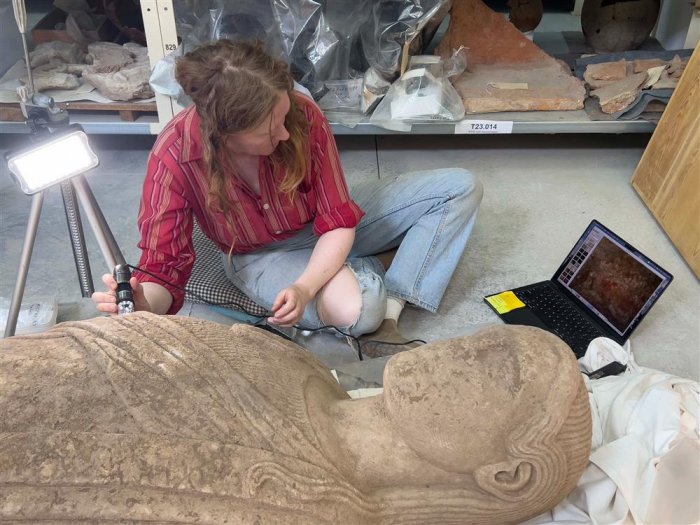
Although most marble sculptures in antiquity were originally painted, surviving pigments are often extremely fragile.
See also: More Archaeology News
The Sardis statue is coated with thick mineral deposits from centuries underground. Conservation specialists will conduct a careful scientific cleaning to preserve any remaining pigment.
Experts in ancient polychrome sculpture will also examine both the statue's surface and surrounding soil for traces of original paint.
Following conservation, scientific analysis and restoration, the statue will go on public display at the Manisa Museum, the ministry said.
Source: Daily Sabah and Turkish Ministry of Culture
Written by Conny Waters - AncientPages.com Staff Writer
More From Ancient Pages
-
 Vast Paleogenetic Study Reveals Insights On Migration, Farming And Language Development Across The Southern Arc
-
 Major Discovery Of 15,000-Year-Old Artifacts Could Re-Write History Of Peru
-
 Never-Before-Seen Ancient Texts Hidden In Saint Catherine’s Monastery In Sinai Are Now Available Online
-
 Bronze Age Long-Distance Connections: Baltic Amber In Aššur
-
 Modern Humans Did Not Enter Europe By Sea – New Study Says
-
 Human Sacrifice at Cahokia: Victims Were Locals, Not ‘Foreign’ Captives
-
 Evidence Europeans Made Leather Clothing 40,000 Years Ago – New Study
-
 Ancient DNA Reveals African And Asian Ancestry Of Medieval Swahili People
-
 Can Baboons Solve The Ancient Mystery Of Punt?
-
 Unique Finds Discovered In Oman – Rub’al-Chali Desert Reveals Its Secrets
-
 Hidden Ancient Underground Tomb Discovered In Petra May Solve The Mystery Of The Nabataean Kingdom
-
 Long-Lost Burial Site Of Viking King Harald Bluetooth Discovered By Satellites?
-
 Astronomically Aligned Pyramidal Buildings Of America’s Oldest City Reveal How Its Builders Apprehended Space And Time
-
 What Can Medieval Skeletons Tell Us About Modern Day Pandemics
-
 Ancient DNA Yields Surprising Findings On World’s Earliest Seafarers
-
 2,300-Year-Old Tablet Found In Mugla, Turkey – Region Of Great Historical Importance In Ancient Times
-
 Sandstone Relief Of The Roman Goddess Of Victory Found At Vindolanda On Hadrian’s Wall
-
 Remarkably Well-Preserved 1,900-Year-Old Chinese Bronze Mirror Unearthed In Japan
-
 Paleolithic Standing Bird Figurine – East Asian 3-D Art – Recovered From Refuse Heap
-
 Mystery Of Gigantic Lion Sculptures Dated To The Hittite Era

