
Ancient City Empuries (Emporiae) With Best Greek Ruins Located Outside Of Greece
A. Sutherland - AncientPages.com - The 2,500-year-old Empuries (also Emporiae) site on the Costa Brava was built in 575 BC. It was a Greek and, later, a Roman colony located on the northeastern coast of Spain.
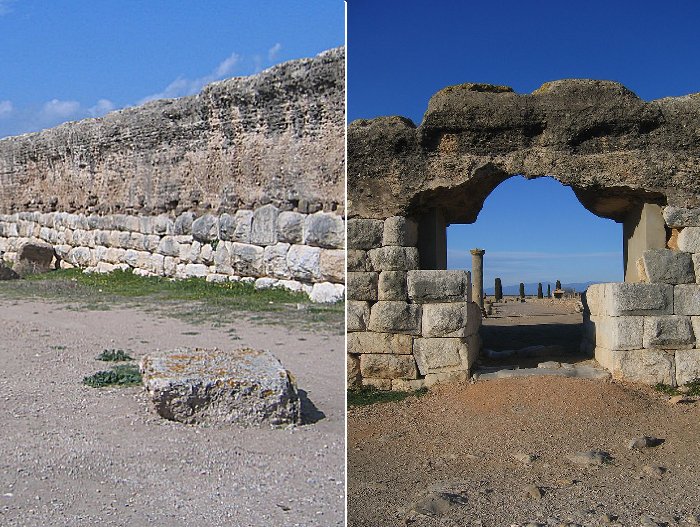
Left: Emporiae - Remains of the Roman wall in the ancient city. Image credit: David Mateos García - CC BY 2.0; Right: Roman gate wall in the city of Empuriae, founded in 575 BC. Image credit: Marta A A - CC BY-SA 3.0.
The city of Emporiae, was founded in 575 BC by Ionian Greek colonists from Phocaea (Phocaia) under the name 'Emporion, which means 'market.' It developed under the strong influence of the two most prominent cultures of the ancient world: Greek and Roman.
However, the site is considered the home of the best ancient Greek ruins located outside of Greece.
Recently, Spanish archaeologists unearthed the remains of a large temple in Catalonia, northeast of Spain. The discovered structure was, according to researchers, used for worship approximately 2,500 years ago. The temple was dedicated to Demeter, the Greek goddess of fertility and fertility.
She was the goddess of agriculture and mother to the goddess Persephone, a daughter of Zeus. She provided nutrition to everyone on earth – and, to help man, introduced him to wheat.
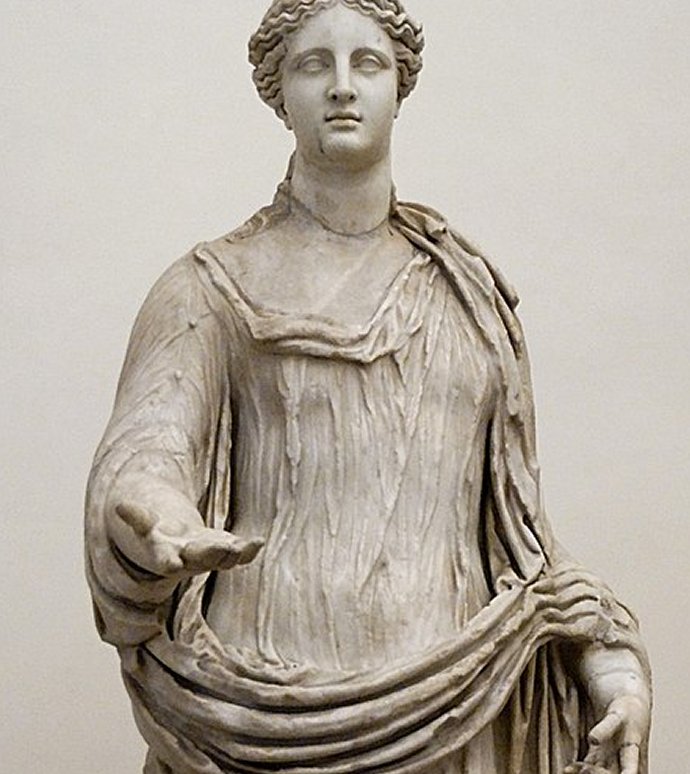
Demeter. Coarse-grained marble, Roman artwork; the head is a modern restoration. Image credit: Marie-Lan Nguyen - CC BY 2.5
The temple – probably built in the 6th century BC - was rebuilt several times. The building functioned until at least the 3rd century BC, thanks to these preservations.
Although now in ruins, it was once an essential part of the ancient city of Emporiae, located on the Mediterranean coast of Catalonia, on the Costa Brava. In the beginning, the town was occupied by the ancient Greeks.
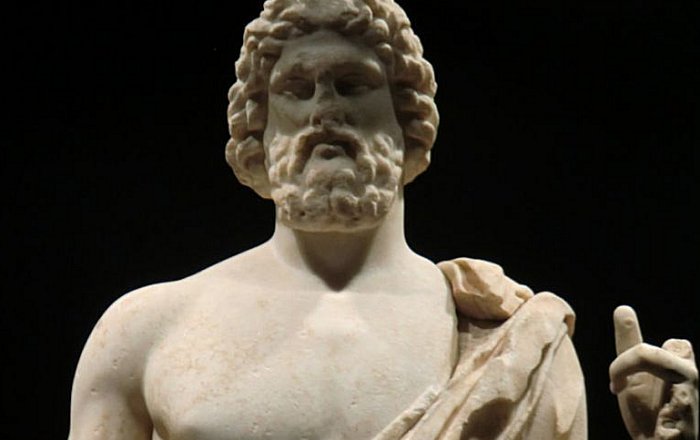
The Greek sculpture of Asclepius - dated to the 2nd century BC. Image credit: Museum of Archeology of Catalonia, Empúries.
This marble statue associated with the city of Empúries represents a male deity with a beard and cloak. His attributes are - according to tradition- identified with Asclepius, the Greek god of medicine. It was sculpted in two parts that fit together at the torso. It comes from a Hellenistic workshop in the eastern Mediterranean and would have arrived at the end of the 2nd century BC.
It is worth noting that the different parts of this particular statue were found, in Empúries, in 1909, on the upper terrace of the sanctuaries, located to the south of the Greek city.
The iconographic features of the statue, together with the fragments of the representation of a serpent found in the place, contributed much for researchers, who could identify it with the Greek god Asclepius, the Roman Aesculapius.
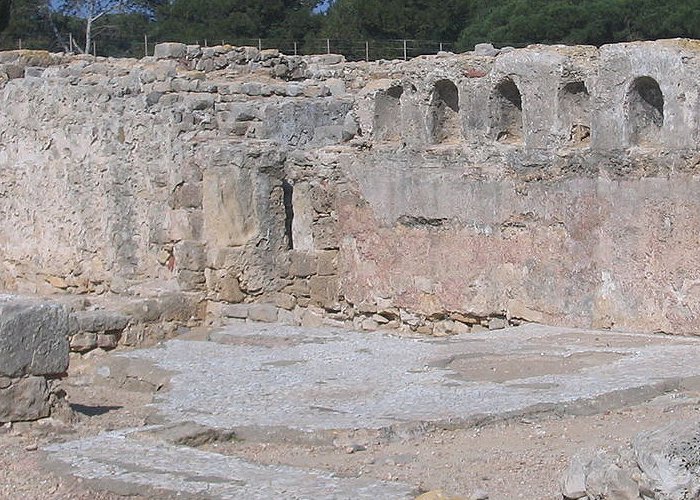
Paleochristian Basilica – Empúries. Image credit: CC BY 2.0
Later, Emporiae became more and more of a Roman city due to the early presence of the Romans and their troops that landed there in 219 BC. It was a historical event strongly connected with Hannibal's march toward Italy.
For the Roman troops conducting their operations in Spain, the city of Emporiae has become a vital transshipment point on the transport route from Italy. Under Emperor Julius Caesar, Emporiae gained the status of a Roman colony in 45 BC.
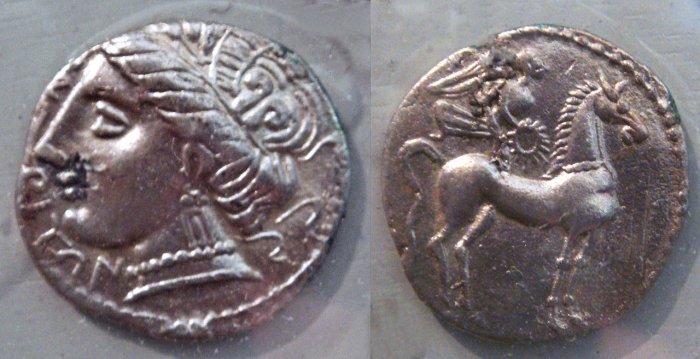
Emporiae coins, 5th-1st century BC. Image credit: PHGCOM - CC BY-SA 3.0
After a period of prosperity and uninterrupted development, about the 1st/2nd century AD, an economic collapse took place. A general crisis caused by the loss of the city's leading role on the Western trade route, certainly played an important role.
However, Emporiae continued as a more modest, walled settlement well into the early Christian period. From the 6th century, the city became the diocese's seat and later the local Principality's capital. The end of the ancient city had to come, so it happened.
It was caused at the beginning of the 8th century by the invasion of the Arabs. Sometime in the early Middle Ages, the city was abandoned due to its unprotected location for looting from the sea.
Today, Empuries is one of the important archaeological sites in Catalonia. Once, it was a crucial element of connection with other Mediterranean areas of the Iberian Peninsula.
The preserved remains shed light on the city's ancient past, which still has much to offer. Among many Greek and Roman ruins, there is a temple dedicated to the Hellenistic-Egyptian god, Serapis, and another one that honored Artemis of Ephesus).
Written by – A. Sutherland - AncientPages.com Senior Staff Writer
Copyright © AncientPages.com All rights reserved. This material may not be published, broadcast, rewritten or redistributed in whole or part without the express written permission of AncientPages.com
More From Ancient Pages
-
 Curious Ritual Wooden ‘Duho’ Stool Of Ancient Taino People
-
 DNA Reveals – One Of Sunken Warship Vasa’s Crewmen Was A Woman
-
 Caribbean Silk Cotton Tree And Its Dangerous Spirits In Myths And Legends
-
 New, Unique Wall Paintings Discovered In Old Dongola, Sudan
-
 On This Day In History: One Of The Tallest Women In History – Died – On August 5, 1888
-
 Lilith – Beautiful Demonic And Brave Symbol Of Equality And Adam’s First Wife Who Refused Subordination
-
 Mythical Biringan City – Invisible Portal To Another World Where Dangerous Engkantos Reside
-
 Why Did Vikings Burn And Bury Their Longhouses?
-
 Mysterious Ancient Rulers With Elongated Skulls – Who Were They Really?
-
 4,500-Year-Old Lost ‘Sun Temple’ Dedicated To God Ra Unearthed In Abu Gorab Necropolis
-
 Secrets Of The Scarab – Ancient Sacred Symbol In Human History
-
 Sir William Wallace: Brave Scottish Knight And Legendary Hero
-
 Man-Made Square Burial Cave Dated To Rameses II-Era Accidentally Found In Israel
-
 Intriguing Genetics: First Ancient Irish Human Genomes – Sequenced
-
 California’s Mysterious Ancient Wisdom Teacher And His Puzzling Connection To The Stars
-
 Examination Of Six 19th-Century Remarkable Dahomean Swords Crafted From Locally Smelted Iron
-
 Tazza Farnese (Farnese Cup) – Mysterious, Never Explained And Debated Ancient Gemstone
-
 Advanced Heating System Discovered In Ruins Of Metropolis ‘City Of Mother Goddess’
-
 5,000-Year-Old Bryn Celli Ddu Funeral Complex Reveals More Secrets
-
 World’s First Diva Was Livia – Wife Of Emperor Augustus

