
Mycenae Kingdom: Home To King Agamemnon And Tholos Tomb ‘Treasure of Atreus’
A. Sutherland - AncientPages.com - One of the greatest civilizations of Greek prehistory was the Mycenaean civilization, famous for its majestic architecture and monuments with a grand and impressive appearance.
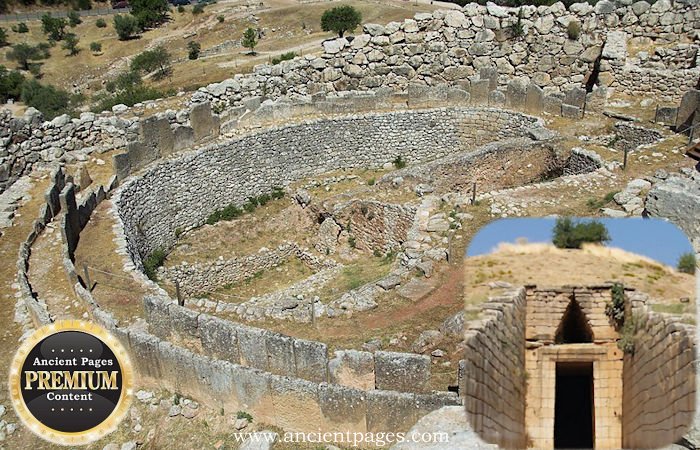
Mycenae, one of Greece's most significant archaeological sites, lies on the route between Nafplio and Corinth, approximately 90 km from Athens.
It was here that the so-called Mycenaean civilization originated, and the oldest known European script (Linear B) was developed. Another association with this famous ancient site is Agamemnon's golden funeral mask and the so-called Trojan War, when the local King Agamemnon of Mycenae set out against Troy.
When Menelaus's wife, Helen, was taken to Troy by Paris, Agamemnon commanded the united Greek armed forces in the ensuing Trojan War. His goal was to avenge his brother Menelaus. As we know, Helen was already married to King Menelaus of Sparta, so Paris had to raid Menelaus's house to steal Helen from him. However, according to some other accounts, this beautiful woman fell in love with Paris and left her husband willingly.

This is a preview of our premium article available only to members of Ancient Pages.
Become a member to read more - Click here
If you are already a member and have logged in to your account, you can access the article here

See also:
Terracina – Ancient City Where Mythology And History Meet
Kingdom Of Mitanni: Forgotten For Millennia But Once Great Power Of Ancient West Asia In 2000 BC
Ancient City Empuries (Emporiae) With Best Greek Ruins Located Outside Of Greece
More From Ancient Pages
-
 New Paintings And Details Uncovered In The Egyptian Temple Of Esna
-
 Vikings’ Hideouts, Harbours And Homes: How Norse Warriors Owed Their Success To Their Encampments
-
 3,000-Year-Old Fortress Built By The Mysterious Votadini Tribe Discovered On Top Of Arthur’s Seat
-
 Pytheas’s Voyage To The Arctic In 325 B.C. And Account Of Thule, The Strange Land Beyond
-
 Dangerous Anomaly Inside Mysterious European Mountain Remains Unexplained – Examining Evidence – Part 2
-
 Mystery Of The Faceless Creature – Ancient And Modern Sightings
-
 Seshat: Goddess of Astronomy Aligned Sacred Monuments To The Stars Long Before Imhotep
-
 Uruk – The Hero Gilgamesh’s City With A Sophisticated, Carefully, And Intentionally Planned Layout
-
 Forbidden Ancient Manuscripts Almost Erased From History – Secret Teachings Of Mysterious Founder – Part 1
-
 Mythical Norse Artifacts Discovered In Viking Graves Confirm Icelandic Sagas Once Again
-
 The Sumerian King Who Received A Divine Tablet With Secrets Of The Gods And Changed History Of Mesopotamia
-
 Mysterious People Who Appeared Out Of Nowhere
-
 Stele Of Tell al-Rimah And Deeds Of Assyrian King Adad-nirari Against Rebellious Kings
-
 Perchta: Evil Witch Of The Alps – An Old Tradition That Still Continues
-
 Prince Madoc In North America: New Evidence Or Persistent Myth?
-
 1,500-Year-Old Marble Slab With Inscription Found On East Coast Of Sea Of Galilee
-
 Mysterious Maya Teeth Cave Investigated By Archaeologists
-
 Sirens: The Secret Of The Power In Their Captivating Song That Heralded Death
-
 Evidence Scots And Irish Settled Iceland A Century Before The Vikings?
-
 Witch Of Endor – A Biblical Ghost Story Or A Woman With Supernatural Powers?

