
Ancient Burial Of Woman Equipped With A Unique Gold Pectoral Ornament Discovered In Siberian ‘Valley Of The Kings’
Conny Waters - AncientPages.com - The Siberian Valley of the Kings, on the Southern Siberian Steppe of the Russian Federation, is of great significance to archaeologists, who have made astounding findings in the region over the years.
In the Siberian valley, once inhabited by an ancient, long-lost civilization, excavations revealed numerous giant kurgan tombs, often filled with treasures believed to belong to royalty. The Scythians buried their dead in kurgans, some resembling hills visible from afar.
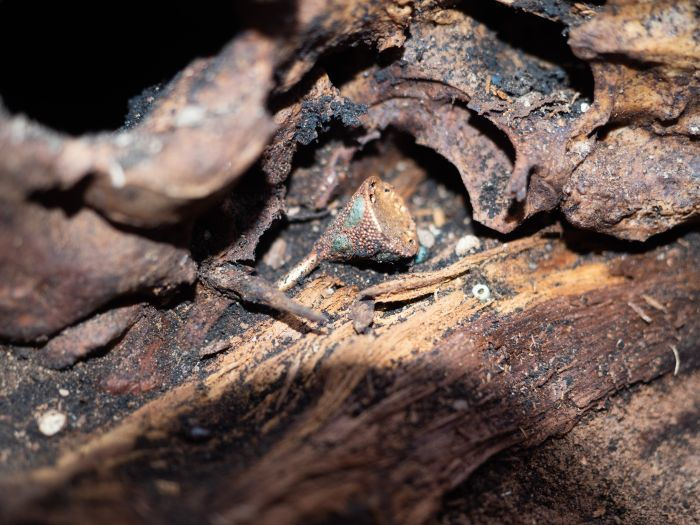
Credit: Igor Pienkos
Findings such as the untouched grave of a 2,500-year-old of a Scythian warrior have fascinated the world, but there are many more ancient treasures awaiting discovery.
From about 700 to 300 BC, a particular group of migratory peoples, known to the Greeks as the Scythians, suddenly appeared on the Eurasian steppes.
Some modern scholars suggest three theories to explain their sudden and mysterious appearance. Some believe they migrated there from the north, others from the east, or perhaps from the south. Archaeological discoveries help scientists to shed more light on this interesting ancient civilization.
While excavating in Chinge-Tey, in the Touran-Uyuk valley in northern Tuva, the so-called Siberian Valley of the Kings, archaeologists unearthed a woman's skeleton with a gold pectoral ornament and a bronze mirror inside a large barrow. 2.5 thousand years ago.
“Last year, Polish archaeologists from the Jagiellonian University in Kraków discovered two intriguing graves. The first of them was in the central part of a destroyed, almost completely flattened barrow, approximately 25 m in diameter. Almost invisible to the naked eye, it was detected by aerial laser scanning.

Credit: Igor Pienkos
The wooden burial chamber, built in the framework of solid beams, contained the remains of two bodies. The chamber itself was covered with three layers of beams. The floor was covered with planks. According to the researchers, the deceased was a woman who died at the age of approximately. 50 years old and a 2-to 3-year-old child.
Next to the remains of the woman, the researchers found gold ornaments, an iron knife, a bronze mirror, and a very well preserved wooden comb decorated with engraved ornament, “ Science in Poland reports.
Dr. Łukasz Oleszczak from the Jagiellonian University in Kraków and the head of the Polish expedition explained the gold pectoral ornament, a decoration hung at the neck in the shape of a sickle or crescent is particularly interesting.
According to Dr. Oleszczak, such jewelry has previously been found only in male burials. This is the first time scientists have unearthed a gold pectoral ornament in a female grave, which indicates the deceased woman must have held a significant position in society.
“'They were considered symbols of belonging to a social group, caste, perhaps warriors - in any case, men. Its presence it in the grave of a woman is a very interesting deviation from this custom. This certainly confirms the unique role of the deceased in the community of the ‘Siberian valley of the Kings', the archaeologist says.
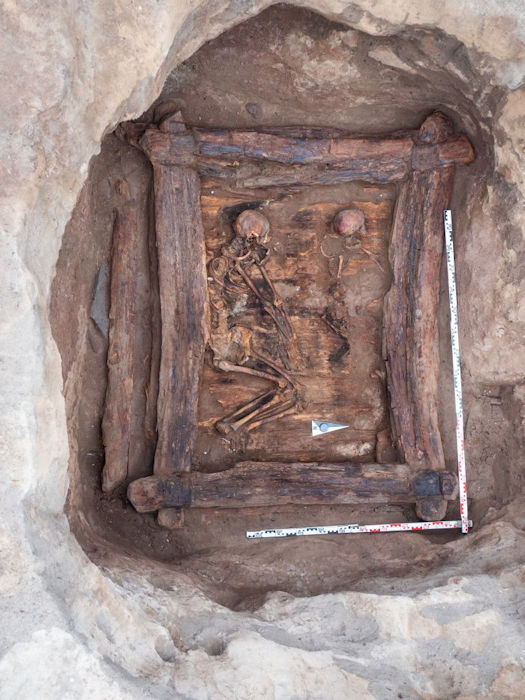
Credit: Igor Pienkos
He points out that the woman was buried in the central part of the tomb located in the immediate vicinity of the great barrow that, according to the researchers, belongs to a nomadic prince. 'It seems that, like the others buried in this barrow, she belonged to the prince's entourage, says Dr. Oleszczak.
As reported by Science in Poland, “He mentions the condition of the grave goods made from organic material. The researchers from Polish-Russian expedition had previously found arrow shafts, an ice axe handle, a piece of a quiver. The woman's grave contained a wooden comb connected with a leather loop to a mirror made of bronze. This set of cosmetic items was placed in the grave in a leather pouch.
The second grave discovered in the last season of excavation was located outside the ditch surrounding the barrow. It was the skeleton of a teenage child, placed in a small pit surrounded with stones. It did not contain any equipment.
'Graves of children on the perimeter or just outside the ditch surrounding the barrow are a typical part of the funeral rites of this early Scythian culture', adds Dr. Oleszczak.
The archaeologists also found evidence that a treasure trove of bronze objects was most likely deposited around the perimeter of the barrow at some point. Evidence of this is the discovery of tens of horse tack parts, a bronze ice axe, and an ornament in the form of a goat. They were located with a metal detector. According to Dr. Oleszczak, the treasure was scattered by deep ploughing in the 20th century, when a kolkhoz operated near the cemetery.
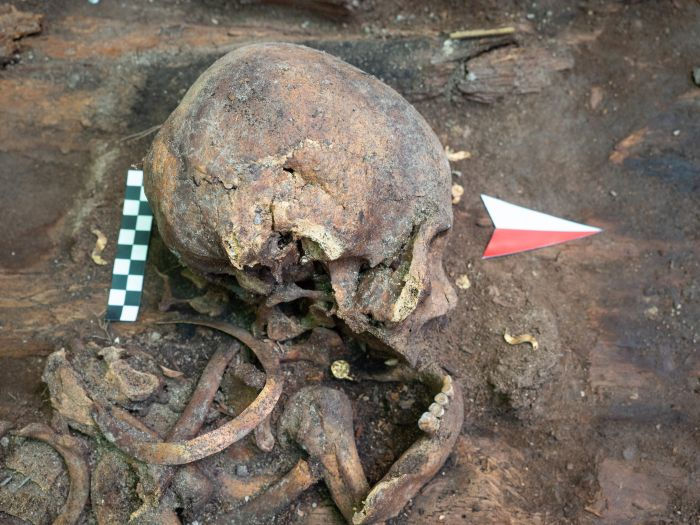
Credit: Igor Pienkos
In 2021, Polish archaeologists continued their research in the barrow they had begun excavating two years earlier. Back then, they found two burials - a central, robbed one, and an intact side grave that contained the body of a young warrior, richly equipped with weapons, a knife, a whetstone and gold ornaments. This is one of the 10 tombs located in a row on the north-south axis in the western part of the cemetery.
See also: More Archaeology News
According to the researchers, the graves date to the 6th century BCE, when people of Scythian origin lived in these areas. Experts say it was the Aldy-Bel culture. In the early Scythian period, the Touran-Uyuk valley was one of the most important ritual centers of the Scythian and Siberian world.
It was from there, from the mountains of southern Siberia, that the people who dominated the steppes of Eastern Europe originated. The Scythians were known for their warlike nature. Their achievements have been described, among others, by the famous Greek historian Herodotus.”
Written by Conny Waters - AncientPages.com Staff Writer
More From Ancient Pages
-
 Wooden Coffin With Greco-Roman Mummy Wearing Mask Depicting Sky God Discovered In Egypt
-
 Carved Stone Depicting Mystery Horseman Unearthed At Roman Vindolanda, Hadrian’s Wall
-
 Shangshan Culture Drank Ancient Rice Beer 10,000 Years Ago – Archaeological Evidence Found In China
-
 Important Discoveries Made In Upper Egypt’s Tel Edfu and Kom Ombo Sites
-
 On This Day In History: Harvard University – America’s Oldest Learning Institution Was Founded – On Oct 28, 1636
-
 Dinosaurs Were The First To Take The Perspectives Of Others
-
 Maya Of Ucanal: Their Ritual Use Of Mercury Created A Toxic Faint
-
 Ancient Artifacts With Carved Geometric Patterns Demonstrate Advanced Cognitive And Symbolic Behavior Among Early Humans
-
 Early City Planning In The Kingdom Of Judah Examined
-
 Magnificent 2-Meter Statue Of The Goddess Athena Wearing A Breastplate Decorated With Medusa Discovered In Laodicea, Türkiye
-
 Unique Treasure Of 500 Coins Accidentally Found Under Church Floor In Slovakia
-
 Magnificent New Trove Of Ancient Egyptian Artifacts And 250 Mummies At The Saqqara Necropolis
-
 Hidden Silver Casket With Bones Of 13th Century Saint Found
-
 Ancient DNA Reveals How Yamnaya People Re-Wrote Northern Europeans’ Genetic Story 5,000 Years Ago
-
 1,300-Year-Old Paintings Depicting Eight Buddhist Saints Revealed By Infrared Cameras
-
 Roman Empire’s Emerald Mines In The Egyptian Eastern Desert – New Evidence
-
 Evidence Of Copper Processing Unearthed At Archaeological Site In Oman
-
 Secrets Of Mysterious Bronze Age Hoard Found In Rosemarkie, Scotland Revealed
-
 Rare 500-Year-Old Wreck From Missing Ship Samson Discovered In Central Stockholm, Sweden
-
 Ancient People Possessed Far Greater Knowledge Of Astronomy Than Previously Believed – Researchers Say

