
Meskiaggasher: Legendary Founder Of The First Dynasty Of Uruk Who ‘Entered The Sea And Disappeared’
A. Sutherland - AncientPages.com - According to surviving clay tablet dated by the scribe who wrote around 2125 BC during the reign of King Utukhegal of Erech (Uruk), we read:
' After the Flood, a dramatic and devastating event, the kingship had descended from heaven, and Kish became the seat of kingship. In Kish, twenty-three kings reigned 24,510 years, three months, 3 1/2 days. When Kish was defeated, its kingship was carried off to Eanna.'
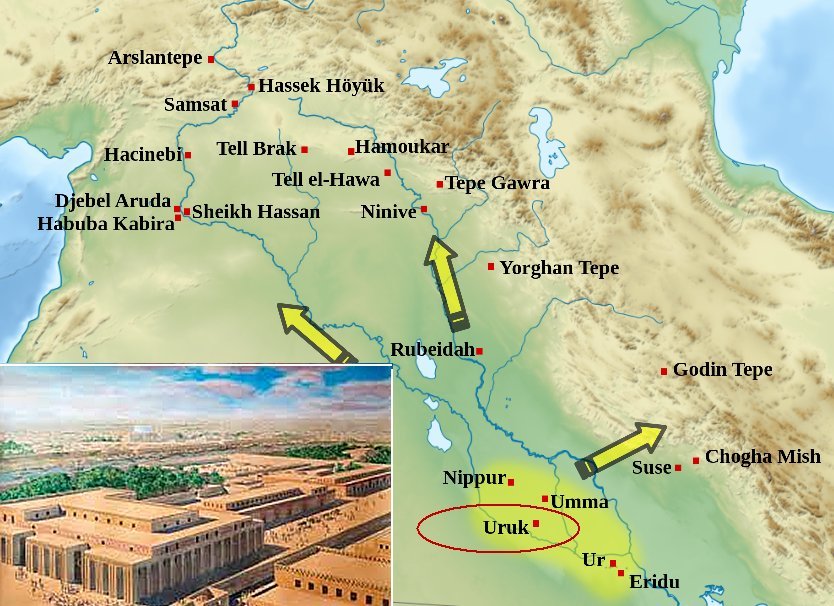
In Eanna (the name of the temple of Inanna in Uruk), we meet, Meskiaggasher, the son of the sun god Utu, who reigned as En (Priest) and Lugal (King) for 324 years.
We do not know precisely what his role was in Uruk, but he would have been the master and guardian of the fortress around which his son would have built the city of Uruk, and the temple became the main shrine of the goddess.
Unlike his future successors, Enmerkar, Lugalbanda, Dumuzi the Fisherman, and Gilgamesh, not much is known about him and confirmed except for the Sumerian King List, saying that he was the son of the Sun and the founder of a dynasty. It is unknown how Meskiaggasher's reign ended, but legend has it he 'entered the sea, ascended the mountains.'
Meskiaggasher is indeed a mythical character.
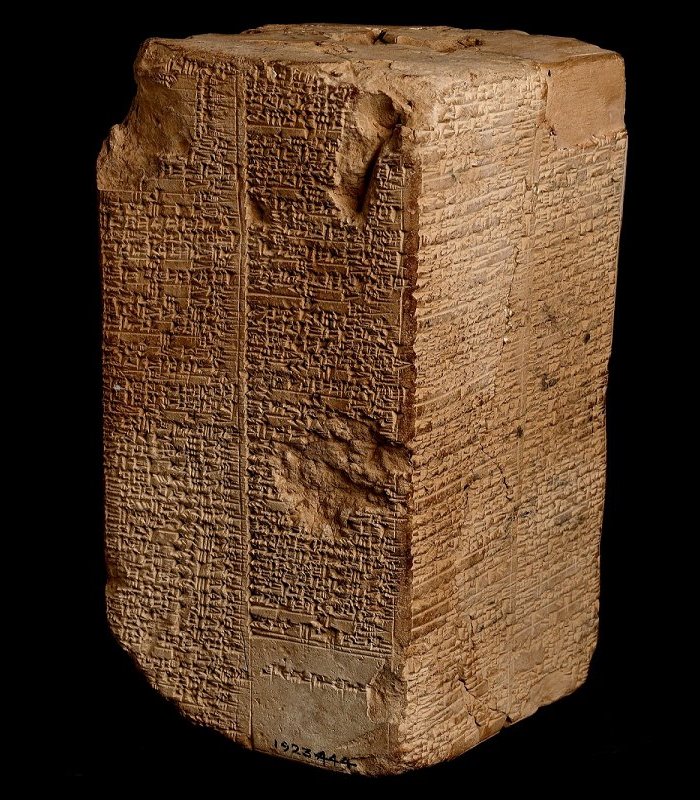
Sumerian King List - Photo: Ashmolean Museum
Enmerkar is believed to have lived at the end of the 4th or beginning of 3000 BC. He ascended the throne after his father's death. According to the Sumerian King List, during Meskiaggasher's time, the city of Uruk was not particularly large.
He became a true Sumerian ruler and ancient hero to whom the construction of Uruk and a 420-year-long reign were attributed.
The extremely long reign of Meskiaggasher indicates this individual was a mythological character.
It is interesting to note that the city of Uruk is mentioned concerning different Sumerian personalities.
For example, "in Mesopotamian myths, Gilgamesh is presented as a demigod of superhuman strength that lived a very long life. Based on the Sumerian King List,' we learn that the great hero, Gilgamesh, reigned for 126 years. He lived in the ancient Sumerian city of Uruk. He was the son of the mortal Lugulbanda and a minor goddess, Ninsun.
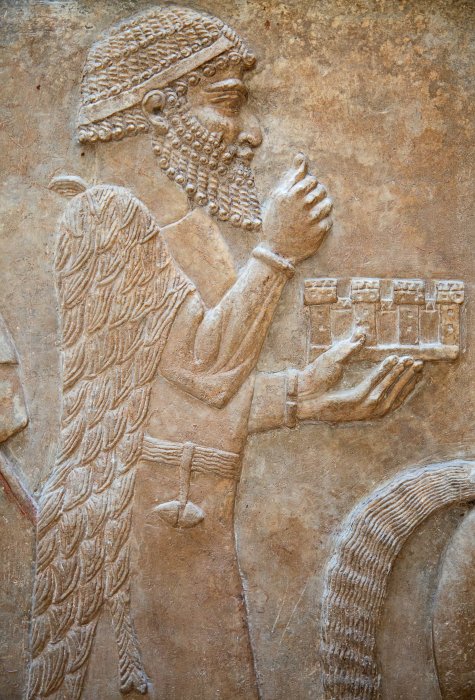
Meskiaggasher was an enigmatic person in Mesopotamian mythology. Credit: Adobe Stock - swisshippo
Gilgamesh built and beautifully remodeled this great city to honor An, the father of the gods, and his daughter, Inanna, the goddess of love and war. He also irrigated the fields, dug wells, and made orchards. One of his more significant achievements was constructing the city walls of Uruk to defend his people from enemies." 1
We also learn from the Sumerian King List that Enmerkar "appears as the second king of the First Dynasty of Uruk. His father was Meskiaggasher (Mesh-ki-ang-gasher), the son of the god Utu (the twin of the goddess Inanna, the Queen of Heaven), later worshipped as Shamash, the Mesopotamian Sun god associated with justice, truth, and morality. Utu, on the other hand, was Enmerkar's grandfather." 2
In ancient times, Uruk was a place of great importance, which explains why so many mythological rulers and significant historical figures are associated with this once-mighty city of Sumer.
"Meskiaggasher inaugurated the dynasty of Uruk. Relative chronology allows scholars to date this semi-legendary personality to 2700 BC.
His successors all belong to an era which has been rightly called " the heroic age of Sumer." 3
Written by – A. Sutherland - AncientPages.com Senior Staff Writer
Updated on November 9, 2023
Copyright © AncientPages.com All rights reserved. This material may not be published, broadcast, rewritten or redistributed in whole or part without the express written permission of AncientPages.com
Expand for referencesReferences:
1. A. Sutherland, Uruk Was Ruled By Gilgamesh Who Built City's Great Walls, AncientPages.com
3. Sasson, Jack M. "Some Literary Motifs in the Composition of the Gilgamesh Epic." Studies in Philology69, no. 3 (1972): 259-79.
Samuel Noah Kramer, "Sumerians"
Samuel Noah Kramer, "Sumerian Mythology"
More From Ancient Pages
-
 Human Body Has Gone Through Four Stages Of Evolution – New Study
-
 Manuscripts And Art Support Evidence That Syphilis Was In Europe Long Before Explorers Could Have Brought It Home
-
 A Scarab Seal At Tel Gerisa, Depicts Walking Lion – Symbol Of Strength, Power And Authority
-
 Traditional Viking-Age Crafts: Glass Beadmakers And Their Secrets
-
 Rök Stone (Rök Runestone): Longest Runic Inscription Ever Discovered
-
 Archaeologists Focus On Greek Poet Aratus’ Memorial Tomb And Ruins Of Soli Pompeiopolis
-
 Did The Babylonian Fish-God Oannes Visit Tiahuanacu?
-
 Three Judges Of Souls Await You On Chinvat Bridge – Gateway To Unknown Realms In Zoroastrian Beliefs
-
 Unique 2,800-Year-Old Ivory Object Unearthed At Hattusa
-
 Countless Artifacts, Structures And Roads Discovered In Ancient City Of Aigai, Turkey
-
 Common Ancestor Of Neanderthals And Humans That Lived 700,000 Years Ago Holds Clues To A DNA Mystery
-
 Unexpected Archaeological Discovery May Re-Write English Civil War History
-
 Enigmatic Voynich Manuscript: Computer Scientists From Alberta Use AI To Decipher Document
-
 Starkad The Viking – Legendary Norse Hero Who Was Both Blessed And Cursed By Gods
-
 Archaeologists Encounter A 1,500-Year-Old Mystery In Kent, UK
-
 More Evidence Linked To Enigmatic Laodicea Temple In Nahavand Found By Iranian Archaeologists
-
 Mystery Of The Controversial Phantom Time Hypothesis
-
 1,400-Year-Old Christian Chalice With Etched Symbols Found In Rubble At Vindolanda Fort, Britain
-
 Why Did Ancient Romans Build So Many Straight Roads?
-
 Mystery Of The Proto-Elamite Tablets – Cracking The World’s Oldest Undeciphered Writing

