
Subterranean Kingdom Of Shahmaran And The Land Of The Snakes
Ellen Lloyd - AncientPages.com - Wisdom is better than ignorance, but perhaps not always. How far should a person go to become a wise man or woman? There are times when we wish we never experienced certain events because the price we paid for gaining wisdom was much too high.
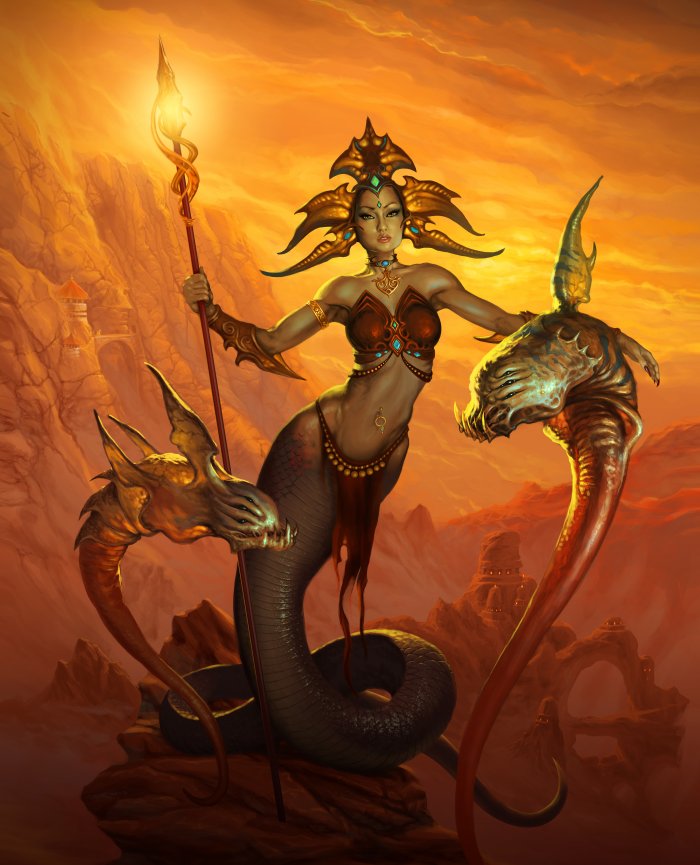
Shahmaran was the Queen of the Serpents. Credit: Adobe Stock - T Studio
The legend of Shahmaran is a beautiful but sad story about a man who gained remarkable wisdom, but not through any good means. Although he spent the rest of his life as a famous and respected wise man, his heart was always filled with sorrow. No matter how much he tried, he could never forget about the wonderful, intelligent creature he had met and lost.
Shahmaran's legend is not only a tale about wisdom, love, greed, and loss but also reveals why the snakes became mortal enemies of humans.
Ancient Beliefs About The Wise Serpents
The serpent has played an important role in the life of our ancestors for thousands of years. Many ancient civilizations say they were guided by the wise Serpent People, who gave them knowledge of architecture, astronomy, medicine, and agriculture and taught Earthlings all they needed to know to establish a civilization. Evidence of ancient serpent worship can be found worldwide. The serpent frequently appears in myths and legends. Artifacts and carvings made in the image of the snake have been found all across the world.
According to ancient beliefs, the serpent is a symbol of immortality, which was demonstrated by the shedding of its skin.
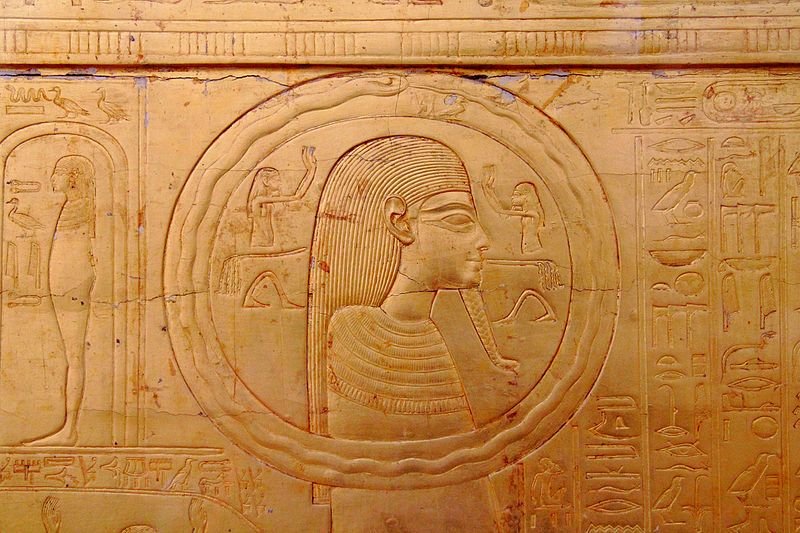
First known representation of the ouroboros on one of the shrines enclosing the sarcophagus of Tutankhamun. Credit: Djehouty - CC BY-SA 4.0
Many ancient cultures believed in the concept of infinity, and the serpent became a symbolic representation of the cycle of life and death that the universe maintains. Ancient texts and carvings show our ancestors frequently used the Ouroboros as an infinity symbol. Beliefs and depictions vary slightly, but in general, the Ouroboros were portrayed as serpents engulfing their tails and forming a circle with the beginning and end.
The Neolithic site Göbekli Tepe in Turkey is famous for its massive T-shaped stone pillars. On these huge megaliths, there are many engravings of animals, and among them, the serpent is one of the most frequently depicted creatures. Legends of various serpent-like beings are common across Anatolia. The Turks, Kurds, Yezidis, and Iranians have kept the memory of the wise serpents of the past alive.
The Underground Kingdom Of Shahmaran And The Serpents
Ancient legends tell Shahmaran was half woman and half snake. Her legend is very old, and there are many variations of the same story. Being half-human and half-snake, Shahmaran reminds me of the wise Nagas encountered in Hindu mythology.
In Turkey, Shahmaran is associated with the Mediterranean town of Tarsus. In the Turkish version of the legend, the young man who met Shahmaran was named Tahmasp (in other versions of the story, he is known as Yada Jamsab or Jamisav). Tahmasp was handsome but poor and worked as a woodcutter.
One day, while being out in the forest cutting trees, he and his friends came across a mysterious well filled with honey. Tahmasp climbed down the well to get more honey, but when it was time to return to the surface, he got stuck. His friends didn’t bother to wait for him and left him in the well. In other versions of the legend, it is said that Tahmasp and his friends found a cave with honey.
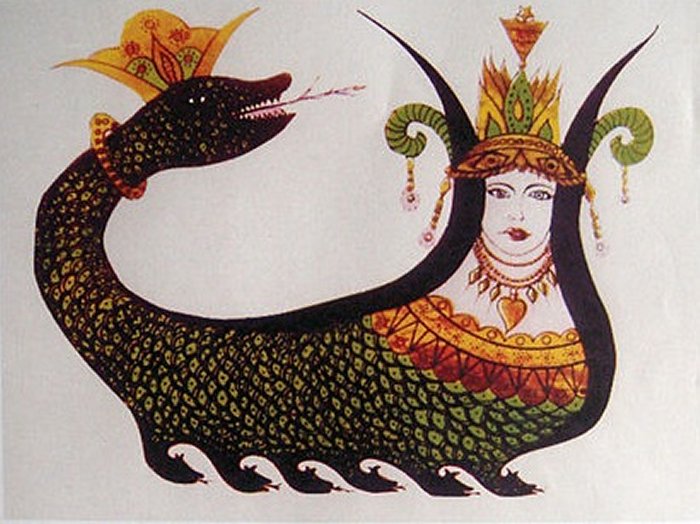
Shahmaran depicted in a Kurdish calendar. Credit: MikaelF - CC BY-SA 2.0
Tahmasp didn’t know what to do. He could not reach the surface, and his friends were gone, so he decided to explore well. Suddenly, he spotted a large hole at the bottom of the well. What was this? Where was the hole leading? Being a brave and curious young man, Tahmasp grabbed a knife and made a hole big enough to squeeze through. He crawled down and reached a deep, dark cavern. At this point, he was now so tired from exhaustion that he fell asleep.
When Tahmasp woke up, he was horrified as he saw thousands of snakes around him. He was convinced they were going to kill him, and he started praying to God. The young man was sitting, shaking, not knowing what to do. He was so frightened that he closed his eyes. However, the snakes didn’t appear hostile. They were simply looking at him.
When Tahmasp suddenly opened his eyes, he saw a beautiful woman who was half human and half snake. Tahmasp was startled and speechless. He had never seen any remarkable creature like this before. The snake woman told him not to be afraid. She explained her name was Shahmaran, and she was the Queen of the Snakes. She also told him that he was now in the land of the snakes, and as their guest, he had nothing to fear. Then, she left, and Tahmasp fell asleep again.
The next morning, Shahmaran returned and showed him the magnificent realm of the serpents. Tahmasp was taken to a large hall and beautiful garden. He ate breakfast and he was captivated by the beauty of this mysterious snake woman. As time passed, Tahmasp became a permanent resident in the underground land of the serpents. He felt safe and appreciated the company of these colorful, intelligent animals. He and Shahmaran fell in love, and though he was now a different man. He was happy, or at least he thought so. After a while, he realized that although he loved Shahmaran, he missed his family.
Shahmaran was reluctant to let him go because she loved him, but she was a wise being and understood he should be in the company of his own kind. She allowed him to return to the world above, but only under one condition. He must never reveal her kingdom's location and the snakes' underground land. She also told him that he must be careful because, after all this time, he had now taken on some characteristics of the snakes. Shahmaran explained he should never bathe with other people because contact with water would reveal he had the skin of a snake.
Horrible Death Of Shahmaran - The Serpent Queen
Tahmasp promised never to reveal her secret and returned to the surface. Many years passed, and everything was fine, until one day, the king of the city became sick. Doctors said the ruler could only be cured if he ate the flesh of Shahmaran. Somehow, the king had learned there was someone in the city who knew where to find Shahmaran and the land of the snake, but he had no clue who it was. The king ordered water to be poured on all inhabitants. This would reveal who had the skin of a snake.
Tahmasp understood water would expose him and tried to hide, but it was too late. Soldiers ordered everyone to go to public baths, and as he tried to flee, the king’s man captured him and took him to the town baths.
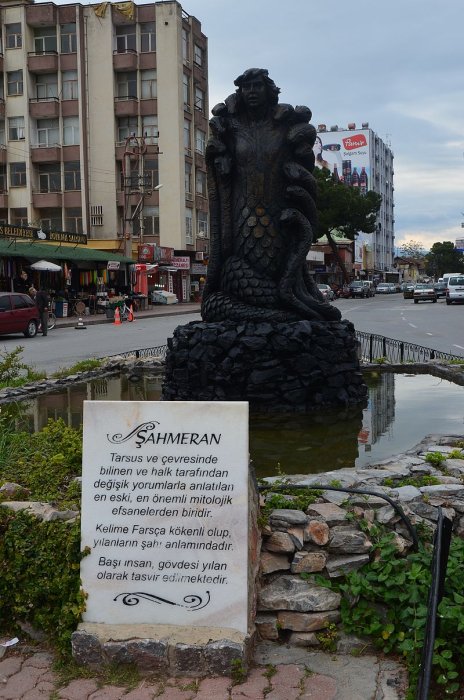
Statue of Shahmaran in Tarsus. Credit: CeeGee - CC BY-SA 4.0
There was nothing he could do, and when soldiers poured water on him, his skin took on the appearance of a snake. Tahmasp was taken to the king, where he, under torture, revealed Shahmaran’s secret.
As soon as soldiers learned where to find the land of the snakes, he hurried, grabbed Shahmaran, and took her to the king’s palace.
Needless to say, Tahmasp felt awful when he saw the beautiful snake woman who was now captured because he couldn’t keep his promise. Shahmaran, who knew she was going to die, said: “As I am about to die, I will give you my secret. Whoever eats my tail will attain wisdom beyond measure and long life but whoever eats my head will die.”
The guards killed Shahamran and cut her into three pieces. The Captain of the Guard and the King wished to become wise, and the King wanted to live long, so they ate her tail. Tahmasp wanted to die, so he consumed part of her head.
What they didn’t know was that Shahmaran had tricked them shortly before being killed. The King and the Captain of the Guard died, but Tahmasp survived. The truth was that the wisdom of Shahmaran filled her head and now was part of Tahmasp.
Tahmasp became a wise man, but he was lonely and sad. He couldn’t bear the sorrow of losing Shahmaran. He left his home, wandered from land to land, from mountain to mountain, and became known far and wide as a wise man.
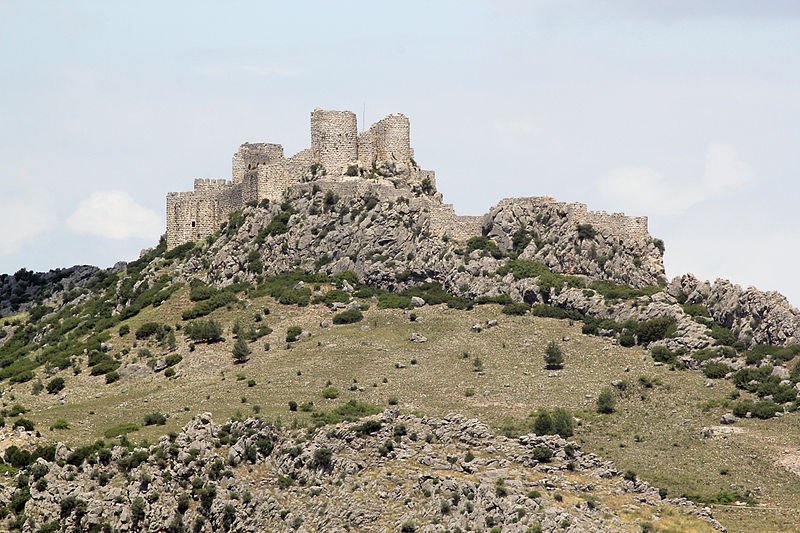
Some say Yilankale, the Snake Castle was once home to Shahmaran. Credit: Klaus-Peter Simon - CC BY-SA 3.0
The legend of Shahmaran explains why the snakes became enemies of humans and why they could never forget and forgive the brutal killing of their Serpent Queen.
See also: More Myths And Legends
If you travel to Turkey, you can find that Shahmaran is still depicted in embroidery, fabrics, and jewelry. The story and imagery of Shahmaran are considered a national treasure in Turkey.
In Adana in southern Turkey, the Yilankale (Snake Castle) is locally known as the home of Shahmaran. Shahmaran’s story is still popular today. Descriptions of her underground kingdom and the land of the snakes have been the subject of many books, including Arabian Nights Tales.
Updated on February 1, 2024
Written by Ellen Lloyd – AncientPages.com
Copyright © AncientPages.com All rights reserved. This material may not be published, broadcast, rewritten or redistributed in whole or part without the express written permission of AncientPages.com
More From Ancient Pages
-
 DNA Identifies Historical Remains Of George Washington’s Relatives
-
 Rare Discovery Of A 2,500-Year-Old Ancient Receipt With The Name Of King Darius The Great
-
 Ancient Egyptian Monuments Threatened By Climate Change Restored By Oriental Institute
-
 Roman Fort Of Apsaros Reveal Some Of Its Archaeological Secrets
-
 Peculiar Accounts Of Ancient Flying Metallic Dragons And Bells In China And Japan
-
 Mystery Of The Artificial Cave And Ancient Encounters With Short People With Strange Feet
-
 Dwarfie Stane: Mysterious 5,000-Year-Old Rock-Cut Tomb On Dark Enchanted Island Of Hoy, Scotland
-
 Mystery Of Ancient Roman Concrete That Still Stands Strong – Has A 2,000-Year-Old Engineering Puzzle Been Solved?
-
 How Did Ancient People Wake Up On Time Before The Alarm Clock Was Invented?
-
 Cacao Was Cultivated By Cultures Along The Pacific Coast Around 5,000 Years Ago – New Study
-
 Sverd I Fjell – Swords In Rock: Battle Of Hafrsfjord Won By Harald Fairhair – First King Of Norway
-
 Judahite Shrine Of Biblical Arad Reveals Ancient Use Of Cannabis And Frankincense
-
 120,000-Year-Old Bone Etchings – Evidence Of The Earliest-Known Use Of Symbols
-
 Rollo: Viking Sea Lord, Chieftain, Lone Wolf And The First Ruler Of Normandy
-
 Ancient Celtic Necropolis With Magnificent Swords And Artifacts But No Human Remains Discovered
-
 The Black Obelisk Of Shalmaneser III – Great Assyrian Ruler
-
 Unique Ancient Coast Salish War Club Accidently Discovered In British Columbia Backyard
-
 Giulia Tofana Poisoned 600 Men – Beautiful Sicilian Woman And Her Deadly Mission
-
 Excavations In Ancient City Of Cremna – One Of The Five Colonial Cities In Pisidia
-
 Impact Of European Contact With Pacific Islands Was Devastating – New Study Reveals

