
King Solomon Was Invented As Political Propaganda To Unite People Of Judah – Scholars Argue
Ellen Lloyd - AncientPages.com - Renowned for his wisdom and riches, King Solomon is said to have ruled Israel after King David. Mentioned in the Bible on several occasions, King Solomon is famous for being the one who built the first Jewish Temple around 957 B.C.
Mystery still surrounds King Solomon’s temple because no one knows what it looked like, and its location remains an archaeological puzzle. According to Biblical accounts, King Solomon ruled during ‘The Golden Age” of Israel and he was the richest and wisest man who ever lived.
Whatever happened to his precious possessions is unknown because his temple has never been found. Some suggest Pharaoh Shishak plundered King Solomon’s temple, but there is no solid evidence to maintain this event ever took place.

Left: King Solomon by Simeon Solomon (1840–1905). Credit: Public Domain - Right: Manasseh's Sin and Repentance; as in 2 Chronicles 33:1-13; illustration from a Bible card published by the Providence Lithograph Company. Credit: Public Domain
Much has been written about the famous king of Israel, but are the tales about the legendary King Solomon completely made up?
Many scholars have questioned King Solomon’s existence on several occasions. A leading archaeologist in Israel maintains the written story about King Solomon was pure propaganda that served to unite people Judah.
According to a theory presented by archaeologist Israel Finkelstein and historian Neil Silberman, it’s impossible that King Solomon could have lived and ruled Israel between 970–931 B.C. Based on extensive studies they conclude Israel was a weak and unorganized state at the time.
King Solomon’s “supposedly vast wealth and international power could have been centered in Jerusalem, which was then no more than a “highland village,” nor could he possibly have ruled over a large kingdom in the land of Israel, which lacked the level of literacy and urbanization necessary for such an administration.” 1
Was Solomon King Manasseh Of Judah?
Silberman and Finkelstein explain that the Biblical account of King Solomon reminds of King Manasseh of Judah who reigned at the time when the story of Solomon was written down. King Manasseh ruled Judah between 687–643 B.C. and he is mentioned in Assyrian records as a contemporary and loyal vassal of Sennacherib's son and successor, Esarhaddon.
King Manasseh had to deal with Assyrians who had destroyed much of Judah. Being a cunning and clever man who used diplomacy he managed to incorporate Judah into the Assyrian world economy.
 “The instruments of royal power—trade, building projects, and administration—that begin to emerge during the reign of Hezekiah were exercised more extensively during the reign of his son and successor Manasseh (698–642 BCE). If any historical character resembles the biblical Solomon, it is he.
Sennacherib’s invasion resulted in far-reaching destruction, devastating Judah’s main regional centers and richest agricultural areas. By the time of Manasseh’s accession, the economy of Judah was in ruins.
The city of Jerusalem was isolated in the midst of a depopulated countryside; it had become the lonely “lodge in a cucumber field” described by the prophet Isaiah (1:8)—a huge, crowded city in the midst of an overwhelmed agricultural hinterland.” 2
King Manasseh did all he could to restore Judah to its former glory. He built new cities, improved agriculture and launched important building projects. However, King Manasseh could not accomplish any of this without the support of his people.
Silberman and Finkelstein state this is was the reason why the story of King Solomon was invented. King Solomon was used as political propaganda to unite people of Judah with the “with the goal of providing a precedent for King Manasseh’s integration of Judah into the Assyrian international economy, and the grandiose depiction of the Temple in Jerusalem is actually from the late eighth century, when Jerusalem’s authority needed shoring up in the face of an incoming flux of refugees from nearby Israel.” 1
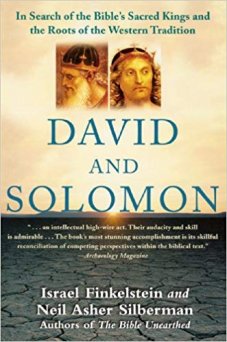
In their book, David and Solomon: In Search of the Bible's Sacred Kings and the Roots of the Western Tradition, the researchers present compelling evidence that many famous episodes in the Biblical story of King Solomon are historically questionable and overexaggerated. This doesn’t necessarily imply that King Solomon was not a historical person, but he was simply very different from his scriptural portraits.
Written by Ellen Lloyd – AncientPages.com
Copyright © AncientPages.com All rights reserved. This material may not be published, broadcast, rewritten or redistributed in whole or part without the express written permission of AncientPages.com
Expand for references- Raanan Eichler - David and Solomon: In Search of the Bible's Sacred Kings and the Roots of the Western Tradition, by Israel Finkelstein and Neil Asher Silberman
- Israel Finkelstein, Neil Asher Silberman - David and Solomon: In Search of the Bible's Sacred Kings and the Roots of the Western Tradition
More From Ancient Pages
-
 Legendary Erlang Shen And His Third Seeing Eye That Could Distinguish Between Truth And Lie
-
 Huginn and Muninn: Powerful Ravens Of Odin, Supreme God In Asgard In Norse Mythology
-
 Mysterious Ancient People Who Mastered Thought-Transmission Through Space And Spoke At Distance
-
 Drones Find Evidence Roman Siege Of Masada Lasted Much Shorter Than Previously Thought
-
 Magnificent Decorated Tomb Of Scribe Unearthed At Abusir Sheds New Light On Ancient Egyptian History
-
 Part Of Long-Lost Pelusiac Branch Of Nile Uncovered In Egypt
-
 8,000-Year-Old Nephrite ‘Frog-Like’ Swastika In Bulgaria’s Neolithic Settlement – Unearthed
-
 2,000-Year-Old Stela And ‘Laboratory’ Of Early Maya Writing Found In Guatemala
-
 Celtic Knot Decorated Bible, Gospels, Celtic Crosses And Symbolized Strength, Love And Continuity Of Life
-
 Ancient Village Of Zalipie Where Flowers Are Painted On All Houses
-
 Barabar Caves: The Oldest Surviving Rock-Cut Caves With Acoustic Effects In India
-
 İnkaya Cave Study Brings To Light 86,000-Year-Old Traces Of Human Life
-
 Okanagan Indians’ Fascinating Myth Of A Lost Paradise Island Inhabited By White Giants – Are Their Descendants Living in British Columbia?
-
 Ancient Egypt: The Eldest Sons Traditionally Held Significant Power And Authority – New Study
-
 Secret Ancient World Buried Under The Vast Takla Makan Desert
-
 Why Is La Ferrassie Man A Unique And Famous Neanderthal?
-
 Unique Geoglyphs In Torgay, Kazakhstan – Destroyed
-
 Norse Legend Of Hero Sigmund And The Magical Sword In The Branstock Tree
-
 Oral Stories Of Australia’s First Nations Might Be 10,000 Years Old – Evidence Found
-
 Jackalope – Are Mythical Horned Hares Real?

