
Ancient Ingenious Ideas Of Transmitting Messages Over Long Distances
A. Sutherland - AncientPages.com - The need for people to communicate at a distance has a very long tradition, and one can say it is as old as humanity itself.
Without telegraphs and wireless communication, our ancestors quickly learned that giving information to others is often necessary.
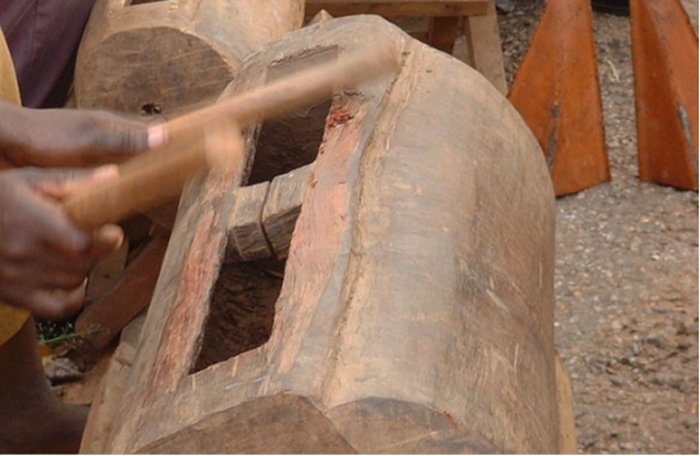
Bamileke tamtam. Image credit:Tatoute/Wikipedia
Usually, using one's own voice is enough, especially at very small distances, but other means of communication are required over long distances.
What Did Ancient People Come Up With?
Our ancestors were resourceful and found their own ways to spread important messages. Horns, trumpets, and drums were used to communicate. These instruments are still used by some tribes in Africa, Papua in New Guinea, and by Indians of South America.
Additionally, drums and trumpets were used for signaling in the army; Roman soldiers used them to give orders. The bells were of great importance because they warned of an imminent threat or another danger on the way.
For many centuries, important messages have been often transmitted from one village to another and over large distances.
Drum Telegraphy Is Still An Effective Means
A distance of 566 miles can be covered in only a few hours. In Africa, New Guinea, and America's tropical regions, people have used drum telegraphy to communicate with each other from far away for centuries.

Painting by Frederic Remington showing Native Americans generating a smoke signal; Amon Carter Museum, Fort Worth. Image via Wikipedia
When European expeditions came into the jungles to explore the local forest, they were surprised to find that the message of their coming was carried through long distances a step in advance of their arrival. An African message can easily arrive at the speed of 100 miles within an hour.
An important role was played by the bells that warned of the imminent threat. The oldest of them originated from China.
Talking Drums And Smoke Signals
In the first human societies, people used special drum beats to send warnings or important information. The talking drum from West Africa has been used for a long time while other people like the Achaeans, the inhabitants of Achaea in Greece, had another non-verbal way of transferring information, namely, fire and smoke signaling.
They invented a fire telegraph that served efficiently to confirm or negate a previously agreed message. Thus, they were the first to use fire to send news at a distance.
In countries with mountainous areas, messages were relayed by torches lit on hilltops or beacons. However, these messages were extremely short and contained vital information like for example, warnings or announcements about victory.
Homing Pigeons And Fire Signals
Among the oldest and efficient ideas for transmitting messages over long distances were pigeons that carried messages on the learned route. Also, the use of signal fires, used by the Chinese along the Great Wall of China, is a very old method of communication over distances.

African drummers were able to communicate complex messages over vast distances.Image via Wikipedia
Around 150 BC, the Romans built the so-called telegraphic network but not literally the same we possess today. It consisted of hundreds of guard towers, which were located at the borders of the Empire. In their vicinity bonfires were lit as soon as possible to inform and warn the crew about the dangers.
Such a way of communication was also known to Native Americans in North America. During hunting and war expeditions, the language of signs served as a means of communication at a distance. Fire, smoke or flickering signals were used using a mirror and it could have been a warning alert or a friendly greeting.
Other Effective Means Of Communication Used By The Ancients
The primitive peoples used other signaling instruments, horns, and trumpets. The horns were used in ancient Mesopotamia, Egypt, Israel, Greece, Rome in southern and western Africa. Shepherds used them in Scandinavia, the Balkans, Spain, and Sudan.
A well-organized pedestrian system of transmitting messages existed in the Inca Empire. The chasquis (also chaskis) were the messengers of the Empire. They were highly trained and physically fit. They were in charge of carrying the quipus, messages, and gifts up to 240 km per day through the chasquis relay system. Chasquis were not just messengers; they were also trained to read and translate the quipus to each other and higher authorities.
Not only were they used to transport oral messages, but they also assisted the Sapa Inka's brother, keeping track of the people in the Empire.
Written by – A. Sutherland - AncientPages.com Senior Staff Writer
Copyright © AncientPages.com All rights reserved. This material may not be published, broadcast, rewritten or redistributed in whole or part without the express written permission of AncientPages.com
More From Ancient Pages
-
 Treasures Of Polish Archaeological Dig In Czermno Medieval Fortified Settlement – Revealed
Archaeology | Dec 5, 2015
Treasures Of Polish Archaeological Dig In Czermno Medieval Fortified Settlement – Revealed
Archaeology | Dec 5, 2015 -
 First Egyptian Middle Kingdom Tomb Unearthed In South Asasif Necropolis In Luxor
Archaeology | Nov 5, 2024
First Egyptian Middle Kingdom Tomb Unearthed In South Asasif Necropolis In Luxor
Archaeology | Nov 5, 2024 -
 Biblical City Of Gezer: Important Ancient City Mentioned In The Amarna Letters
Biblical Mysteries | Sep 6, 2018
Biblical City Of Gezer: Important Ancient City Mentioned In The Amarna Letters
Biblical Mysteries | Sep 6, 2018 -
 Reports Of Mysterious Whistling Giants Roaming The Cascade Mountains – Ancient And Modern Accounts
Ancient Mysteries | Nov 28, 2025
Reports Of Mysterious Whistling Giants Roaming The Cascade Mountains – Ancient And Modern Accounts
Ancient Mysteries | Nov 28, 2025 -
 Remarkable Man-Made Underwater Structures Could Rewrite History Of Wisconsin
Featured Stories | Aug 22, 2018
Remarkable Man-Made Underwater Structures Could Rewrite History Of Wisconsin
Featured Stories | Aug 22, 2018 -
 Ur – One Of The Largest And Most Important Cities Of Ancient Mesopotamia
Featured Stories | Jul 28, 2021
Ur – One Of The Largest And Most Important Cities Of Ancient Mesopotamia
Featured Stories | Jul 28, 2021 -
 How Human Ancestors Used Fire – New Methods Give Answers
Archaeology | Nov 2, 2022
How Human Ancestors Used Fire – New Methods Give Answers
Archaeology | Nov 2, 2022 -
 Scientists Use Ancient DNA To Explore Early European Adaptation
DNA | Nov 27, 2024
Scientists Use Ancient DNA To Explore Early European Adaptation
DNA | Nov 27, 2024 -
 Mysterious Philistines: They Migrated Across Mediterranean – DNA Testing Shows
Archaeology | Jul 4, 2019
Mysterious Philistines: They Migrated Across Mediterranean – DNA Testing Shows
Archaeology | Jul 4, 2019 -
 Brihadeshwara Temple – Outstanding Example Of Chola Architecture In Tamil Nadu, India
Featured Stories | Aug 26, 2021
Brihadeshwara Temple – Outstanding Example Of Chola Architecture In Tamil Nadu, India
Featured Stories | Aug 26, 2021 -
 When Did Humans First Colonize Australia? Sahul Colonizers Arrived Later Than The Commonly Held 65,000-Year Timeframe
DNA | Sep 3, 2025
When Did Humans First Colonize Australia? Sahul Colonizers Arrived Later Than The Commonly Held 65,000-Year Timeframe
DNA | Sep 3, 2025 -
 51,000-Year-Old Bone Carving Shows Neanderthals Were Artistic Long Before Humans Arrived
Archaeology | Jul 6, 2021
51,000-Year-Old Bone Carving Shows Neanderthals Were Artistic Long Before Humans Arrived
Archaeology | Jul 6, 2021 -
 Remarkable discovery: Ancient coffins reveal centuries-old secrets of French nobility
News | Sep 1, 2015
Remarkable discovery: Ancient coffins reveal centuries-old secrets of French nobility
News | Sep 1, 2015 -
 Extraordinary Bronze Age Jewelry Hoard Discovered In A Carrot Field In Switzerland
Archaeology | Oct 18, 2023
Extraordinary Bronze Age Jewelry Hoard Discovered In A Carrot Field In Switzerland
Archaeology | Oct 18, 2023 -
 Beavers Had A Big Influence On How Stone Age People Lived
Archaeology | Oct 18, 2023
Beavers Had A Big Influence On How Stone Age People Lived
Archaeology | Oct 18, 2023 -
 Population Pressure And Prehistoric Violence In The Yayoi Period Of Japan
Archaeology | Aug 30, 2021
Population Pressure And Prehistoric Violence In The Yayoi Period Of Japan
Archaeology | Aug 30, 2021 -
 Encounter Between Neanderthals And Homo Sapiens – Genome Study Traces The History
DNA | Oct 18, 2023
Encounter Between Neanderthals And Homo Sapiens – Genome Study Traces The History
DNA | Oct 18, 2023 -
 Mystery Of Pre-Adamic Didanum Race: Giants Who Were Ancestors Of The Nephilim and Rephaim
Biblical Mysteries | Oct 2, 2014
Mystery Of Pre-Adamic Didanum Race: Giants Who Were Ancestors Of The Nephilim and Rephaim
Biblical Mysteries | Oct 2, 2014 -
 Jigai – Suicide Ritual For Wives Of Samurai – Feminine Counterpart Of Seppuku
Ancient History Facts | Feb 24, 2018
Jigai – Suicide Ritual For Wives Of Samurai – Feminine Counterpart Of Seppuku
Ancient History Facts | Feb 24, 2018 -
 Mysterious Ancient Tomb Reveals ‘Impossible’ Human Connection To Cosmos – Human Anomaly? – Part 2
Ancient Mysteries | Oct 15, 2020
Mysterious Ancient Tomb Reveals ‘Impossible’ Human Connection To Cosmos – Human Anomaly? – Part 2
Ancient Mysteries | Oct 15, 2020

