
Ur: One Of The Largest And Most Important Cities Of Ancient Mesopotamia
A. Sutherland - AncientPages.com - Today, all we know about the ancient city of Ur comes from the written documents unearthed at Ur. Since Ur was part of Mesopotamia, it is important to note that its people used cuneiform, written on clay tablets that were often broken and unreadable. As a result, scholars have worked hard to decipher them.
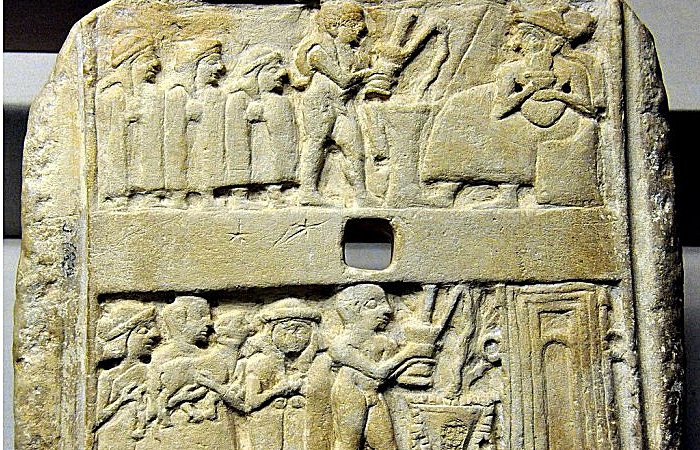
Wall plaque from Ur, 2500 BCE; the British Museum. image credit:
This historical material is undoubtedly the essential source of our knowledge about Ur. The city's monuments have survived to this day, largely due to the test of time. Built of mud brick - not as resilient a building material as stone, widely used in ancient Egypt – the Sumerian structures could not survive.
The city of Ur was once a large, wealthy, busy, and prosperous port located close to the mouth of the Euphrates River in the Persian Gulf, and much of Sumerian history is linked to this city.
The geographical location of Ur (now Tell el-Muqayyar, Iraq), in the vicinity of the river and the sea, contributed to the city's dominant role in foreign trade, with ancient Dilmun serving as a transit harbor.

This is a preview of our premium article available only to members of Ancient Pages.
Become a member to read more - Click here
If you are already a member and have logged in to your account, you can access the article here

See also:
Uruk – The Hero Gilgamesh’s City With A Sophisticated, Carefully, And Intentionally Planned Layout
Ziggurats, Axis Mundi And Strong Connection To Religion In Mesopotamia
Ancient City Of Urkesh – Home Of Kumarbi – The Foremost Son Of Anu
More From Ancient Pages
-
 Legendary Epic Of King Gesar Who Descended From Heaven And The Ancient Tarna Monastery
-
 Monumental King’s Grave (Bredarör) In Kivik, Sweden With Spectacular Rock Carvings
-
 Strange Tale Of Mysterious Thousand-Year-Old Underground Network Of Caves And Encounters With Subterranean Dwellers
-
 Mysteries Of Lake Llyn Y Dywarchen: A Portal To Fairyland
-
 Evidence Of Lost Advanced Ancient Technology In Babylon
-
 Robert Fortune’s Dangerous Mission To Obtain Tea From The Chinese
-
 Why Are Apples So Important During Halloween?
-
 Stonehenge Is Older Than Mankind – Archaeologist Suggests
-
 Ancient Aqueduct System Discovered In Boroujerd, Lorestan
-
 Peculiar Unsolved Greek Mystery In New York
-
 Mysterious Death Of Amy Robsart – Murder, Accident Or Suicide?
-
 Ninkasi – Sumerian Goddess Of Beer And Alcohol – The Hymn To Ninkasi Is An Ancient Recipe For Brewing Beer
-
 Michael Scott – Fascinating Wizard Who Tutored The Holy Roman Emperor Frederick II
-
 Sanctuary Of God Mithra And His Mysterious Religion Unearthed In Corsica
-
 ‘The Waters Become Corrupt, The Air Infected’: Here’s How Ancient Greeks And Romans Grappled With Environmental Damage
-
 Mystery Of Count St. Germain – He Claimed To Have Lived For Several Centuries
-
 Sophisticated Pre-Columbian Gran Coclé Culture Reveals Its Ancient Secrets
-
 Was The Discovery Of Biblical Abel’s Giant Grave In Syria Covered-Up?
-
 Long-Lost Wreck Of Crusader Ship And Gold Coins Discovered
-
 Knowledge Of Secret Ancient Underground Civilization Revealed By Maya Priests

