
Lhasa’s Potala Palace: Greatest Building In Tibet With History Of 1300 Years
A. Sutherland - AncientPages.com - The Potala - also known as "Buddha Mountain" - is the most famous building in Tibet and the winter palace of the Dalai Lama.
It is a massive, earthquake-proof mud-and-brick structure with the largest collection of Tibetan most valuable relics. It is a masterpiece in world architectural history and most probably the highest ancient palace in the world.

According to an ancient legend, Songtsen Gampo, a wise ruler and the most important Tibetan king built a 9-storey palace with a thousand rooms up on the Red Hill and named it Potala. Image via Trip China Guide
The Potala, where the former great Dalai Lama’s stupas are being kept, is now turned into a museum by the Chinese. Inside the museum, there are sutras, jewelry, murals that tell the story of Tibet, and other priceless antiques.
The museum also stores many Buddha figures, Buddhist halls, sculptures, and Tibetan paintings.
With a long history of more than 1300 years, the Potala represents the ancient legacy of Tibetan culture and religion.
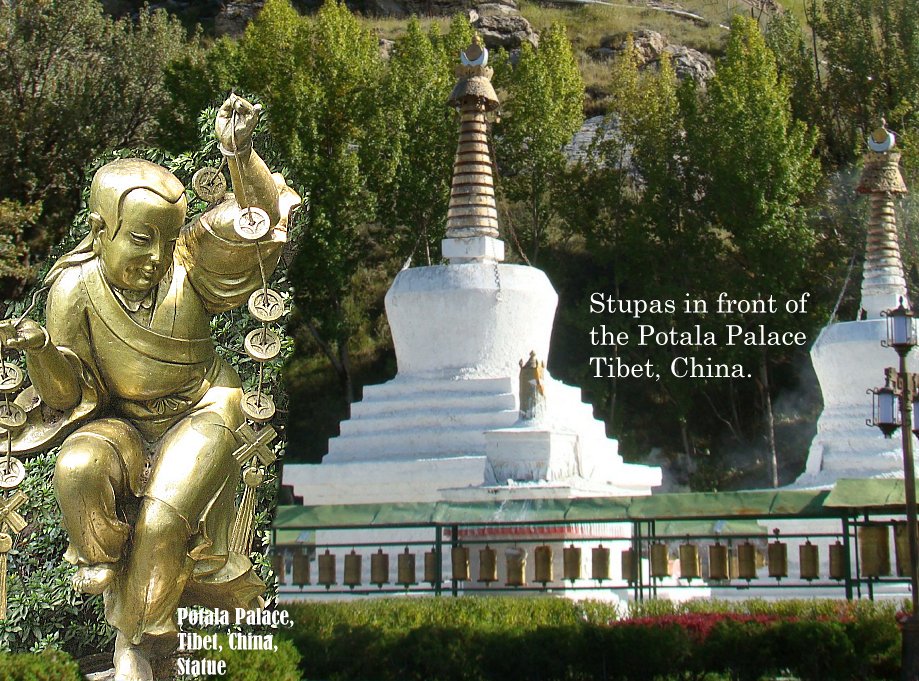
Situated on the Red Hill of central Lhasa and rising more than 300 m (about 1,000 ft) above the valley floor, two major structures form the Potala - the Red Palace and the White Palace.
In outward appearance, the huge complex consists of 13 stories 117 meters high and covers an area of 100,000 square meters.
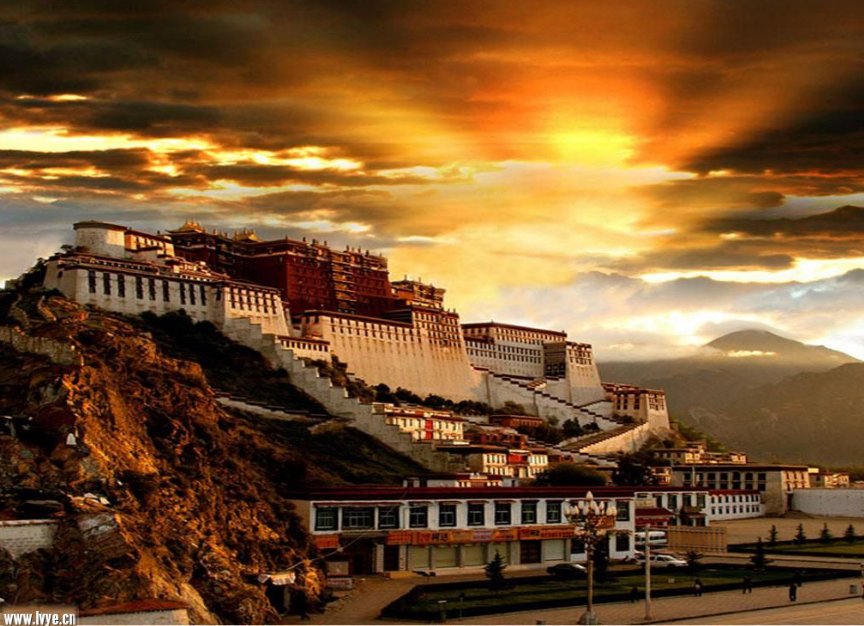
The name of the palace comes from a sacred hill located in South India is a Sanskrit word meaning "Abode of the Avalokitesvara (Buddha of Mercy)."
According to an ancient legend, Songtsen Gampo, a wise ruler and the most important Tibetan king built a 9-storey palace with a thousand rooms up on the Red Hill and named it Potala. He wanted to welcome his bride, Princess Wen Cheng of the Tang Dynasty (618 BC – 907 BC) of China.
This king contributed to the unification of the Qinghai-Tibet Plateau, promoted the development of the economy, politics, and culture in the region.
The Potala Palace was many times destroyed in wars but later rebuilt by architects of the Qing Dynasty (1644 BC – 1911 BC).
The Red Palace, the highest part of the complex, has the walls painted to red to represent stateliness and power; it is entirely devoted to Buddhist prayer and religious study.
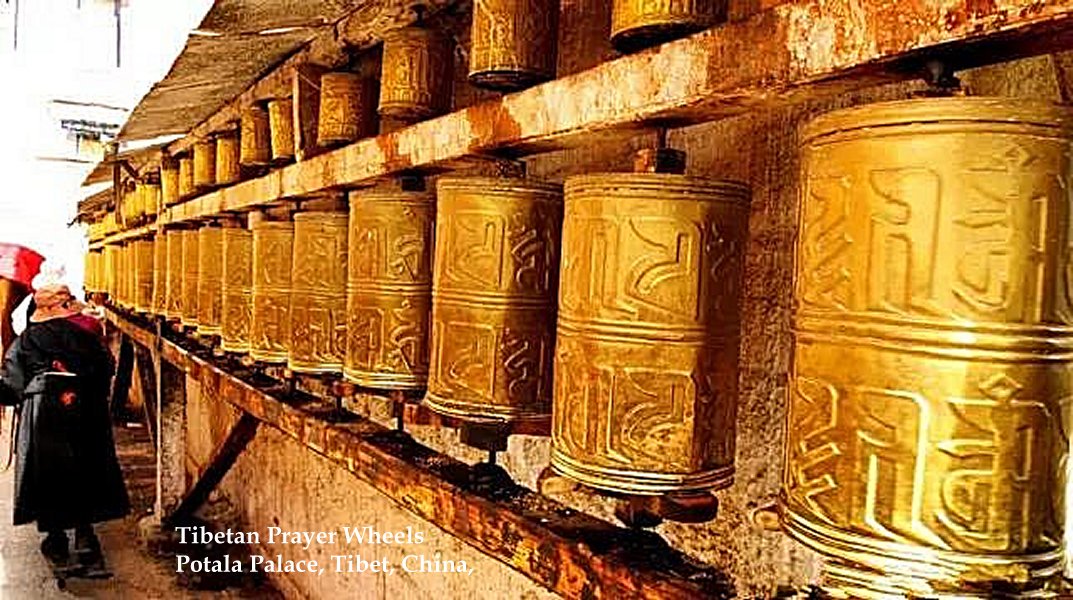
The palace contains libraries, chapels, several halls, and passages.
The White Palace has the walls painted to white to convey peace and quietness. It once served as the office building of Tibet local government and the living quarters of Dalai Lama.
The Potala has several additional annexes including gardens, courtyards, the School of Buddhist Logic, the seminary, and even a jail.
In 1994, the Potala treasure landmark of Tibet was declared a World Heritage Site by UNESCO.
Written by – A. Sutherland - AncientPages.com Senior Staff Writer
Copyright © AncientPages.com All rights reserved. This material may not be published, broadcast, rewritten or redistributed in whole or part without the express written permission of AncientPages.com
Expand for referencesReferences:
More From Ancient Pages
-
 First Chinese Murals Unearthed In Shimao Ruins Are Over 4,000 Years Old
-
 Gold Treasures Of Ancient King Discovered In North America Create Historical Problems
-
 Two Knights, One Horse − How A Legendary Knights Templar Symbol Has Puzzled And Fascinated Since The Middle Ages
-
 What Can The 3D Reconstruction Of The Principia At Novae Reveal About Roman Propaganda?
-
 Cats Were Rare And Expensive During The Viking Age – Spectacular Discovery Reveals Why
-
 Herne The Hunter – The Horned God And Lord Of The Forest In British Mythology
-
 First Genome-Wide Ancient Human DNA From Sudan Shines New Light On Nile Valley Past
-
 Silla: The Most Successful Of Three Korean Kingdoms
-
 Ancient DNA Reveals Missing Link In The History Of Indo-European Languages
-
 Fragment Of A Fine Marble Statuette Of Heracles Found In Jezreel Valley, Israel
-
 Neanderthal Hunting Camp Discovered In The Center Of The Iberian Peninsula
-
 Dangerous Anomaly Inside Mysterious European Mountain Remains Unexplained – Examining Evidence – Part 2
-
 Aegir – Jotun Lord Of The Stormy Seas Revered And Feared By Norsemen
-
 Anglo-Saxon Warlord’s Grave: Archaeologists And Metal-Detectorists Work Together
-
 Ancient Giant Skeleton Discovered In Krabi Cave Confirms Legend Of The Nagas – Or Perhaps Not
-
 Unexplained Disappearance Of East Balkan Civilizations – Discovery Of Unusual Mini Artifacts – Part 1
-
 Archaeologists Encounter A 1,500-Year-Old Mystery In Kent, UK
-
 Ancient Syriac Epitaphs Discovered In Tomb Of Priest Monoha Shed New Light On The Assyrian Empire
-
 Who Has Stolen Charles Darwin’s Notebooks Worth Millions From The University Of Cambridge?
-
 Truth Behind Mysterious Ancient Metal Depositions Revealed By Scientists

