
Mada’in Saleh: Magnificent Timeless Rock-Cut Tombs And Monuments In The Desert
A. Sutherland - AncientPages.com - Located 20 km (12.4 mi) north of the Al-`Ula town, 400 km (248.5 mi) north-west of Medina, and 500 km (310.7 mi) south-east of Petra, in modern-day Jordan, the impressive ancient site Mada'in Saleh in Saudi Arabia continues to impress the modem world with its magnificent tombs and monuments that reflect the great skills of the masons of their time.
Madain Saleh, also called Al-Hijr or Hegra dates back to the Nabataean civilization.
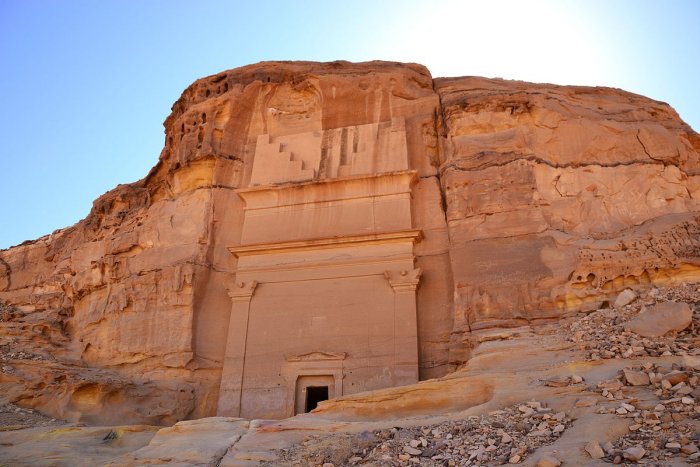
Madaʼin Saleh. Image credit: wikipedia
This beautiful place is considered as one of the ´most important archaeological sites in Saudi Arabia and is called "The Capital of the Monuments".
The site constitutes the kingdom's southernmost and largest settlement after Petra, its capital.
With its 111 monumental tombs, 94 of which are decorated, and water wells, the site is an outstanding example of the Nabataeans' architectural accomplishment and hydraulic expertise.
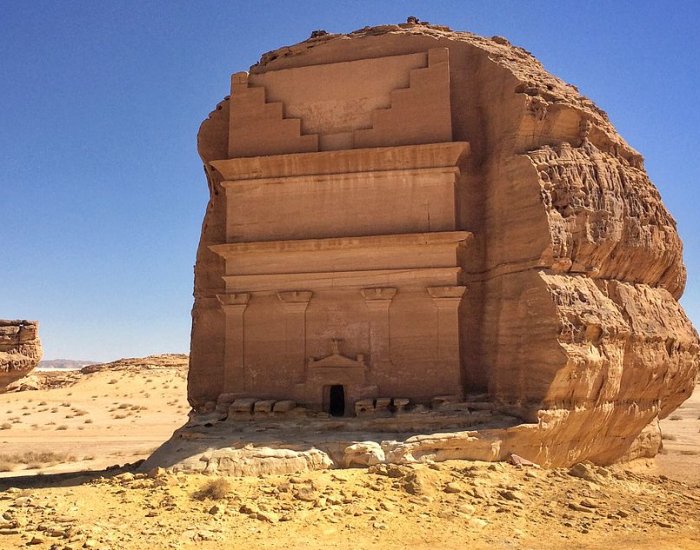
Qasr al Farid, the largest tomb at the Mada’in Saleh archaeological site.. Image credit: wikipedia
Madain Saleh is the first World Heritage site in Saudi Arabia. Although historians are not complete certain where the Nabataean civilization came from, there is a strong possibility that they came from the Hejaz region of northwest Saudi Arabia and their history goes back thousands of years.
At its peak, the Nabataean Empire stretched from modern-day Yemen to Damascus and from western Iraq into the Sinai Desert, at least, according to some historians.
See also:
Unclear Purpose Of Mysterious Rock-Cut City Of Petra - Was It A Fortress Or Sacred City?
A Great Flood Destroyed The Mysterious Ancient City Of Petra – Evidence Has Been Found
Skilled Nabataeans Celestially Aligned Petra’s Wonderful Architecture
No one is really knows how large their empire was. Written records of the Nabataean kingdom are sparse as there are only a few surviving documents and scattered inscriptions and graffiti.
However, many thousands of graffiti carved onto rocks and canyon walls clearly demonstrate that almost every Nabataean could read and write, even the shepherds.

Ad Deir monastery in Petra, dated to 1st century. The elaborately ornamented façades, of the Nabatean kingdom resembles those of ancient site Mada'in Saleh located only 500 km (310.7 mi) south-east of Petra. Image credit: wikipedia
This makes us wonder why the Nabataeans did now write down their history.
According to historians, the Nabataeans were nomads, dwelling in tents in the desert.
They began as pastoral nomads, raising their sheep, goats, and camels in the desert as so many other Arabian tribes have done through the millennia. They also practiced oasis agriculture.
Yet, interestingly within a few short years they also built spectacular and awe inspiring monuments. The magnificent city of Petra is so impressive, that even today tourists stare in awe at the great ruins. Yet, this impressive city was hidden away in a cleft in the rock with access through a narrow crack in a mountain.
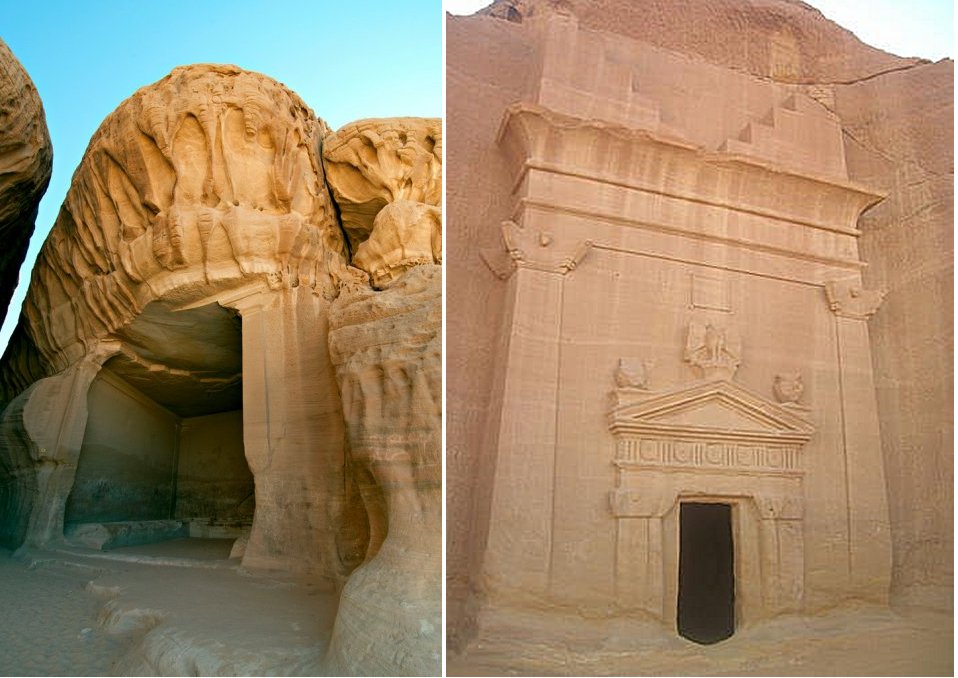
Mada'in Saleh cut tombs. Copyright: © Jérémie Flores
The Nabataeans watched the sky systematically and accurately and there are proof of their astronomical observations.
According to scientists who studied the Nabataean's palaces, temples and tombs these people were skilled astronomers. Great buildings were erected bearing in mind the equinoxes, solstices and other astronomical events that determined the Nabataean religion.
Mada'in Saleh is their second largest city. According to UNESCO "most of the monuments and inscriptions of the archaeological site of Al-Hijr date from the 1st century BCE and the 1st century CE. But the inscriptions in Lihyanite script and some recently discovered archaeological vestiges are evidence for human settlement as early as the 3rd or 2nd century BCE.
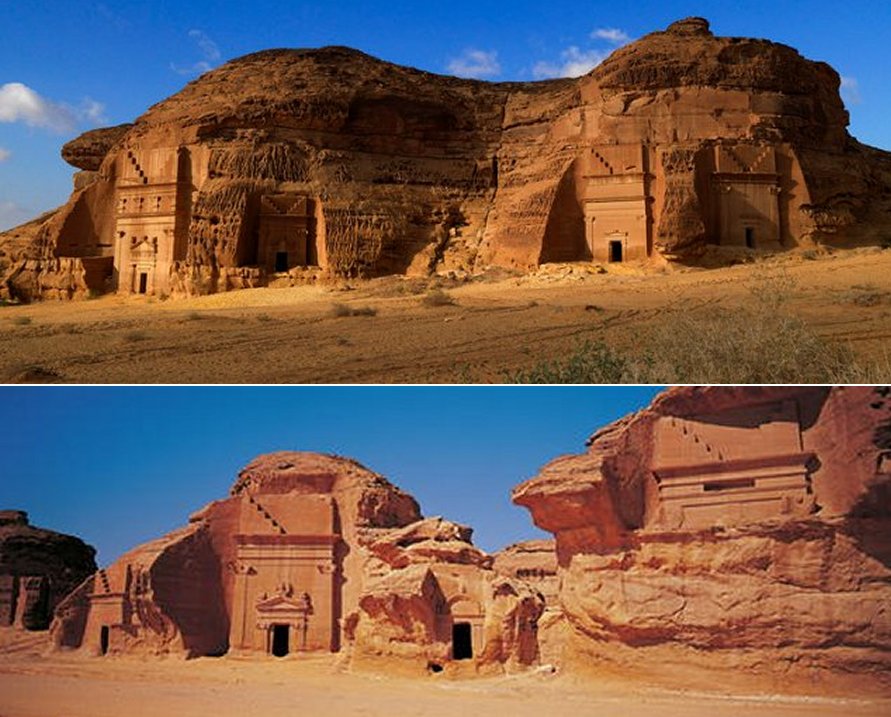
Mada'in Saleh. Copyright: © Editions Gelbart
One-third of the tombs, which are amongst the largest, are clearly dated to between 0-75 CE.
Hegra was a major staging post on the main north-south caravan route. A secondary route linked it to the port of Egra Kome, according to a Greek-language source. Two recently discovered Nabataean sites on the shores of the Red Sea could in fact be this port."
The ruins of the town of Hegra lie on the plain some distance from their tombs.
Mada'in Saleh remains a timeless and truly beautiful ancient place.
Written by – A. Sutherland - AncientPages.com Senior Staff Writer
Copyright © AncientPages.com All rights reserved. This material may not be published, broadcast, rewritten or redistributed in whole or part without the express written permission of AncientPages.com
More From Ancient Pages
-
 On This Day In History: Sir Francis Drake Sets Sail On His Round-The-World Voyage – On Dec 13, 1577
-
 7,000-Year-Old Inscription With Undeciphered Vinca Script – One Of The World’s Earliest Writing Systems Discovered
-
 Mythical Kingdom Of Prester John – Did It Exist?
-
 Medieval Wooden Stave Churches In Norway Are Older Than Previously Believed
-
 Mystery Of Gigantic Lion Sculptures Dated To The Hittite Era
-
 Hidden Story Of The Sacred Wiradjuri Carved Trees Revealed
-
 Huge 40-Meter Long 16th Century Tunnel For Looting Was Exposed Inside Tower Tomb
-
 Unexplained Dangerous Secret In The Great Smoky Mountains
-
 Non-Royal Elite Burial And Deciphered Hieroglyph Reveal Privileged And Hard Life Of Maya Ambassador
-
 Astronomically Aligned Pyramidal Buildings Of America’s Oldest City Reveal How Its Builders Apprehended Space And Time
-
 Mystery Of The Delphi Oracle Prophecies: Was Pythia On Drugs While Guiding Ancient Greek Civilization For Thousands Of Years?
-
 Riddle Of An Ancient Underground City No-One Thinks Exist – Symbol For A Spiritual Quest – Part 2
-
 DNA Reveals – One Of Sunken Warship Vasa’s Crewmen Was A Woman
-
 Unusual Relic That Mysteriously Disappeared From The Vatican
-
 Cursed Biblical City Bethsaida May Have Been Found – But Scientists Argue About The Discovery
-
 Well-Preserved Fragments Of Epetion’s Wall Discovered At The Hellenistic Site Of Stobreč, Near Split, Croatia
-
 Dingoes Given ‘Almost-Human’ Status In Pre-Colonial Australia – Archaeological Study Finds
-
 Rare 1,000-Year-Old Viking Wooden Bowl Found By Young Boy
-
 On This Day In History: Napoleon Exiled To Elba – On Apr 11, 1814
-
 Megalithic Giant Tripolye ‘Mega-Structures’ In Large Settlements That Collapsed Around 3650 BC

