
Ancient Romans Loved White Teeth – All Means Were Acceptable To Get Them Even Portuguese Urine
A. Sutherland - AncientPages.com - The Romans loved their public baths but they also paid special attention to oral hygiene and had surprisingly healthy teeth.
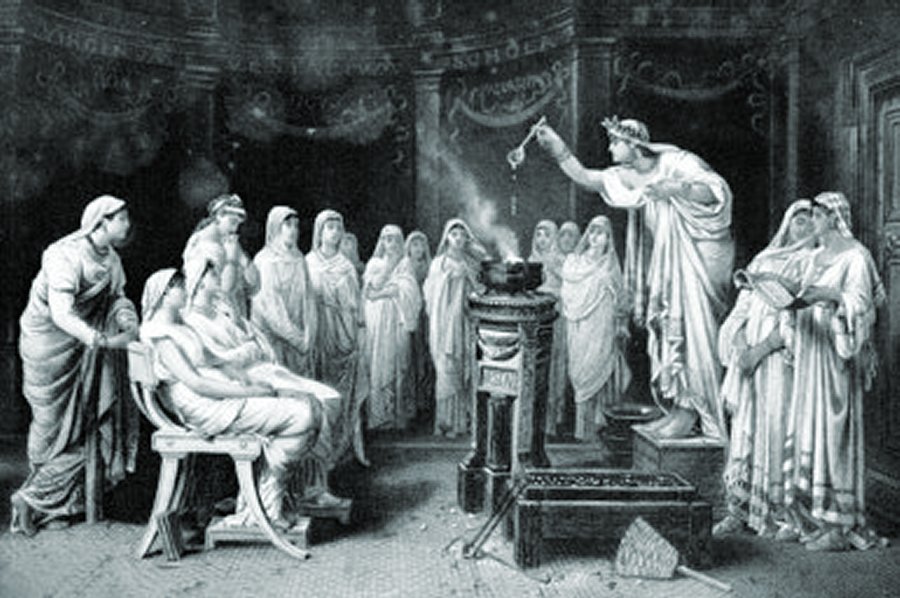
Believed to be the strongest in the world and most effective, Portuguese urine was shipped in large quantities from Portugal for wealthy Roman ladies to use on their teeth, and the product was so popular that the Roman emperor Nero had to place a tax on it. Image via Bust
Aulus Cornelius Celsus (c. 25 BC – c. 50 AD) was a Roman encyclopaedist, historian of medicine and one of the most important contributors to medicine and scientific thought during the Roman Empire, was particularly well-known for his extant medical work, De Medicina.
Celsus stated that food leftovers in teeth can cause a disease called caries dentium, or simply caries.
“Even though fulsome white smiles were keenly prized in Roman high society, the rich were not about to forego their lavish dinners; they literally wanted to have their cake and eat it…” wrote Greg Jenner in his book “A Million Years in a Day: A Curious History of Daily Life”.
The ancient Romans knew about it and therefore, daily tooth brushing was their daily routine.
A Slave Helped A Roman Aristocrat With Tooth Brushing
However, a Roman aristocrat did not make his daily tooth brushing by himself. Instead he was helped by his own slave at home. In order to avoid the need for dentures, his slave would wield the soft twig, onto which polishing powders were applied, and then he would gently scrub his master’s teeth and gums to clean away food leftovers.

Traditional miswak sticks. (Photo: Middayexpress/WikiCommons CC BY-SA 3.0
In more serious cases, Celsus recommended filling the hole with lead (in Latin: lead means plombus), but the Romans did not like the treatment of cavities and it was the last option, particularly because of pain.
How Did The Oral Care Of The Average Roman Look Like?
"Refreshing" rinses were also used to promote oral hygiene. The composition of these substances, however, may seem somewhat unusual from our modern point of view. They also used several mixtures of ingredients similar to our modern kinds of toothpaste. However, sometimes, these mixtures – especially those proposed by Pliny the Elder – seemed creepy and disgusting. ¨
He advised to prepare good “toothpaste” that included “ashes head of hare and donkey teeth, mixed with extracts of mouse brain or hare”.

Celsus, Aulus Cornelius and De medicina libri VIII (daten.digitale-sammlungen.de
In fact, the use of the mouse brain was rather frequently used in ancient Rome. To get flavoring effect, it was mixed with bicarbonate sodium, powdered charcoal and bark. Other ingredients commonly used included a powder of ox hooves' ashes and burnt eggshells that was mixed with pumice.
The ancient Romans also had the habit to brush their teeth with … the urine. They made mixtures of goat milk and old urine to try to keep their teeth white.
Messalina, the wife of Emperor Claudius, for example, washed her teeth with a paste of powdered deer antler or “chose to gargle undiluted human urine, preferably the super-strength stuff shipped in all the way from Portugal where piss was believed to contain more ammonia…” G. Jenner writes.
The ancient Roman treatments of teeth were rather controversial at least but these were means they had if they wished to have white teeth. They efficiently removed the stone from their teeth but… they also removed the enamel, which certainly wasn’t easily restored.
Still, the Romans liked white teeth very much and neglected teeth were not welcome in Rome.
Written by – A. Sutherland AncientPages.com Staff Writer
Copyright © AncientPages.com All rights reserved. This material may not be published, broadcast, rewritten or redistributed in whole or part without the express written permission of AncientPages.com
Expand for referencesReferences:
Jenner G. A Million Years in a Day: A Curious History of Daily Life”
More From Ancient Pages
-
 Lady Justice (Justitia): Legal And Philosophical Concept Produced In Remote Antiquity
-
 2,300-Year-Old Tablet Found In Mugla, Turkey – Region Of Great Historical Importance In Ancient Times
-
 10 Spooky Ancient Places That Are Home To The Feared Living Dead
-
 On This Day In History: Agatha Christie Known As ‘Queen Of Crime’ Died – On Jan 12, 1976
-
 Unique Statue Of Mayan God K’awiil Associated With Lightning, Serpents, Fertility, Maize, Royal Lineage Found On Maya Train Route
-
 On This Day In History: Louis Braille – Creator Of Alphabet For Blind People Died – On Jan 6, 1852
-
 On This Day In History: Naval Battle Of Porto Bello Begins – On Nov 20, 1739
-
 3,000-year-old knight discovered at the Palidli necropolis
-
 Strangest Maps Ever Created – You Have Never Seen Our World Like This!
-
 New Insights Into The Dawn Of The Indo-European Languages
-
 Neolithic Mendik Tepe Site Discovered In Southeastern Türkiye Is Older Than Gobeklitepe
-
 Large Fortress And Wall Uncovered On The Nile Delta Mark Power Of Egypt’s Canal Of the Pharaohs
-
 Ouroboros: Ancient Infinity Symbol Used By Different Ancient Civilizations
-
 Kava – Astonishing Ancient Plant That Improves Emotional Intelligence Is Gaining Popularity In The Western World
-
 Large 4th Century Mosaic Floor Unearthed In İncesu, Kayseri Province, Turkey
-
 DNA Study Suggests Human Language Emerged 135,000 Years Ago
-
 First Peoples’ Early Migration To Australia – Influenced By Evolving Landscapes
-
 On This Day In History: Bishop of Gloucester John Hooper is Burned At The Stake For Heresy- On Feb 9, 1555
-
 Little Known History Of Amazon’s Ashaninka People Studied By Researchers
-
 Aboriginal Australians Were World’s First Astronomers Who Discovered Variable Stars – Astrophysicist Says

