
Pliska: Ancient City Ahead Of Its Time With Secret Underground Tunnels, Sewage And Heating Systems
A. Sutherland - AncientPages.com - Ancient city of Pliska was once the capital of the First Bulgarian Empire after the Ancient Bulgars shifted the center of their state from the lands of the so called Old Great Bulgaria, located north of the Black Sea to the wider Lower Danube region in the second half of the 7th century AD.
Pliska - very old city with a fascinating history - was the capital in 680-893 AD. Archaeological discoveries have confirmed that Pliska was settled much earlier than previously thought.
Before the arrival of the Ancient Bulgars, the area is known to have been settled by Slavs.

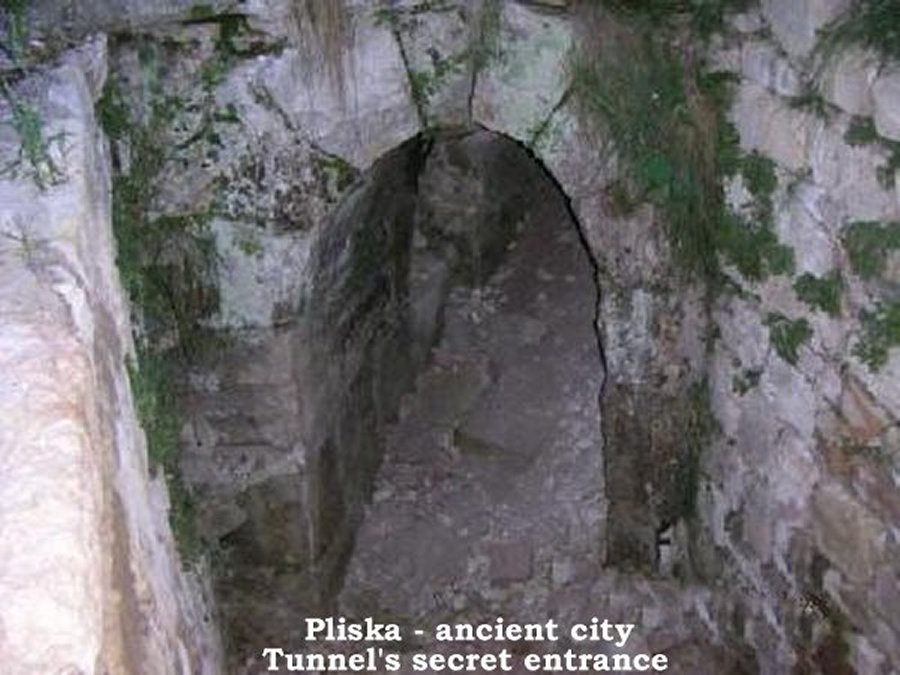
Not long ago, archaeologists uncovered a network of ancient secret tunnels under Pliska. Interestingly, one of the entrances to the secret tunnels, is only constructed of wood, with the planks, well cut and covering exactly the entrance to the tunnel.
Despite that the structure survived a fire since early Medieval times.
Researcher Mariela Inkova explained that "the wooden boards finish at the doors that served as a paneling and they are just cut in line with the width of inputs, you can see the gaps between well-ordered leveling boards that end up vertical doors of this entrance.
However, these ancient boards are a clear proof of the burning of Pliska by the armies of the Byzantine emperor Nikephoros I who conquered the city in 811 AD.
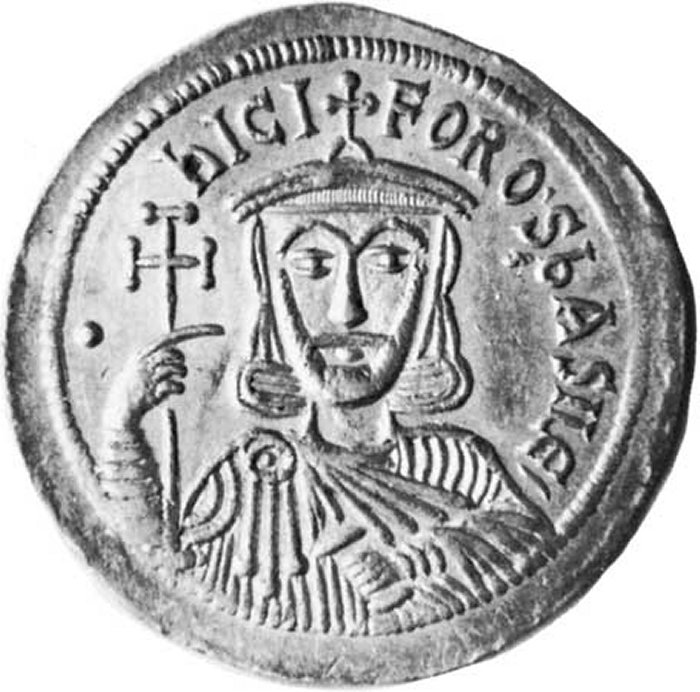 Nikephoros I - Byzantine Emperor from 802 to 811 AD, killed in the Battle of Pliska. Image via Britannica
The capital of Pliska was constructed in an area of 23 square kilometers, and had a moat and ramparts surrounding the outer walls. These were constructed with stability, longevity, and indispensable strategic details.
An important structure of Pliska was the fortified residency of the Bulgarian Khans and
crown princes - the so-called Inner Town. First wooden palace buildings were later rebuilt with bricks, chiseled stones and mortar.
In 811 Pliska was conquered by the army of Byzantine Emperor Nikephoros I. Refusing to take any chances against Byzantine invaders, even the inner walls of the capital were over 2.5 meters thick, and were built to about 12 meters high.
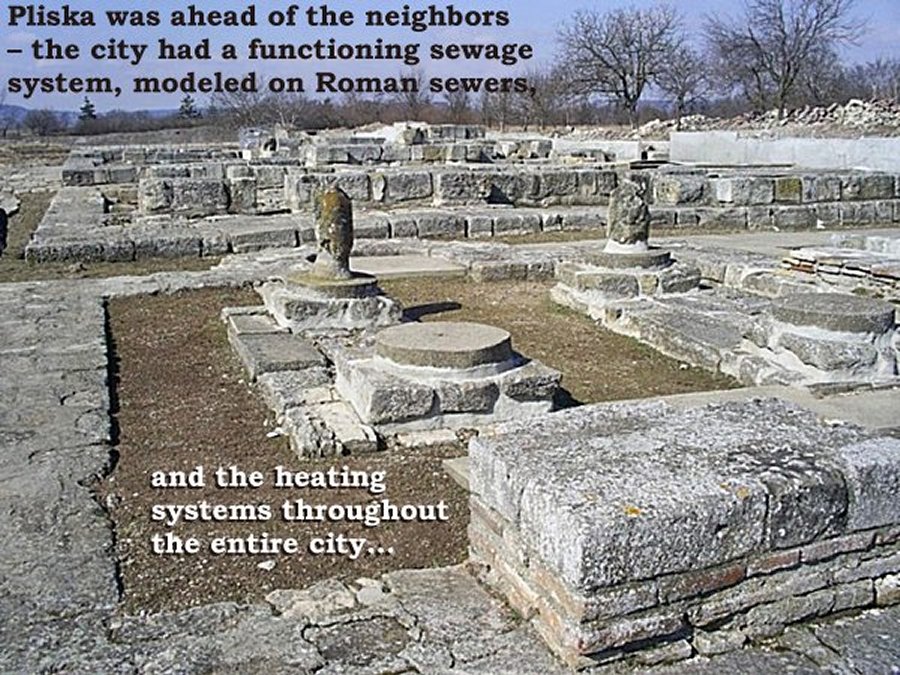
Pliska was ahead of the neighbors in plenty of ways - the city had a functioning sewage system that was modeled on Roman sewers, and the heating systems throughout the entire city ensured that the people were kept safe and warm throughout the harsh winters. Fortress walls surrounded the city, both inner and outer, and at each corner there was a cylindrical-shaped tower for lookouts and nightly watchmen.
What was the purpose of the Pliska's tunnels? Could they serve as a shelter, a protection against attacking armies of enemy? The underground network of the city's tunnels has certainly much more to reveal.
Written by A. Sutherland - AncientPages.com Staff Writer
Copyright © AncientPages.com All rights reserved. This material may not be published, broadcast, rewritten or redistributed in whole or part without the express written permission of AncientPages.com.
Expand for referencesReferences:
J. Henning, Post-Roman Towns, Trade and Settlement in Europe and Byzantium
P. Sophoulis, Byzantium and Bulgaria, 775-831
More From Ancient Pages
-
 Collapse Of Ancient Mayan Capital Linked To Drought – New Study Suggests
-
 Ancient Irrigation System Could Boost Water Availability In Peru
-
 Rare Discovery: Remains Of An Avar Warrior And A Belt Unearthed In Vinkovci, Croatia
-
 Controversial Hollow Earth Theory – Scientific Facts Presented By Researchers – Part 1
-
 Were The Viking Berserkers True Or Drug Addicted Warriors Fighting In Trance?
-
 12,000 Years Ago Siberian People Possessed Technique To Soften Ivory And Create Toys Or Art Items
-
 King Tut’s Face Reconstructed By Bioarchaeologist
-
 Humans Were Apex Predators For Two Million Years
-
 Complex Of Goguryeo Tombs: Beautiful Ancient Wall Paintings Displaying History And Mythology Of North Korea
-
 Hyksos: Foreign Rulers Of Avaris Who Founded The Fifteenth Dynasty Of Egypt
-
 Incredibly Rare Iron Age Wooden Objects Discovered In 2,000-Year-Old Waterlogged Site In The UK
-
 Ancient Tomb Of Peru’s Moche Priestesses Unearthed
-
 Tanana Valley, Alaska: Study On Ancient Hunter-Gatherer Sites Dating Back To 14,500 Years Ago
-
 Arborglyphs – Basque Immigrant Sheepherders Left Their Marks On Aspen Trees In The American West
-
 On This Day In History: Battle Of Nineveh Was Fought – On Dec 12, 627 AD
-
 Nalanda – One Of The Most Praised Learning Centers And Masterpiece Of Ancient World
-
 Two Vikings From The Same Family Reunited After 1,000 Years
-
 Has The Mystery Of Neanderthals’ Flower Burial At Shanidar Cave Been Solved?
-
 The Helm Of Awe – Powerful Viking Symbol For Physical, Mental And Spiritual Protection
-
 Biblical Tefach: Amazing ‘Common Constant’ Found Among Ancient Storage Jars In Israel

