
Mystery Of Ancient Language PIE From Which Half Of All Languages Originate
Ellen Lloyd - AncientPages.com - Did you know that about three billion people speak languages that all originate from one root language that was spoken about 6,000 years ago?
Ancient language PIE is not a universal language, but it is the common ancestor of the Indo-European languages, the world's most widely spoken language family. As many as 400 languages and dialects originate from it.
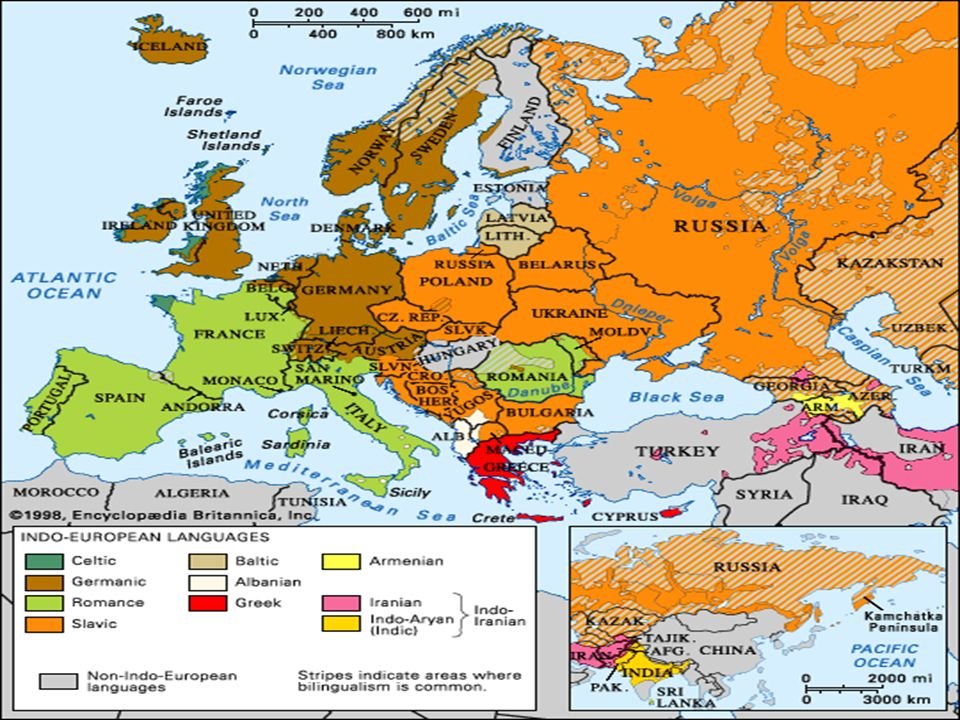
Hindi, Bengali, Persian, English, German, Spanish, and Greek all come from the same root, known as Proto-Indo-European (PIE).
Proto-Indo-European, or PIE, was discovered in 1868 by German linguist August Schleicher.
When And Where Was PIE First Spoken?
It remains unknown when, where, and by whom PIE was spoken, and scholars disagree on how the language spread.
However, many theories attempt to unravel the mystery of this fascinating ancient language.
Currently, the Kurgan hypothesis is the most accepted theory according to which language PIE formed in a region known as the Pontic-Caspian Steppe, a sprawling grassland north of the Black and Caspian Seas today encompasses parts of Russia, Ukraine, and Kazakhstan. The earliest Kurgans date to the 4th millennium BC in the Caucasus and are associated with the Indo-Europeans.
Language PIE is believed to have been spoken in the region from about 4500 to 2500 B.C. Linguist Will Chang from UC Berkeley conducted a comprehensive study of the Proto-Indo-European language and discovered that the first linguistic divergence occurred about 6,500 years ago. By cross-referencing these findings with an analysis of the Indo-European language tree, Chang and colleagues concluded that conquering Indo-Europeans spread PIE as they moved westward.
The Kurgan hypothesis has also been confirmed by David Reich of Harvard University. Reich examined 69 ancient Eurasian mummies who lived 8,000 to 3,000 years ago. One of the mummies was the famous Iceman Ötzi discovered in a 5,000-year-old glacier in the Ötzal Alps in South Tyrol. Genetic tests revealed that certain ailments, including hay fever, derive from Neanderthal genes.
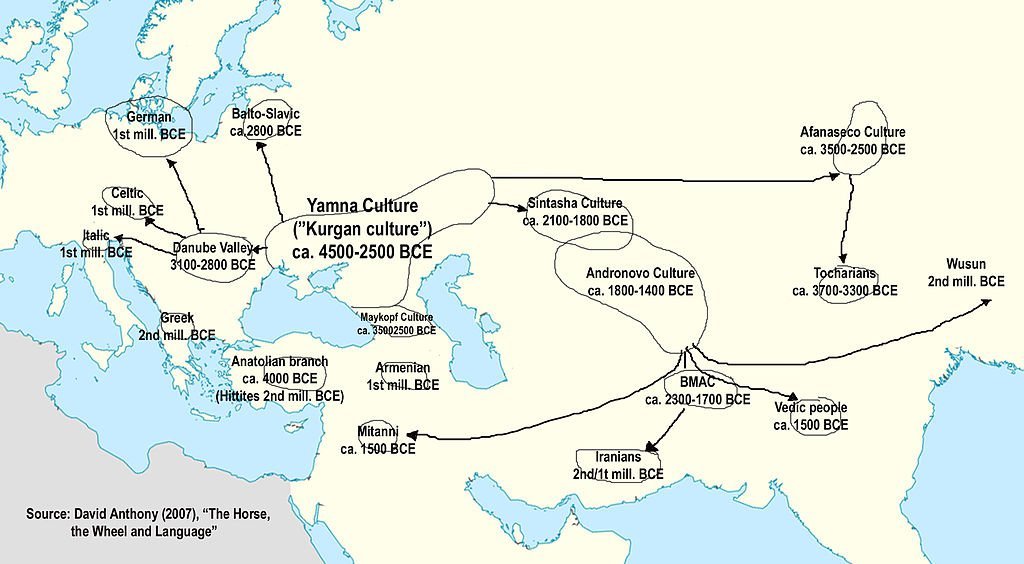
Based on these results, scientists could conclude that European hunter-gatherers came from the Yamnaya steppe in Russia, appearing around 6,000 to 5,000 years ago. These herders originated in the Near East.
Later, about 4,500 years ago, the Corded Ware people created settlements in the Northern part of Europe, including Germany. According to the genetic study conducted by Reich, the Yamnaya Steppe people swept through from the East, settling in Europe and eventually becoming the Corded Ware people. Genetic evidence suggests that most Europeans can trace their ancestry to the Corded Ware people.
Another theory also attempts to explain the origin of the PIE language. According to the Anatolian hypothesis that was first developed by British archaeologist Colin Renfrew in 1987 and later supported by evolutionary biologists from the University of Auckland, New Zealand, speakers of the Proto-Indo-European language (PIE) lived in Anatolia during the Neolithic era, beginning about 10,200 BC, and ending between 4500 and 2000 BC.
The Kurgan and Anatolian hypotheses contradict each other, but scientists seriously consider both since they offer compelling evidence.
Scientists also consider the possibility there is one common universal language that ties all other languages together.
The idea of a universal human language goes back at least to the Bible, in which humanity spoke a common tongue but was punished with mutual unintelligibility after trying to build the Tower of Babel all the way to heaven.
Some researchers think they have found a universal language that self-organizes so that related concepts stay as close together as possible within a sentence, making it easier to piece together the overall meaning.
Updated on August 3, 2024
Written by Ellen Lloyd – AncientPages.com
Copyright © AncientPages.com All rights reserved. This material may not be published, broadcast, rewritten or redistributed in whole or part without the express written permission of AncientPages.com
Expand for referencesMore From Ancient Pages
-
 The Man Who Took The Greatest Alchemy Secret Of All Time To His Grave
-
 Tarascan Indians: Intriguing Pre-Columbian Civilization Of Artists, Warriors And Skilled Metallurgists
-
 The Great Pyramid And Ancient Egyptian Knowledge Shed Light On Biblical Mysteries – Resurrection Of The Flesh – Part 1
-
 Rare Ancient Clothes And Shoes Found Under The Ice At The Lost Lendbreen Mountain Pass
-
 This Ancient Roman Painting Survived Eruption Of Mount Vesuvius In 79 A.D.
-
 4,000-Year-Old Village Mentioned In Ancient Texts Unearthed Near Sacred City Of Varanasi
-
 Ancient Suda: Massive Anonymous Byzantine-Greek Lexicon Dated To 10th Century
-
 Unique Chinchorro Burial Tradition For All And Ancient Egyptians Who Mummified Kings And Nobles Only
-
 4,500-Year-Old Sumerian Palace Discovered In The Ancient City Of Girsu
-
 Sumerian King List – Ancient Record Of Kingship That Has Long Been Of Great Interest
-
 Mysterious And Magnificent Pasha Gardens Built For Unknown Reasons
-
 Ancient Thriving Market Of Khan al-Tujjar (The Merchants’ Caravanserai) Discovered In Lower Galilee
-
 Dragon Man: New Species Of Human May Replace Neanderthals As Our Closest Relative
-
 Mysterious Sanctioned Ancient Temple In Jerusalem Create Some Biblical ‘Problems’
-
 Glory And Fall Of Babylon Dedicated To The Cult Of Marduk
-
 Legendary Johnny Appleseed Who Planted Apple Trees Across North America
-
 Poles conduct mural restoration in the villa buried by the ashes of Vesuvius
-
 Rare Medieval Painting Depicting Judas’ Betrayal Of Christ Saved By Reformation ‘Recycling’
-
 On This Day In History: Moscow Armistice Signed Between Finland And Soviet Union – On Sep 19, 1944
-
 Hidden Text Of Medical Book By Doctor Galen Read For The First Time In 1000 Years

