
Celts: Facts And History About The Powerful And Intriguing People Of Central And Northern Europe
A. Sutherland - AncientPages.com - The Celts are mysterious people who played a crucial role in the history of ancient Europe.
In this article, we take an in-depth look at the people of Central and Northern Europe and examine facts and history about the Celts. The Celts were people living in large parts of Europe during the Bronze Age and Iron Age.
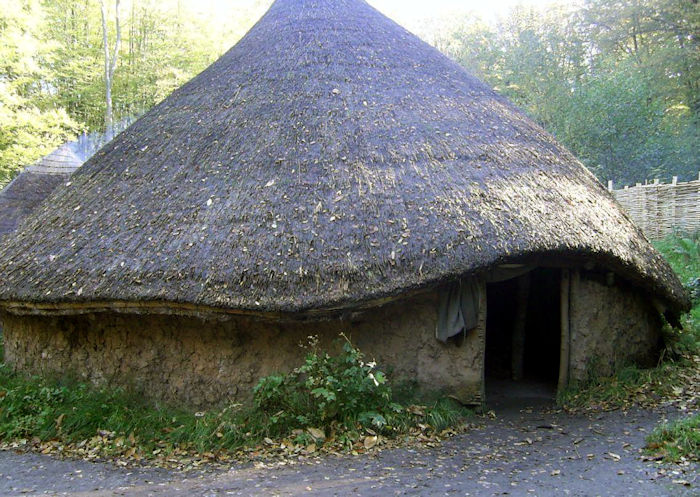
Various designs of Celtic houses have been reconstructed and these models demonstrate highly sophisticated building techniques. A recreation of a Celtic roundhouse, National History Museum of Wales. Credit: FruitMonkey - Public Domain
Various designs of Celtic houses have been reconstructed, and these models demonstrate highly sophisticated building techniques. They dominated most of the highly diverse population groups known to have inhabited certain regions at that time in Europe.
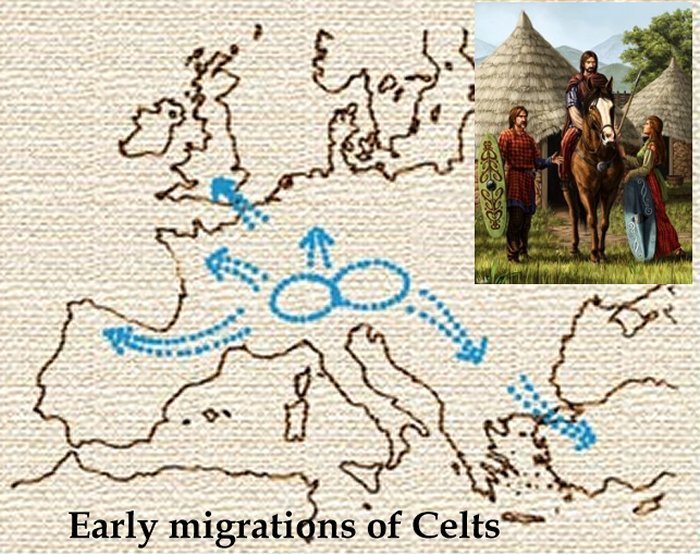
Celtic roots are found in the Rhine and the Danube, where their ancestors settled around 2000 BC in western Austria, Bavaria, and Switzerland; it has been confirmed by archaeological discoveries in the town of La Tene (Switzerland). But to precisely trace the lineage of the Celts back to antiquity is very difficult because of a lack of written history of Europe in the distant past.
The Celts exerted a strong influence on other European inhabitants, which is still visible, particularly in the culture of Wales, Ireland, and Scotland. The culture of these intriguing people had many faces; depending on where they lived, they led a different life occupied with agriculture, trade, sailing, fishing, or handicrafts.
Structure Of Celtic Society
The Celts did not build cities but lived in small villages or strongholds called "oppidum." They could use a potter's wheel and the vehicles equipped with wheels, including the war chariot.
Celtic society was organized into three groups: farmers and artisans, warriors, and priests. Most appreciated were priests, the bards creating poetry, and the druids, who were both the keepers of knowledge about religion, nature, and history, as well as teachers, communicating their knowledge further and enjoying considerable authority. They were also chief advisers and solved conflicts and disputes.
The typical family consisted of two generations, parents and children, or more broadly - the older and younger family members. Related to each other, clans formed a tribe. The Celts had a custom of placing children in the homes of other members of the tribe for their early training and education.
Farmers worked with farming, combining planting that included cows, sheep, pigs, goats, and, possibly, some chickens, while he was also busy with planting wheat, barley, oats, rye, and peas.
Women In The Celtic Society
The women in the society of the Celts were respected and independent. They could be wives, priestesses, warriors, and queens of considerable influence, such as Boudicca and Cartimandua, Roman British Queen of Brigantes Celts.
Among the Celts, the marriage took on different forms; one such form was a marriage lasting for a specified period of time; there was also the possibility of divorce, initiated by both the man and the woman.
Religion And Art Of The Celts
The oldest Celtic beliefs are linked to the cult of forces of nature, fertility, and the power of the Moon. Widely revered so-called matrons, three female deities presented with attributes symbolizing fertility and abundance. Epona, the goddess of fertility and protector of horses, ponies, mules, and donkeys, was a prominent figure in the Celtic pantheon.
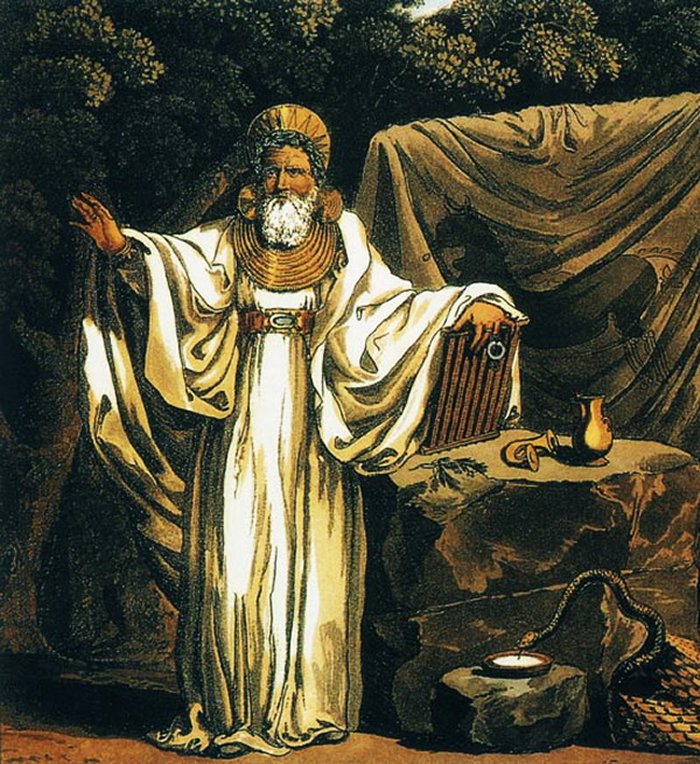
Imaginative illustration of 'An Arch Druid in His Judicial Habit', from The Costume of the Original Inhabitants of the British Islands by S.R. Meyrick and C.H. Smith (1815), the gold gorget collar copying Irish Bronze Age examples. Image: - from "The Costume of the Original Inhabitants of the British Islands" - Public Domain.
Often identified by her horse symbolism, her depictions show her one or more horses. She is either riding side-saddle on a mare or is between two ponies or horses.
Worshiped particularly in the east of Gaul and the Rhineland, Epona was also honored across the European continent, from Britain to the Balkans.
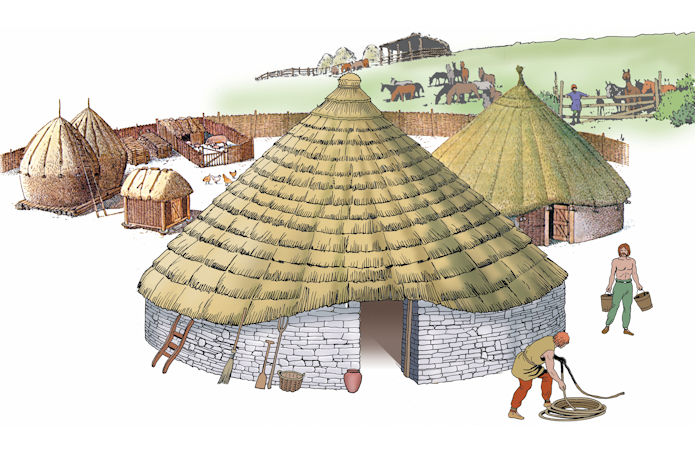
The Celtic house was usually circular, with a large sloping roof of straw and walls made of stone or wood. Credit: Adobe Stock - Massimo Todaro
Other Celtic beliefs developed later, in the Bronze Age, and were strongly associated with the cult of the solar system and the gods, whose cult was associated with such figures as Dagda, Lugh, and Cernunnos.
Romanization of Celtic culture and their religion became enriched by other elements such as the cult of the Egyptian goddess Isis. However, in Ireland, where Christianity was adopted relatively quickly, the Celtic deities were accepted into the pantheon of Christian saints. So, for example, it became the cult of the Christian Saint Brigid.
Technology, Warfare And Defense Of Celts
Already around 1000 BC, Celts mined tin, copper, and rock salt, applying it to food preservation; they could also obtain salt from seawater. They had excellent skills in working with metals; they often used gold and manufactured tools and weapons made of iron and bronze.
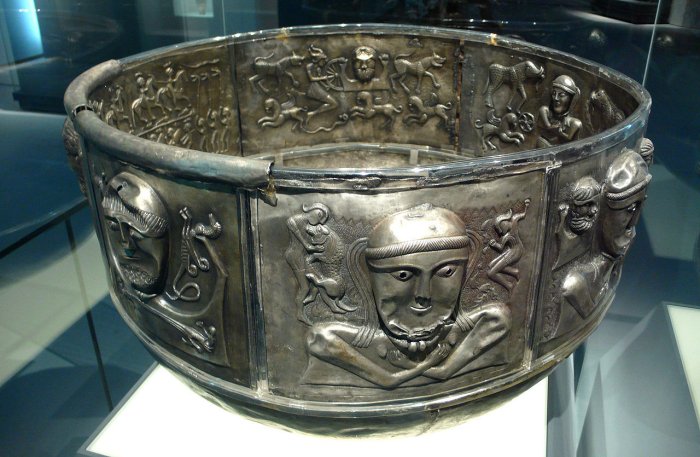
Gundestrup, Denmark. 150-0 BC This cauldron is made from 13 silver plates. The hammered and gilded plates weigh almost 9 kg. On the outside, large deities are accompanied by small humans, animals and mythical creatures in pairs. Interior shows scenes populated with many figures, both human and animals. One of them shows a parade of warriors carrying a carnyx, a Celtic trumpet. Image credit: - CC BY 2.0
The Celts' most significant achievements were the iron horseshoes, spoked wheel, and seamless metal wheel rims. Their chariots had more incredible speed; horses were much safer as the hooves and horseshoes protected them better from injury. Celtic metal shield coverings and chain-link armor were much superior to those used by other people.
All these skills, as well as knowledge of methods of metal processing and production of weapons, made the Celts superior to other less developed societies. The Celtic warriors were brave, mighty, highly regarded, and respected by other armies.
The Expansion Of The Celts
At the end of the Bronze Age, about 1000 BC, the Celts started expansion into western and central Europe. They reached the territory of present-day France, Benelux, Switzerland, Italy, the Iberian Peninsula, and the British Isles.
In the 4th century BC, the Celts entered Rome and soon were driven from there. Later, they continued expansion into other regions of Europe. About the 3rd century BC, they entered Greece, sacked Delphi in 279 BC, and settled in present-day Turkey. Known as the Galatians, they founded the city of Ankara.
Celtic - Roman Relations Were Never Good
The Celts were considered by the ancient Greeks and Romans to be barbarians.
Around 284 BC, the Romans entered the territory of the Iberian Peninsula and began to gain new Celtic settlements over the Atlantic. The situation started to change and was not particularly favorable as before.
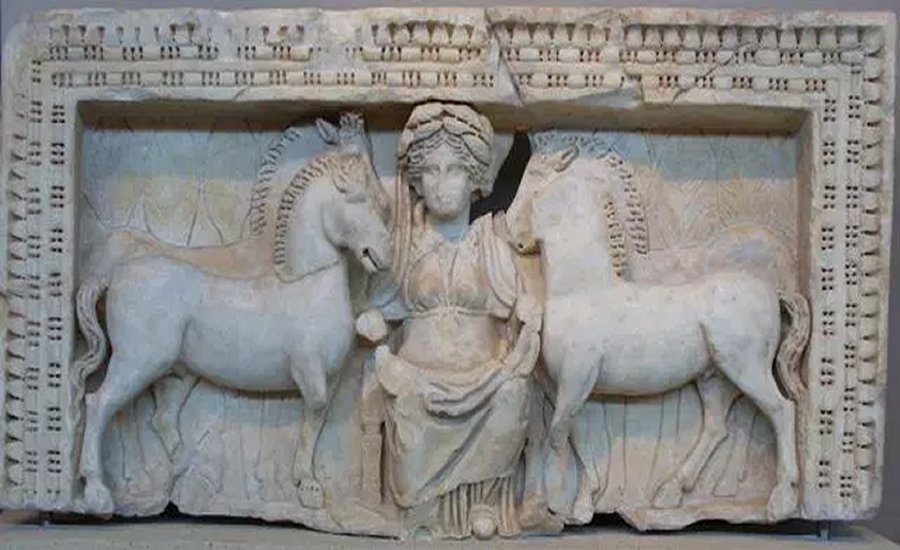 A relief of Epona, flanked by two pairs of horses, from Roman Macedonia. Image credit. QuartierLatin1968 - CC BY-SA 3.0
The Roman conquest of Gaul began in 225 BC.
The Celtic Boii tribe, living in Bologna, clashed with the Roman army at the Battle of Telamon and suffered defeat. Counting on the support of Hannibal and supported his army, but after he left Italy in the year 203 BC, he lost an ally, and the Romans could quickly attack Bologna and win.
The Roman conquest of Gaul proceeded in stages: first, in the 2nd century BC, The Romans captured and colonized South Gaul South (modern-day Provence), and Julius Caesar conquered the northern part of Gaul in 58 BC - 50 BC.
The Collapse Of Celtic Civilization
The conquer of Gaul marked the beginning of the end of the Celts' dominance. Celtic people assimilated the new culture relatively quickly, though not without initial resistance, as we remember the struggle of Vercingetorix, the famous leader of his brave people.
The universal Latin superseded the Celtic languages; the social structure of the Celtic society also changed, and the role of the druids significantly decreased.
Written by – A. Sutherland - AncientPages.com Senior Staff Writer
Copyright © AncientPages.com All rights reserved. This material may not be published, broadcast, rewritten or redistributed in whole or part without the express written permission of AncientPages.com
Expand for referencesReferences:
Green, The Gods of the Celts
Haywood, The Celts: Bronze Age to New Age
More From Ancient Pages
-
 Biblical Mosaic Depicting Miracles Of Jesus Discovered At The ‘Burnt Church’ In Hippos
-
 Large Fresco Depicting The Procession Of The Wine God Dionysus Found In Pompeii
-
 New West Papua Findings Provide Insights Into Early Human Migration To The Pacific
-
 Ancient City Was Discovered Underground In Antalya’s Demre District
-
 Unique Viking Age Shipyard Discovered At Birka Challenges Maritime Activities Of The Viking Age
-
 A 1,600-Year-Old Mosaic Accidentally Unearthed In Ancient City Of Yavne, Israel
-
 Egyptian King Seti I Documented His 3300-Year-Old Accomplishment On Triumphal Stele
-
 Mysterious Pyramid Of Menkaure Remains An Ancient Puzzle
-
 MUL.APIN Tablets: Babylonian Knowledge Of Astronomy And Astrology Recorded In Cuneiform Writing
-
 Artificial Intelligence Reveals The Out Of Africa Expansion Is More Complex Than Previously Thought
-
 A 2,700-Year-Old Urartians’ Ayanis Castle And Haldi Temple – Soon An Open-Air Museum
-
 Xiahou Dun ‘The One-Eyed’: Faithful Warrior, One Of Cao Cao’s Talented Officers
-
 Tooth Analysis Sheds Light On South Australia’s Early Colonial History
-
 Kalaripayattu – 3,000-Year-Old Indian Martial Art From Which Kung Fu And Karate Emerged
-
 Old Unexplained Mystery Of The Frightening Woman On The Isle Of Iona
-
 Has The Mysterious Lost Capital Of The Ancient Kingdom Of Lyncestis Been Unearthed In Northern Macedonia?
-
 Hunter-Gatherers Used Open Habitats Millennia Before Stonehenge Monuments Were Built
-
 10 Ancient Chinese Musical Instruments You Didn’t Know About
-
 Engraved Trees Are Living Records Capturing The Rich History And Traditions Of The Sámi People
-
 Remarkable Funerary Relief Of Life-Size Couple Discovered At The Necropolis Of Porta Sarno In Pompeii

