
Gaocheng: China’s Oldest Observatory And Large Gnomon Installation Of The Ancients
A. Sutherland - AncientPages.com - Astronomical tradition of ancient China was an important part the country’ cultural tradition and dates back to the Bronze Age and 1800 BC. Through the millennia, it changed, but the core – the basic pattern of the Chinese astronomy – remained the same.
To early astronomical observations – especially the passage of the sun - the Chinese used a simple but very powerful instrument known as ‘gnomon’.
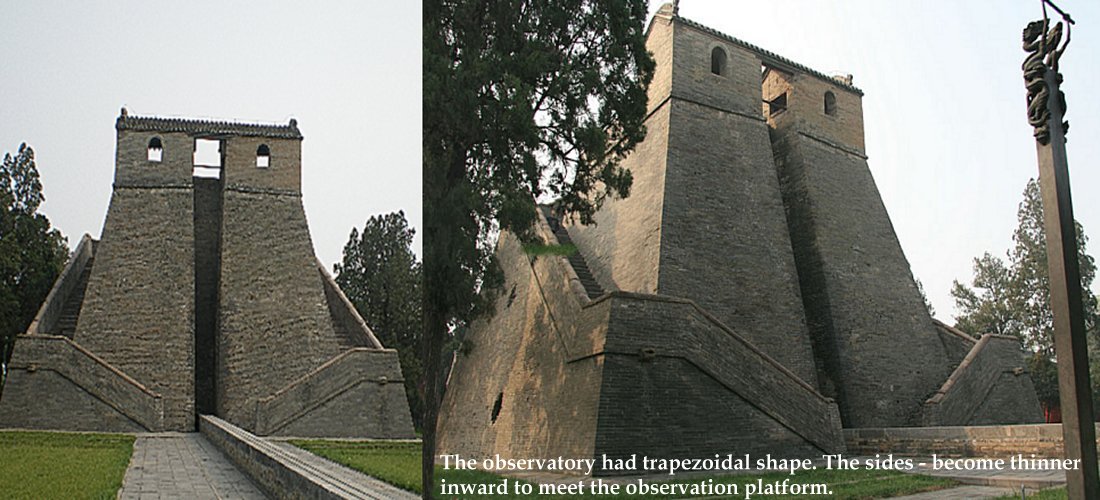
Gaocheng Astronomical Observatory – The China’s oldest observation platform
The Chinese used a ‘gnomon’ instrument as it was confirmed by archaeologists who discovered the early graphic symbol that represents an idea or perhaps a concept of this useful instrument on Bronze Age oracle bones of Shang Dynasty.
Several accounts of Chinese gnomons – before and after the birth of Jesus Christ – also confirm their use. For example, one such large ‘gnomon installation’ existed at Yang-Cheng town, (now Gao-cheng (Gaocheng), located about 50 miles south east of Louyang, (then, the capital of the Eastern Han Dynasty (25-220 AD).
See also:
Gnomon: Ancient Time Measuring Instrument Used By Babylonians, Egyptians And Chinese
Ancient Genius Jang Yeong-sil And His Brilliant Astronomical Instruments
Probably The Oldest Star Map Discovered In Stone Chamber Of The Kitora Tomb, Asuka Nara, Japan
Elusive Planet Mercury As Seen Through The Eyes Of Ancient Astronomers
Namoratunga: ‘People Of Stone’ And Ancient Astronomical Observatory
The Gaocheng Observatory situated at Dengfeng in the central Chinese province of Henan, is a historic solar observatory with a long tradition: it also has a very powerful structure.
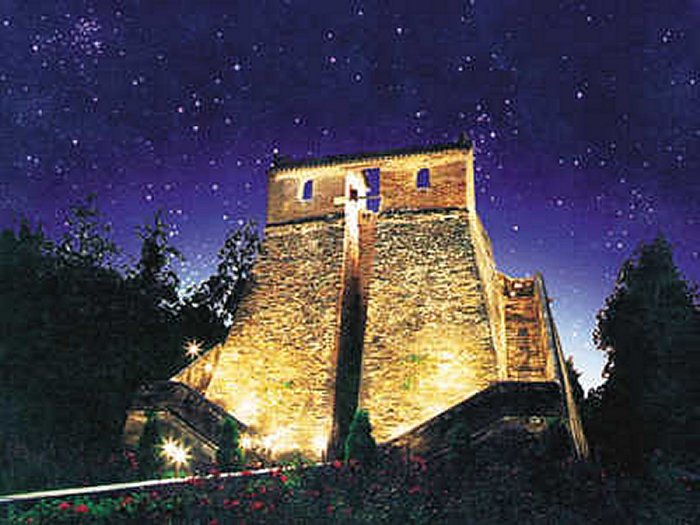
The structure has trapezoidal shape and was constructed of bricks and stones; it is composed of two main parts the body and shigui (‘the ruler to measure the sky’).
It is the oldest astronomical platform in China with tradition that goes back to the time of the Mongol rule. It was built from 1267 to 1269 during the Yuan Dynasty (1271-1368), when the Empire of Yuan was established and it was used for observations of the stars, the sun and for recording of time.
The structure is also one of the most ancient observatories in the world.
Additionally, there have been commissioned the construction of 27 observatories the so-called 'observation stations' scattered across the China.
The Gaocheng Observatory played an important role because it was determined to be the 'earth core', which means the most central point on the surface on our planet. It delivered very precise observations.
Astronomical tradition of ancient China was an important part the country’ cultural tradition and dates back to the Bronze Age and 1800 BC
The structure has trapezoidal shape and was constructed of bricks and stones; it is composed of two main parts the body and shigui (‘the ruler to measure the sky’).
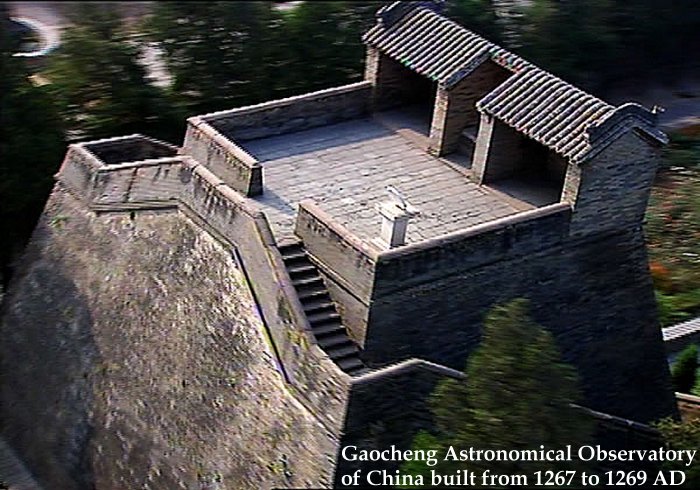
It is 9.46 meters high by itself, and 12.62 meters high if the 2 cabinets on the top are included. The somewhat unconventional gnomon is a bar mounted horizontally between the 2 cabinets. The shigui extending to the far north is 31.9-m-long stone measurement path that stretches out in front of the building and is used to measure the sun's shadow.
It is made up of 36 square stones with two parallel waterways on it to check its levelness. The location of shigui is in accordance with the direction we take today to measure the Meridian. External stairway lead to the structure’s top.
Gaocheng Observatory was designed by Guo Shoujing (1231-1314) who was an inventor, mathematician and astronomer. He used his engineering skills to advance several instruments indispensable for measuring of celestial bodies.
Written by – A. Sutherland - AncientPages.com Senior Staff Writer
Copyright © AncientPages.com All rights reserved. This material may not be published, broadcast, rewritten or redistributed in whole or part without the express written permission of AncientPages.com
Expand for referencesReferences:
F. Wang, Geo-Architecture and Landscape in China’s Geographic and Historic Context
More From Ancient Pages
-
 Strange 1,200-Year-Old Anglo-Saxon Artifact Used For Unknown Purpose Found In Norfolk, UK
-
 Ancient Tomb Belonging To Princess Of Ancient Nomads Discovered In China
-
 Varahamihira: Indian Sage And One Of The Greatest Minds Of All Time
-
 Scientists Unravel Why Humans Used Tiny Flakes 300,000 Years Ago
-
 Mysterious Megalithic Stones Of Carnac, France – An Unsolved Neolithic Enigma
-
 Archaeological Finds Shed New Light On The Paleo Diet Habits Of Ancient Hunter-Gatherers
-
 Caligula’s Stunning 2,000-Year-Old Sapphire Ring Tells Of A Dramatic Love Story
-
 DNA Study Of ‘Cheddar Man’ Re-Writes Ancient History Of Britain
-
 15 Prehistoric Rock Paintings Discovered Near Ancient Armenian City Of Ani
-
 Medieval Grave And Skeleton With Arrow In Chest Unearthed In Ancient City Of Plovdiv, Bulgaria
-
 Mysterious Ancient Mass Grave With Roman Skeletons Baffles Archaeologists
-
 Evidence Of Sangam Age Settlement Unearthed At Nangur, Tamil Nadu
-
 Political Debates In Ancient Rome: Great Harshness, Personal Attacks And Unpleasant Atmosphere
-
 Unknown Rock Inscriptions And Earliest Monumental Hieroglyphs In Egypt Shed New Light On Ancient Writing
-
 Fin Folk – Mythical Amphibious Sea People On Orkney And Shetland
-
 Why Is The Yarm Viking Helmet Special?
-
 Hieroglyphs Reveal The Name Of Forgotten Maya Queen Ix Ch’ak Ch’een
-
 How Did Native American Indian Chiefs Get Their Names?
-
 Mystery Of Ancient Language PIE From Which Half Of All Languages Originate
-
 Jack o’ Legs – The Kind Hertfordshire Giant Who Robbed The Rich And Gave To The Poor

