
Ur-Nammu – Popular And Accomplished Ruler Of Sumer
A.Sutherland - AncientPages.com – Ur-Nammu was a Sumerian king who reigned about 2112-2095 BC and was a founder of the Third Dynasty of Ur.
Initially, he held the position of Sagina - general manager or military - in the city of Ur on behalf of the king of Uruk, and its military activities contributed to an advantage over the Gutians, who had conquered Akkad, controlled of Sumer and the rest of Mesopotamia.
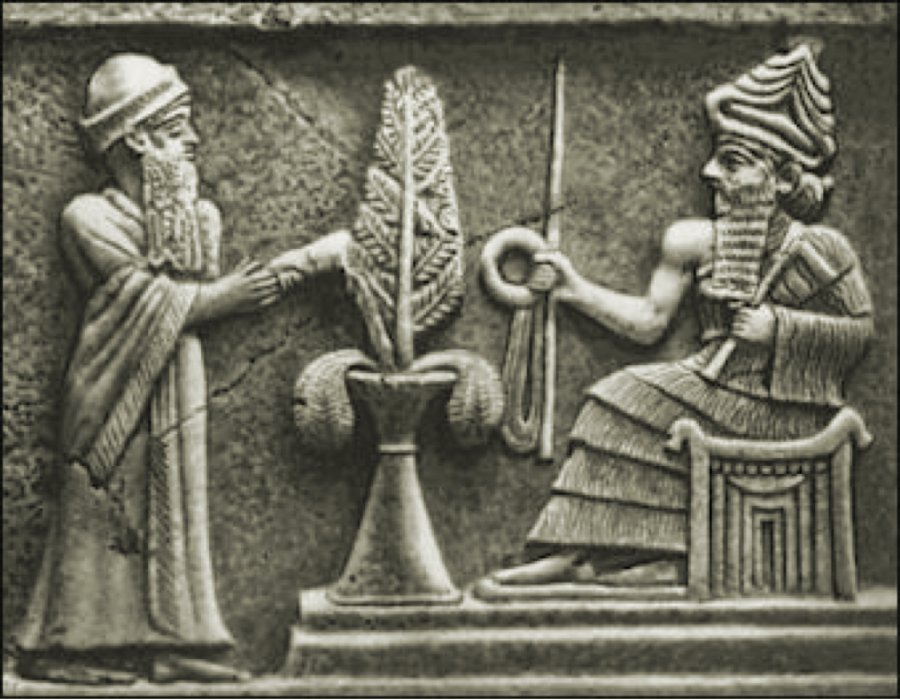
He revitalized the economy of Sumer and encouraged the pursuit of culture and art. This period is known as the Sumerian Renaissance and Ur-Nammu’s efforts were not in vain. Stela or Ur-Nammu. Credit: Public Domain
After the death of King Utu-hengal, Ur-Nammu seized power in Sumer and as an independent ruler of united several Sumerian cities, and then won a momentous victory over the forces of the enemy, driving him out of the country.
He called himself the brother of Gilgamesh and is widely remembered for his legal code, the Code of Ur-Nammu, the oldest known surviving example in the world. His laws known as the laws of Ur-Namma (or Code of Ur-Nammu ca. 2112-2095 BC) represent the first full set of written code found, and it is the oldest surviving tablet containing a law code that was written circa 2100 BC.
Ur-Nammu proved to be a good politician. He understands the current situation of his country, which was not the same as two hundred years ago when it lost its independence, conquered by the Assyrian king Sargon the Great.

Bust of King Ur-Nammu. Credit: Metropolitan Museum of Art - Right: The object on his head (image to the left) represents a basket of Earth. Image source
Ur-Nammu was also a good host, reformer of taxes and military forces, and builder of temples, roads, and canals; mud-brick stamped with the name of king Ur-Nammu was found in Nippur, Uruk, Eridu, Kish, Larsa, and the Ummah.
In fact "the Imperial city of Ur revived Sumer when King Ur-Nammu in 2112 BCE founded the Third Dynasty of Ur. He ruled almost the whole of Sumer and Akkad. The Sumerian Renaissance that occurred during the Third Dynasty of the city of Ur after the collapse of the Akkadian Empire between 2047-1750 BCE brought a cultural revival to Sumer. King Ur-Nammu made cultural advancements a goal of his administration and maintained peace so that the arts and technology could flourish..." we read in Henry Freeman's "Sumerians".
Many constructions (stepped temples – ziggurats, including the Great Ziggurat of Ur) originate from this Sumerian period. The construction of temples initiated by Ur-Nammu was not only a religious but also a political act.
By building and restoring temples of the gods, Ur-Nammu made Sumer strong because he appealed to the feelings of his people and united them with gods, making him a ruler - important and respected.
He revitalized the economy of Sumer and encouraged the pursuit of culture and art. This period is known as the Sumerian Renaissance, and Ur-Nammu’s efforts were not in vain.
His reputation among his subjects is clearly seen in stele and inscriptions. Then ruler was considered to have restored the ancient state of affairs by re-establishing Sumerian rule and reinforcing it. It was necessary because there was the growing power of the Amorite nomads in the Syrian steppe, and it was dangerous.
Ur-Nammu was killed during the battle against the Gutians, who returned and endangered the cities of Sumer in 2030 BC. Ur-Nammu led his army to meet them. According to the Sumerian poem ‘The Death of Ur-Nammu and His Descent to the Underworld’, his army scattered, fleeing the battlefield. and “his body lay tossed aside like a broken urn.”
And yet, his great dynasty survived and lasted for over 100 years. He was succeeded by his son Shulgi, after an eighteen-year reign, and Shulgi of the Third Dynasty of Ur (circa 2094-2047 BC) was also a great personality. He carried out a punitive campaign against the Gutians and he supported a policy of territorial or economic expansion. He was at war on a regular basis, clashing with Hurrian invaders, and finally, he was forced to oversee the construction of a wall to keep the Amorites out.
Written by – A. Sutherland - AncientPages.com Senior Staff Writer
Updated on July 28, 2021
Copyright © AncientPages.com All rights reserved. This material may not be published, broadcast, rewritten or redistributed in whole or part without the express written permission of AncientPages.com
Expand for referencesReferences:
H. Crawford, Sumer and the Sumerians
Kriwaczek, P. Babylon: Mesopotamia and the Birth of Civilization
More From Ancient Pages
-
 2,500-Year-Old ‘Dragon Bed’ Restored By Chinese Archaeologists
-
 Looted ‘Pietas Domini’ Gothic Altar Dated To 1435 AD Returns From Germany To Poland
-
 3,500 Underground Man-Made Maresha/Beit Guvrin Caves And Tunnels In The Holy Land
-
 Location of Roman Ballista Machines During The Siege Of Jerusalem – Uncovered
-
 On This Day In History: Isaac Asimov Creator Of Science Fiction Was Born – On Jan 2, 1920
-
 Amazing Ancient Roman Marble Floor Found In The Underwater City Of Baiae, Italy
-
 Ancestral Puebloans Survived Devastating Climate Change Hiding In New Mexico Lava Tubes
-
 Can Diseases Explain Why Neanderthals Suddenly Disappeared About 40,000 Years Ago?
-
 AI Tool ‘Aeneas’ Helps Historians Restore Damaged Latin Texts By Accelerating Complex And Time-Consuming Work
-
 518-Million-Year-Old-Rocks Suggest Animal And Human Life May Have First Emerged In China – Scientists Say
-
 Intriguing And Suprising Ancient History Of Swimming That Started Over 100,000 Years Ago
-
 Collapse Of Akkadian Empire Strongly Related To Catastrophic Climate Change
-
 Riddle Of Orkney’s Lost Tomb – Fascinating Neolithic Discovery
-
 Fire Reveals Notre-Dame De Paris Cathedral Was Historical First In Using Iron Reinforcements In The 12th Century
-
 25 Stone Age Caves And Rock Carvings Found In Odisha, India
-
 17th Century Medical Pop-Up Book Digitized
-
 Strange History Of Safety Coffins: From Ancient To Modern Times
-
 Spicy History Of Chili Peppers – Study From University Of Alabama
-
 How Did Alexander The Great Die?
-
 Bees Originated From An Ancient Supercontinent Millions Of Years Earlier Than Previously Thought

