
Sumerian Stele Of The Vultures: Oldest Known Historical Records Carved On Limestone
A. Sutherland - AncientPages.com - The Stele of the Vultures is a Sumerian historical and literary work dated to the Early Dynastic III period (2600–2350 BC).
Also known as Eannatum’s Stele of Vultures, the artifact is fragmentary, but it was once carved from a single slab of limestone. The stele was commissioned by Eannatum, a powerful Sumerian ruler of Lagash around 2460 BC.
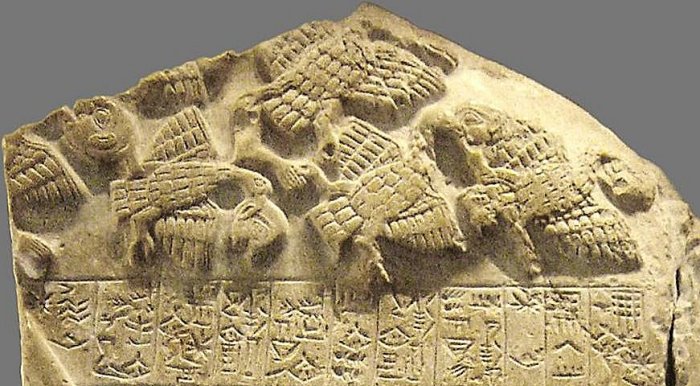
A fragment of the Stele of the Vultures showing vultures with severed human heads in their beaks and a fragment of cuneiform script. Image credit: Sting - CC BY-SA 3.0
The king of Lagash, Eannatum, conquered all of Sumer and established one of the first verifiable empires in history. Eannatum even expanded his enormous influence beyond Sumer, and during his reign many palaces and formidable temples were built, especially in the city of Lagash.
It contains only seven pieces; the first three fragments were unearthed during excavations in the early 1880s by the French archaeologist Ernest de Sarzec (1832–1901), credited with the discovery of the Sumerian civilization.

This is a preview of our premium article available only to members of Ancient Pages.
Become a member to read more - Click here
If you are already a member and have logged in to your account, you can access the article here

See also:
How Did Mesopotamia Change The World?
Nippur – Holy City Of God Enlil And One Of The Oldest Cities Of Sumer
Ancient City Of Urkesh – Home Of Kumarbi – The Foremost Son Of Anu
More From Ancient Pages
-
 Prehistoric Anomaly On The Tennessee-North Carolina Border Baffles Scientists
-
 Sacred Cherokee Star Mound And The Legend Of The Star People – Beneath The Ground May Lie A Secret That Should Remain Hidden Forever
-
 In Ancient Mesopotamia, Sex Among The Gods Shook Heaven And Earth
-
 Secrets Behind Ancient Mesopotamian Sign Uncovered By Scientists?
-
 The Aztec Sun Stone And Medusa Reveal An Intriguing Connection – A Different Gorgon And Strange Location – Part 2
-
 Discovery Of An Unusually Large Ancient Artifact May Confirm Powerful Myth Of A Mysterious Race
-
 Strangeness In The Crystal Forest – Sightings Of Sky Mirrors And Luminous Visitors
-
 Mysterious Ancient Tomb Reveals ‘Impossible’ Human Connection To Cosmos – Human Anomaly? – Part 2
-
 Mystery Of The Forgotten Explorers And Ancient Artifacts That Re-Write History Of North And South America
-
 Riddle Of An Ancient Underground City No-One Thinks Exist – Have We Misunderstood Plato? Part 1
-
 Nalanda – One Of The Most Praised Learning Centers And Masterpiece Of Ancient World
-
 Strange Case Of The Italian Doppelganger – A Tragedy – Part 1
-
 History Of Jarlshof – Thousands Of Years Of History With Traces Of Picts, Vikings And Scots
-
 Movie Stars’ Creepy Encounters With The Unexplained
-
 Reconstructed – Incredibly Well-Preserved 1,700-Year-Old Lendbreen Tunic – Norway’s Oldest Piece Of Clothing
-
 Unusual Time Slips Reported By Multiple People In A Bustling City
-
 Native Americans’ Visions Of Distant Explorers May Unravel Some Ancient Mysteries Of North America – The Arrival – Part 1
-
 Mysterious, Well-Preserved Ancient Foreign Mummies Found On Remote Islands In North America
-
 Advent: Facts And History About The Christian Season Celebration
-
 Mysterious Ancient Jade Artifact May Offer Evidence Of Trans-Pacific Contact – Did Ancient Sailors From California Visit New Guinea?

