
Soap Was Invented In 2800 B.C By Babylonians
AncientPages.com - The first evidence of the use of soap can be traced to around 2800 B.C. Soap was invented by Babylonians and also used in Mesopotamia, ancient Egypt, ancient Greece and by the Romans.
However, in ancient times soap was not used for personal hygiene. Instead it was used cleaning cooking utensils and medicine purposes, such as for example treatment of skin diseases.
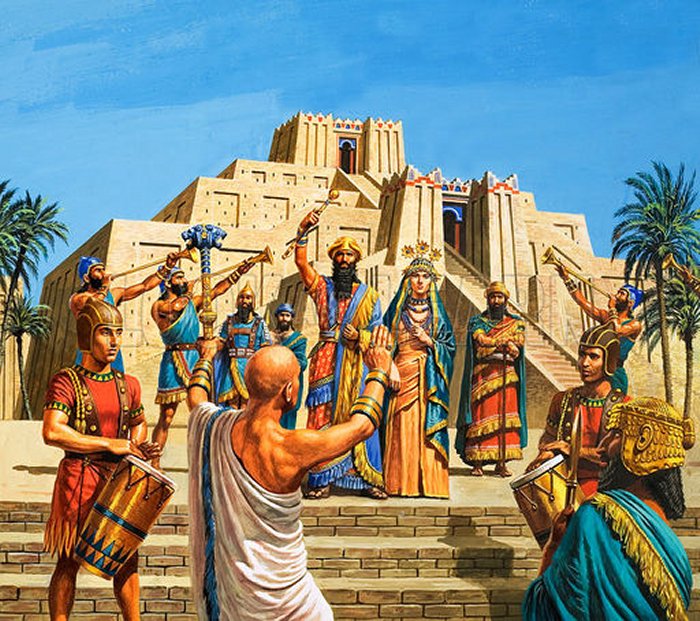
Ancient Babylonians invented soap about 2800 B.C.
Ancient Babylonians discovered that by mixing animal fats with wood ash and water they could create a cleansing substance.
Originating from the Syrian city of Aleppo, the Aleppo soap is widely considered to be the first soap ever made. It quickly became very popular across the Middle East and far beyond.
The ancient city of Aleppo thrived on trade for thousands of years, and was famous for being the endpoint of the famous Silk Road that bridged East and the West world before the advancement of sea trade routes in the “Age of Sail”.
One of the most important trade items of the city of Aleppo was the unique soap that was made by the generations of merchant families and manufacturers for thousands of years
It was made from mixing oil from laurel (bay) trees with olive oil and soda. Formula and manufacturing process for this highly prized soap did not change over time and is still today produced in its original form.
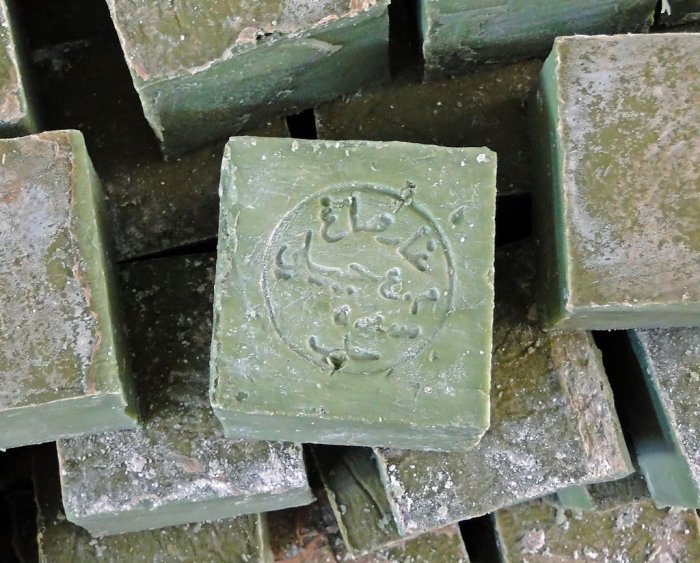
Aleppo soap. Image credit: Bernard Gagnon
People from all around the world who visited Aleppo quickly realized the value of the soap and it was first introduced to Europe by the Crusaders in the 11th Century.
Unfortunately, the exact origin of the Aleppo soap is lost in time, and even though there is hundreds of tales and legends about its creation, modern historians cannot confirm any one. The earliest written mentions of this soap come from the 8th century AD. When the Aleppo soap was brought to Europe people started to produce their own variations of the soap.
See also:
Oldest Evidence Of Beer Was Found On A Sumerian Tablet In Mesopotamia
First Bathrooms Appeared Around 8,000 B.C In Scotland
Ancient Egyptians Invented Toothpaste
The Castile Soap was an early European high quality soap that became popular. The Spanish city had an abundance of olive oil, crucial ingredient that was used in the production soap.
Unlike the Aleppo soap, the Castille soap did not require the use of laurel oil that short in supply, Castille’s easy access to olive oil enabled creation of pure white soap that was very mild and effective. Castile soap became one of the best natural and bio-degradable soaps that can be manufactured by hand.
The soap was perfect for washing body, laundry, hair. It could be easily and safely used by children.
Copyright © AncientPages.com All rights reserved. This material may not be published, broadcast, rewritten or redistributed in whole or part without the express written permission of AncientPages.com
More From Ancient Pages
-
 Ancient Scandinavians Never Spoke Of Themselves As Vikings – Here Is Why
-
 Facial Reconstruction Of Chinese Emperor Wu Who Lived 1,500 Years Ago
-
 Puzzling Biological Event 7,000 Years Ago – Something Weird Happened To Men
-
 Monumental King’s Grave (Bredarör) In Kivik, Sweden With Spectacular Rock Carvings
-
 Yenikapı Shipwrecks – A Unique Historical Treasure That Sheds Light On Ancient Ship Production
-
 Hidden Silver Casket With Bones Of 13th Century Saint Found
-
 Erik The Red: Famous Viking Outlaw Who Colonized Greenland And Was Father Of Leif Erikson
-
 Knowledge Of Divine Alien Beings And High-Tech In Ancient Egypt Described In Sacred Books And Papyrus – The God Who Spoke About Time Dilation – Part 1
-
 4,000 Years Ago Women Of El Argar Used Their Teeth As Tools
-
 Intriguing Ket People – The Last Nomadic Hunter-Gatherers Of Siberia
-
 Early Harappan Burial Site With 26 Graves Unearthed In Kutch, Western India
-
 Mystery Of The Maya Blue Pigment And Its Unusual Chemical Composition
-
 Varangian Guard: Professional Viking Warriors Highly Valued For Courage, Loyalty, Discipline And Fighting Skills
-
 Mysterious 9,000-Year-Old Shaman Burial In Bad Dürrenberg – One Of Central Europe’s Most Spectacular Archaeological Discoveries
-
 Jiangshi – Terrifying Vicious Ancient Chinese Vampire In Disguise
-
 Humans’ Evolutionary Relatives Butchered One Another 1.45 Million Years Ago
-
 Inanna – Prominent And Highly Honored Mesopotamian Goddess
-
 Experiments Show The Great Sphinx May Be A Natural Formation – Scientists Say
-
 Precious Ancient Chinese Immortality Suits Made Of Jade
-
 Pharaonic Water Wells Discovered For The First Time Near ‘Horus Road’ In Sinai, Egypt

