
Clapping To Show Appreciation Is An Ancient And Widespread Behavior
AncientPages.com - Clapping is a common international behavior when we wish to show our appreciation of something. It's something we simply do, especially when we are in large groups.
But when exactly did clapping become the norm for expressing applause? When did we start clapping to show appreciation? As a matter of fact, it turns out that clapping is an ancient and widespread behavior.
Researching ancient history we learn that the practice of clapping as a way of applauding can be traced to ancient Greece as well as ancient Rome.
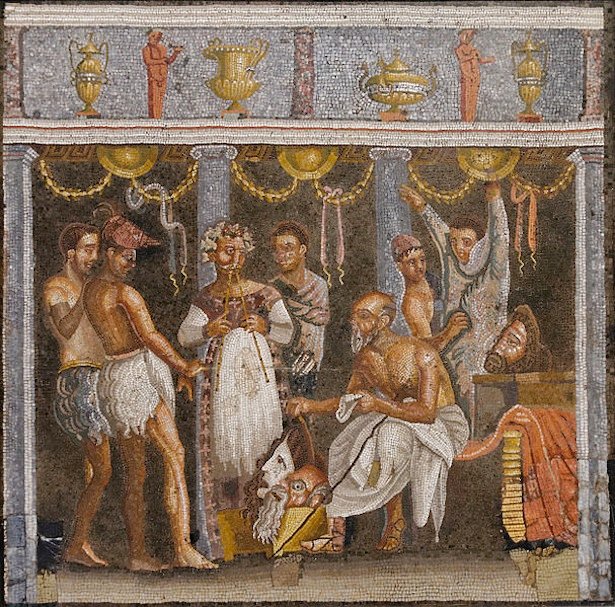
Roman mosaic of choregos and actors, from the House of the Tragic Poet, Pompeii.
According to University of Chicago theater professor and Northlight Theatre dramaturg Gavin Witt, clapping was well established even in 4th Century B.C. Athens, where performers "competed for prizes and paid applauders to influence judges."
See also:
How Did Ancient Romans Grow Their Gardens?
First Pay Toilets Were Invented In Ancient Rome In 74 A.D.
The ancient Romans, on the other hand, had a set ritual of applause for public performances. People expressed degrees of approval. They could snap the finger and thumb, clap with the flat or hollow palm, wave with the flap of the toga, for which last the emperor Aurelian substituted a handkerchief (orarium), distributed to all Roman citizens. Some ancient Roman emperors really enjoyed clapping. Emperor Nero, established a school of applause and was followed on his concert tours by a claque of 5,000 knights and soldiers.
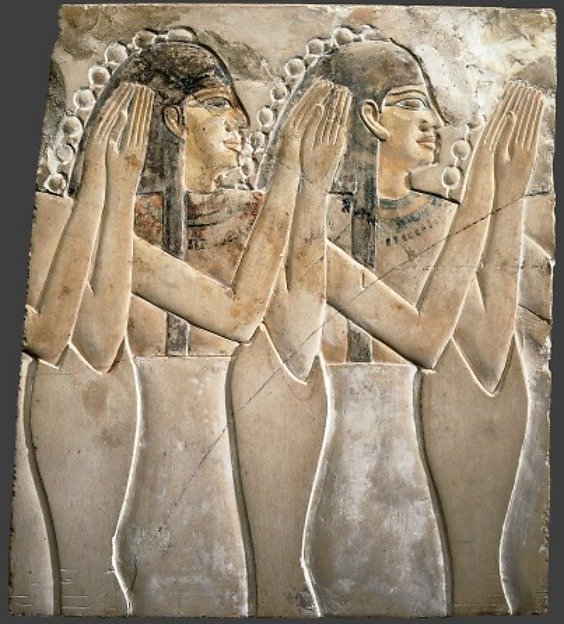
Ancient relief of clapping Egyptian women.
It should be added that we are not the only species to put together our hands. Gorillas, chimps, and orangutans sometimes clap their hands to get attention. However, clapping as a sign of joy or approval is a learned behavior and to our best knowledge limited to humans.
Copyright © AncientPages.com All rights reserved. This material may not be published, broadcast, rewritten or redistributed in whole or part without the express written permission of AncientPages.com
More From Ancient Pages
-
 Mysterious Greyfriars Kirkyard: A Cemetery In Edinburgh With Dark And Spooky History
-
 Agora: An Ancient Meeting Place Visited By Many Famous Philosophers
-
 Mystery Of The Kusanagi Treasure: The Legendary Sword
-
 Hogmanay: Scotland’s New Year Celebration Inherited From The Vikings
-
 First European Farmers’ Heights Did Not Meet Expectations
-
 Rare Kakatiya Dynasty Sculptures Discovered Near A Temple In Telangana, India
-
 Illegal Journey Of 2,000 Historic Artifacts Hidden In Truck Under The Guise Of Parquet
-
 Ancients Built Hindu Temples On A Straight Line Without Access To Satellite Images
-
 Mystery Of King Solomon’s Temple
-
 Reconstrucion Of The 19-Meter-Long Gjellestad Viking Ship In Progress
-
 World’s Oldest Human Statue Discovered At Karahan Tepe, Turkey
-
 Chester Stash Could Have Been Savings Hidden In An Iron-Glazed Mug
-
 Famous Viking Warrior Eric “Bloodaxe” Haraldsson: King Of Norway
-
 Oldest Human Remains From Puerto Rico Reveal A Complex Cultural Landscape Since 1800 BC
-
 2,000-Year-Old Skull Reveals Ancient Romans May Have Been The First To Breed Flat-Faced Dogs
-
 Roman ‘Backwater’ Challenges Major Assumptions About The Ancient Empire’s Decline
-
 Graves Dated To Achaemenid Or Parthian Empire – Found In Iran
-
 Large Ancient Roman Necropolis Is Buried Beneath The Gaza Strip – Can It And Other Ancient Treasures Be Saved?
-
 A 1,800-Year-Old Amasya Mosaic Goes On Display For The First Time After Seven Years
-
 Mystery Of The 30,000-Year-Old Venus Of Willendorf Solved?

