
The Great Stupa At Sanchi – Oldest Stone Structure In India
A. Sutherland - AncientPages.com - Sanchi is famous in the world for stupas, monolithic Ashokan pillars, temples, monasteries, and sculptural wealth.
Located at Sanchi Town in Raisen District of the state of Madhya Pradesh, India we find the country’s oldest stone structure known as the “Great Stupa of Sanchi”.
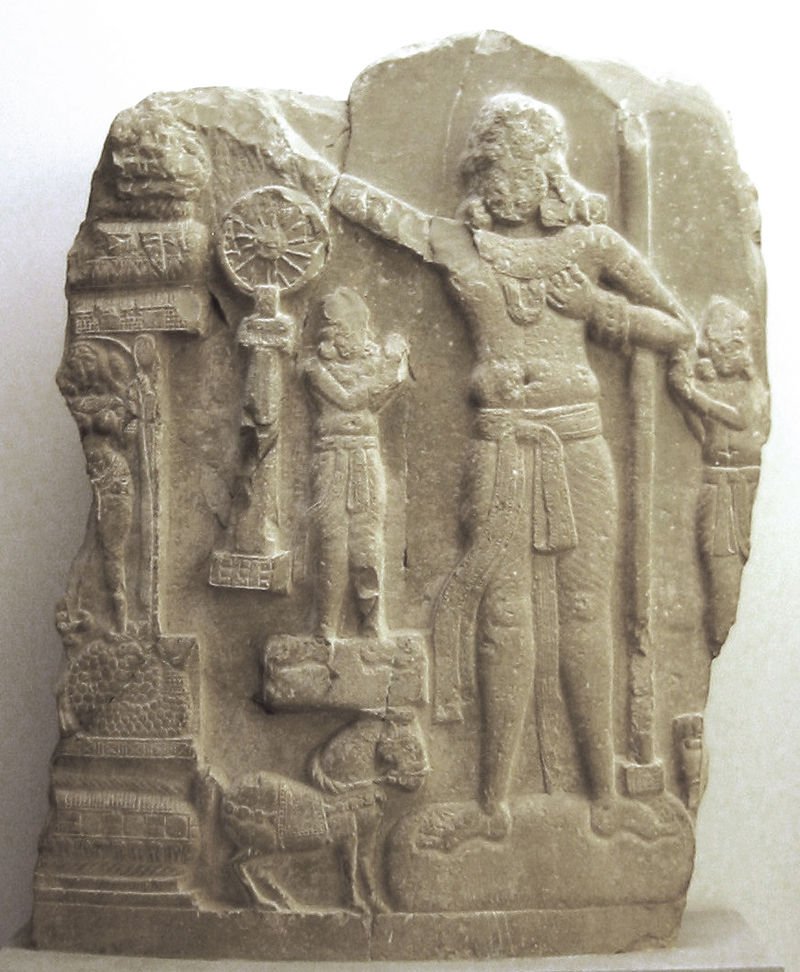
A c. 1st century BCE/CE relief from Amaravati, Andhra Pradesh (India). The figure in the center may represent Ashoka.
Great Emperor Ashoka laid the foundations of a religious center at Sanchi
Commissioned by the emperor Ashoka the Great in the 3rd century BC, the stupa was originally a low structure of brick, half the diameter of the present edifice hemispherical in shape with raised terraces at the base.
It was enclosed by a wooden railing and a stone umbrella at the top. This Great Stupa served as a nucleus to the large Buddhist establishment during the later period.
Sanchi, variously known as Kakanaya, Kakanava, Kakanadabota, and Bota-Sriparvata in ancient times, has a singular distinction of having a remarkable specimen of Buddhist art and architecture right from the early Mauryan period (c. third century BC to twelfth century AD)
During Sunga times, several edifices were raised at Sanchi and its surrounding hills. The Asokan stupa was enlarged and faced with stones and decorated with balustrades, staircases, and a harmika on the top, which in Buddhist architecture, a square fence-like enclosure symbolizing heaven on top of the dome of a stupa.

Image credit: Nagarjun
In the first century BC the Andhra-Satavahanas, who had extended their sway over the eastern Malwa, caused the elaborately carved gateways to Stupa 1. The Great Stupa of Sanchi displays an austere grandeur and the exquisite carvings of the doorway depict in detail the significant episodes and miracles from Lord Buddha’s life and events depicted in the Buddhist Jataka stories.
Depictions of Buddha as a non-human figure
The Sanchi gateways are made of stone, but they were constructed in the manner of wood and covered with narrative sculptures.

Carved decoration of the Northern gateway to the Great Stupa of Sanchi. Torana Panels: Chhaddanta, Sujata's offering, Vessantara Jataka, East Columns: Shakra's visit, Royal procession, Bimbisara's visit, West Column: Foreigners, Monkeys, Kapilvastu. Image credit: Biswarup Ganguly
They show scenes from the life of the Buddha integrated with everyday events that should be familiar to the onlookers and make it easier for them to understand the Buddhist creed as relevant to their lives.
Some of the stone carvings at Sanchi show the Buddha as a non-human figure. Instead, the artists chose to represent him by certain attributes, such as the horse on which he left his father’s home, his footprints, or a canopy under the bodhi tree at the point of his enlightenment. The human body was thought to be too confining for the Buddha.

Sanchi Stupa inside
Since the fourteenth century, Sanchi remained deserted and uncared for till 1818 when General Taylor rediscovered the site. Sir John Marshall established an archaeological museum in 1919, which was later transformed into the present site museum at Sanchi.
Presently under a UNESCO project Sanchi and Satdhara, a Buddhist site, 10 km south-east of Sanchi, is being further excavated, conserved, and environmentally developed.
Written by - A. Sutherland - AncientPages.com Senior Staff Writer
Copyright © AncientPages.com All rights reserved. This material may not be published, broadcast, rewritten or redistributed in whole or part without the express written permission of AncientPages.com
Expand for referencesReferences:
More From Ancient Pages
-
 Knowledge Of Divine Alien Beings And High-Tech In Ancient Egypt Described In Sacred Books And Papyrus – Reincarnation, Cloaking Technology And Space Travel – Part 2
-
 Archaeological Sites At Risk From Coastal Erosion On The Cyrenaican Coast Of Libya
-
 Inventory Stela And Its Message: Controversy About This Artifact Still Remains
-
 Investigation Of A 2.9-Million-Year-Old Site Reopens Case Of Who Made First Stone Tools
-
 Never-Ending Haunting Of A Dangerous Viking Draugr Who Terrorized A Whole Community – Scary Story From A Norse Saga
-
 Thousands Of Cannonballs Discovered In Southern India
-
 Hidden Manuscripts Reveal Ancient Sacred Wisdom Of The Gods And Surprises
-
 Ancient Trade Routes Between Iran And Mesopotamia – Uncovered
-
 Missing Pieces Of The Magnificent Golden Tree Of Lucignano Discovered
-
 On This Day In History: Great Sheffield Flood – Largest Man-Made Disaster Occurred In England – On Mar 11, 1864
-
 Tavern And Mysterious Tools Discovered In North Carolina – Stunning Ancient Time Capsule
-
 Warming Of North Pacific Helped First Human Migration From Asia To North America
-
 Goddess Huitaca – Moon Goddess Of Intoxication, Joyful Life And Unlimited Pleasures In Muisca Mythology
-
 Beautiful Terracotta Figurine Collection Discovered In Myra, Antalya
-
 Imhotep: Ancient Genius And Architect Of The Sakkara Pyramid
-
 Virginia’s Mysterious Vault With Remarkable Secret Ancient Documents Still Raises Many Questions
-
 Kylfings – Unknown Warriors Mentioned On Norse Runes – Were They Members Of The Varangian Guard?
-
 4,000-Year-Old Textile Mill Discovered At Beycesultan Mound In Western Turkey
-
 Did Pharaoh Shishak Plunder King Solomon’s Temple?
-
 Mythical Helen Of Troy: Beautiful Wife Of King Menelaus Of Sparta

