
Lamanai, Belize: One Of The Largest And Oldest Maya Cities Dated To 1500 BC
A. Sutherland - AncientPages.com - One of Belize’s largest and oldest continuously occupied Maya sites is - Lamanai, located deep within the jungles of the Orange Walk District on the bansks of along the 30 mile long New River Lagoon in North Central Belize.
People lived there from about 1500 BC when maize was being grown at the site, to 1680 AD. No doubt, Lamanai managed to have the longest occupation span of any known Maya site.
However, there is little evidence of how life evolved there over the millennia.
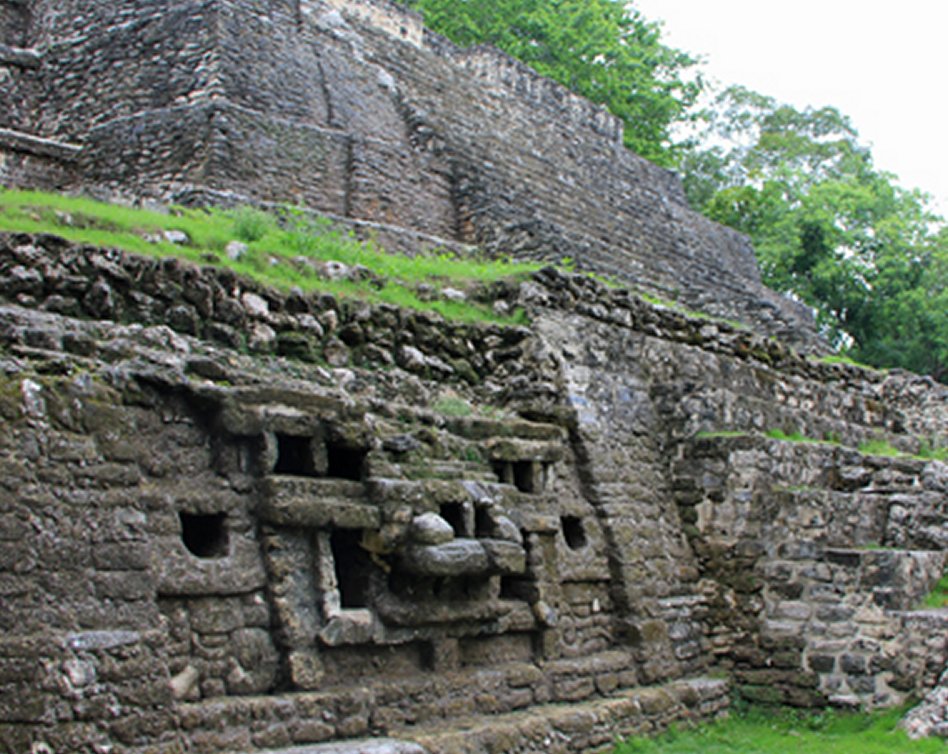
Temple of the Jaguar. This Early Classic temple is part of a complex of residential buildings with several modifications on the temple, attesting to the Maya’s long presence at Lamanai. Photo credits: Globotreks
The site's name is pre-Columbian and before the Spanish conquest, Lamanai was called; Laman'ayin ("submerged crocodile"). When the Spanish Conquistadors arrived, the Franciscan monks corrupted the name from "Laman'ayin" to "Lamanai" (submerged insect). This obvious corruption of the name was corrected by archaeologists in 1978 and the important suffix of "ayin" was officially added to the Spanish "mistake".
See also:
Magnificent Pyramid Of The Magician – The Tallest Structure In Ancient City Of Uxmal
Curiously, the name "Laman'ayin" is similar to that of the Lamanite ruler - King Laman - in the 'Book of Mormon', and according to Dr. Joseph Lovell Allen, a pioneer in the study of history and geography of Mesoamerica, the ruined Maya complex at Lamanai could have been named after him.
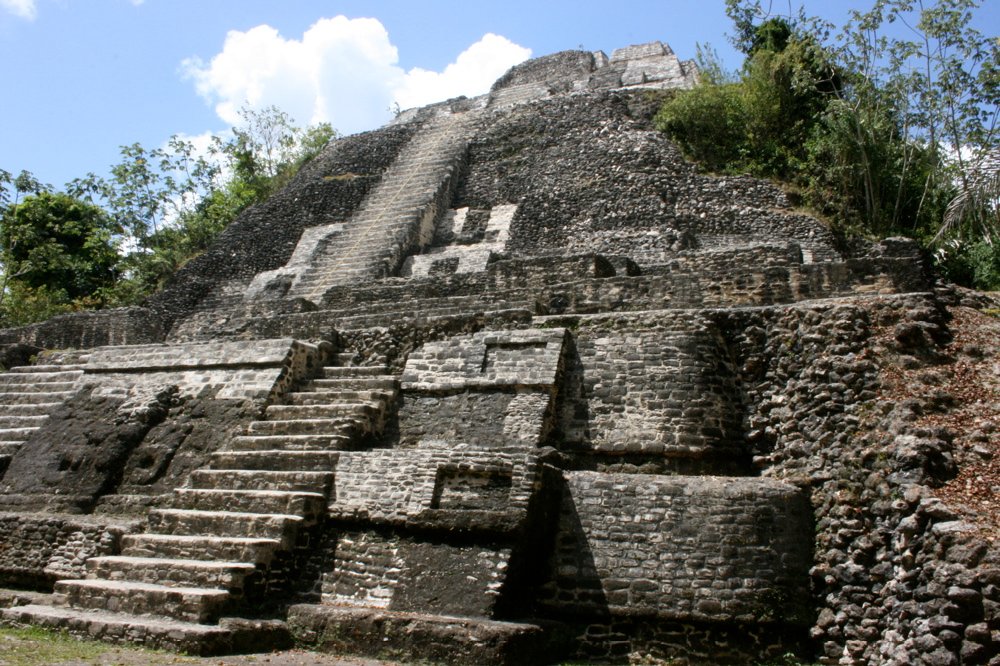
High Temple at Lamanai, Belize. Source via wikipedia
Local museum has collections of impressive artifacts excavated from the Lamanai site, including pottery, jade artifacts, well preserved obsidian, weapons and huge stone carvings, stelae, where the Maya preserved their history with intricate carvings.
In the jungle, there are massive pre-Columbian temples that served as places of rituals and ceremonies to honor the Mayan gods. It is believed that Lamanai contains about 100 structures and twelve major ones. Most of them remain buried or covered by jungle and bush and unexplored; only three of them have been excavated.
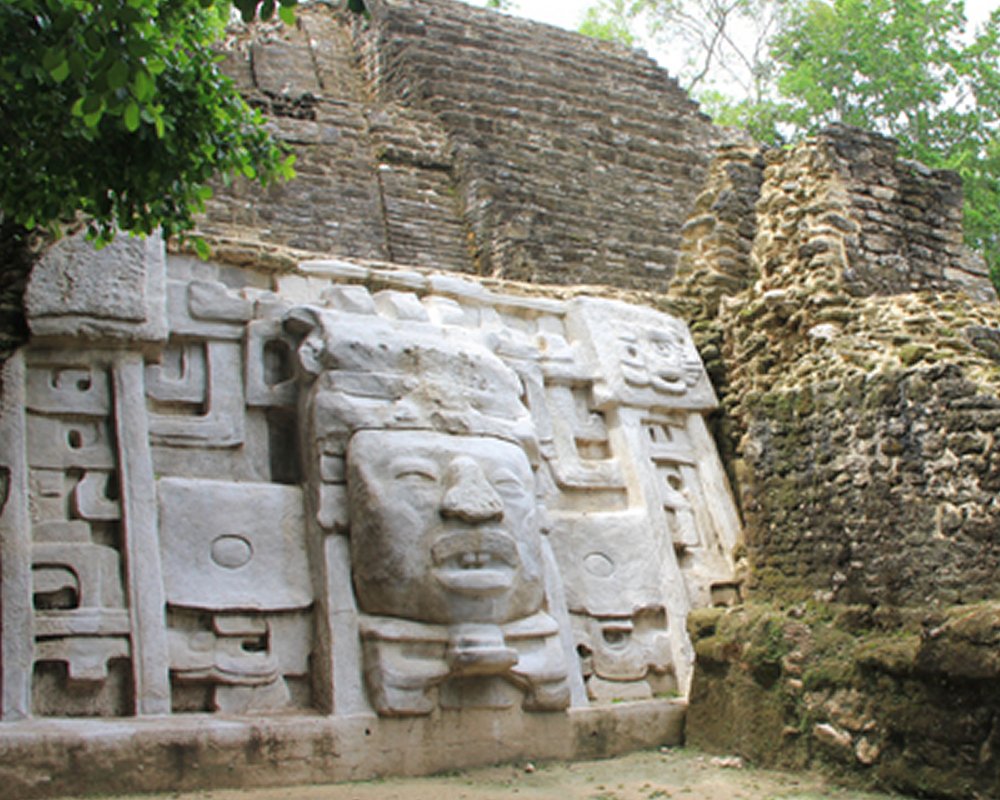
The Mask Temple (or The Temple of the Masks) presents the skilled artistry of the Middle Early Classic and Late Classic periods of the Mayas – between 200 BC and 1300 AD.
One of them is a stepped-pyramid structure the so-called "Temple of the Jaguar Masks" dated back to AD 625 and decorated with a pair of distinctive masks flanking both sides of the structure, and depicting jaguars, one of the Maya’ s most sacred animals.
Another impressive structure is the High Temple, which is 108 feet (33 m) above ground level, and the last one and the smallest of them, the Temple of the Masks, which is adorned by a 13-foot masks of ancient Maya King (believed to be either an Olmec God, or Kinich Ahau, the Maya Sun God) with a headdress of a crocodile.
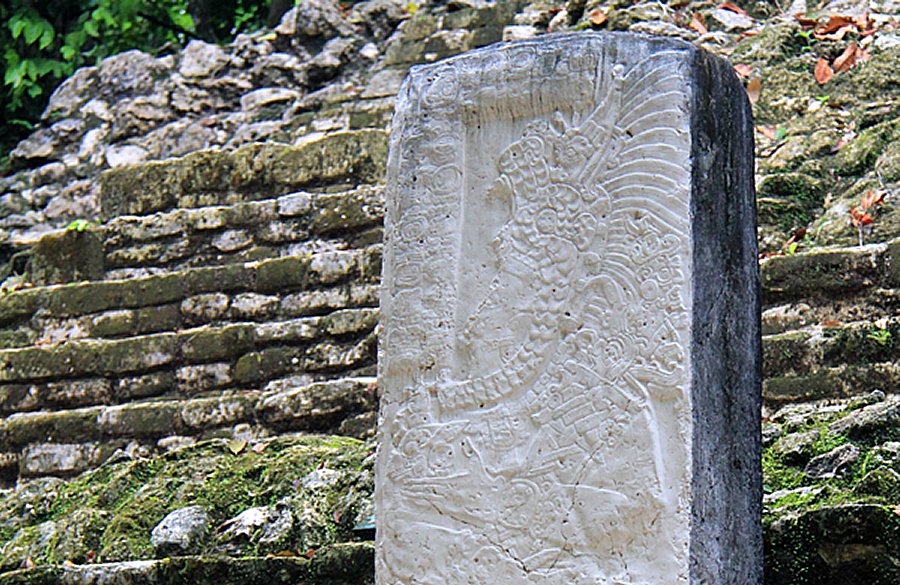
Mayan stela found at Lamanai, erected in 625 CE in the Yucatec language of the Maya. This Late Classic stela represents Lord Smoking Shell and celebrates the anniversary of the lord’s reign and the conclusion of the year. Photo credits: Globotreks.
This temple presents the high artistry of the Middle Early Classic and Late Classic periods of the Mayas – between 200 BC and 1300 AD. During excavations of this temple, archaeologists unearthed two burial tombs.
Unlike many other Maya ruins, much of Lamanai was built in layers; nothing was intentionally destroyed. Ancient temple structures have been found beneath both the High Temple and the Mask Temple. People built upon the temples of their ancestors, instead of destroying them. The last constructions on these two temples took place in the 7th century AD.
Written by – A. Sutherland - AncientPages.com Senior Staff Writer
Copyright © AncientPages.com All rights reserved. This material may not be published, broadcast, rewritten or redistributed in whole or part without the express written permission of AncientPages.com
Expand for referencesMore From Ancient Pages
-
 Mysterious Megalithic Stones Of Carnac, France – An Unsolved Neolithic Enigma
-
 Did A Comet Explosion Over North America Lead To Downfall Of Ancient Hopewell Culture?
-
 Never-Before-Seen Structures Of King Herod’s Magnificent Palace Herodium Unveiled
-
 New Cosmic Ray Bombardment Of The Great Pyramid – Search For The Hidden Chamber Continues
-
 Ancus Marcius: Semi-Legendary Fourth King Of Rome Obliged To Make War To Defend And Expend Territories
-
 Major Discovery Of 15,000-Year-Old Artifacts Could Re-Write History Of Peru
-
 Unique Statue Of Warrior Wearing A Phrygian Cap Accidently Discovered By Dutch Fishermen
-
 10 Surprising Facts About The Neanderthals Who Were Not As Primitive As Previously Thought
-
 Lilith – Beautiful Demonic And Brave Symbol Of Equality And Adam’s First Wife Who Refused Subordination
-
 The First ‘Viking’ Was A Bronze Age Man
-
 Among Ancient Maya Cacao Was Used In Celebrations And Was Common To All People
-
 Ancient Maya Saltworks: Salt Was A Commodity Or Money In Classic Maya Economy
-
 Controversial Artifact: What Kind Of Message Does The Phaistos Disk Contain?
-
 Extremely Rare And Tiny Biblical Coins Discovered Near The Temple Mount
-
 Traces Of Ancient Near East Civilization In America – An Out-Of-Place Ancient Inscription – Part 2
-
 Herne The Hunter – The Horned God And Lord Of The Forest In British Mythology
-
 Unexplained Encounters With Invisible Barriers – Mysterious Rays And Energy Fields
-
 Statue Of Unknown Mythical Beast With Four Wings Discovered
-
 2,700-Year-Old Sarcophagus Of ‘High Priest Of God Amun’ Discovered In Luxor
-
 Mysterious Gosford Glyphs: Remarkable Ancient Egyptian Hieroglyphs Discovered In Australia Could Re-Write History

