
Uruk Was Ruled By Gilgamesh Who Built City’s Great Walls
A. Sutherland - AncientPages.com - In Mesopotamian myths, Gilgamesh is presented as a demigod of superhuman strength that lived a very long life. Based on the’ Sumerian King List’, we learn that the great hero, Gilgamesh, reigned 126 years.
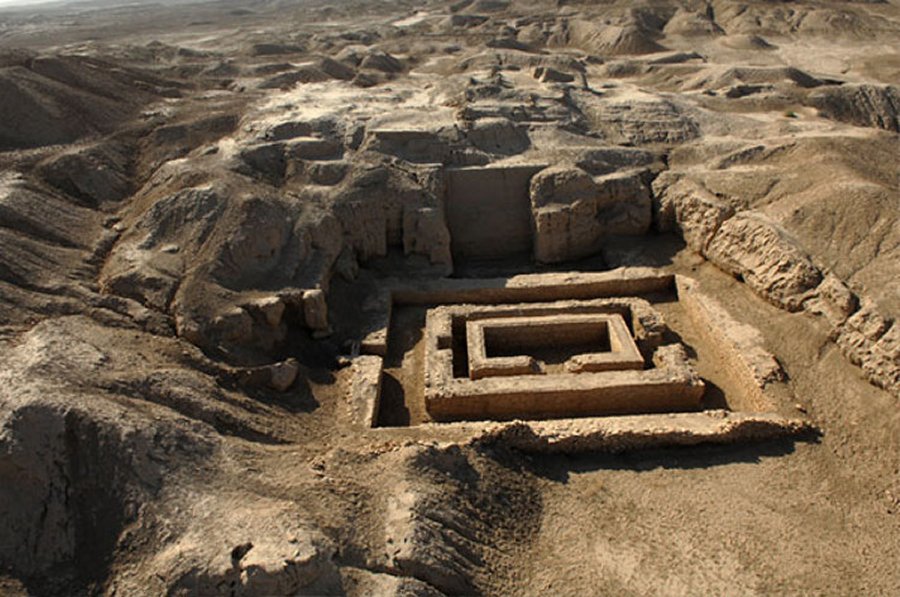
One of his greater achievements was the construction of the city walls of Uruk to defend his people from enemies.
He lived in the ancient Sumerian city of Uruk. He was the son of the mortal Lugulbanda and a minor goddess, Ninsun.
Gilgamesh built and beautifully remodeled this great city to honor An, the father of the gods, and his daughter, Inanna, the goddess of love and war. He also irrigated the fields, dug wells, and made orchards.
One of his greater achievements was the construction of the city walls of Uruk to defend his people from enemies.
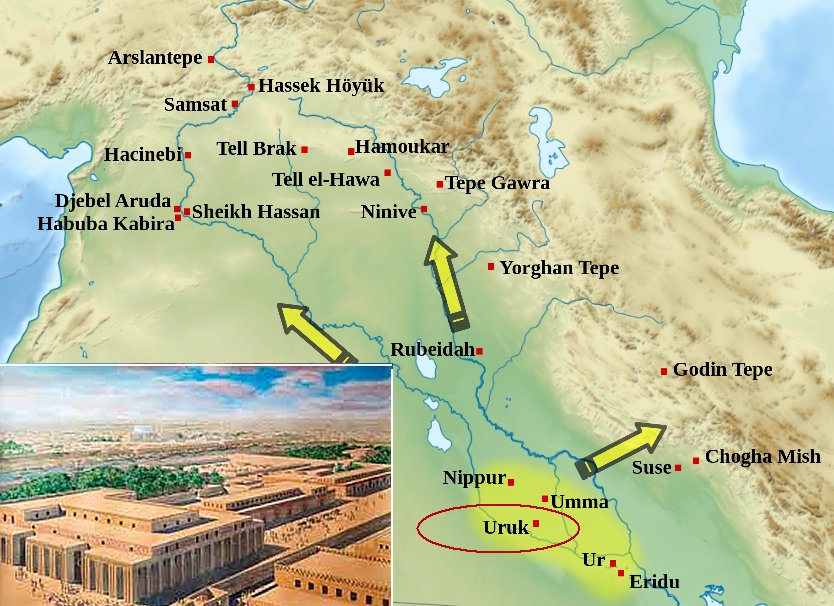
The city of Uruk was an important Sumerian city:
'…The outer wall shines in the sun like the brightest copper; the inner wall is beyond the imagining of kings. Study the brickwork, study the fortification; climb the great ancient staircase to the terrace; study how it is made; from the terrace see the planted and fallow fields, the ponds and orchards. One league is the inner city, another league is orchards; still another the fields beyond; over there is the precinct of the temple.
Three leagues and the temple precinct of Ishtar measure Uruk, the city of Gilgamesh….'
According to the Sumerian King List, Uruk was founded by King Enmerkar around 4500 BC and was the largest settlement in southern Mesopotamia, if not the world.
During the Early Dynastic period (2900–2350 BC), Uruk dominated Mesopotamia.
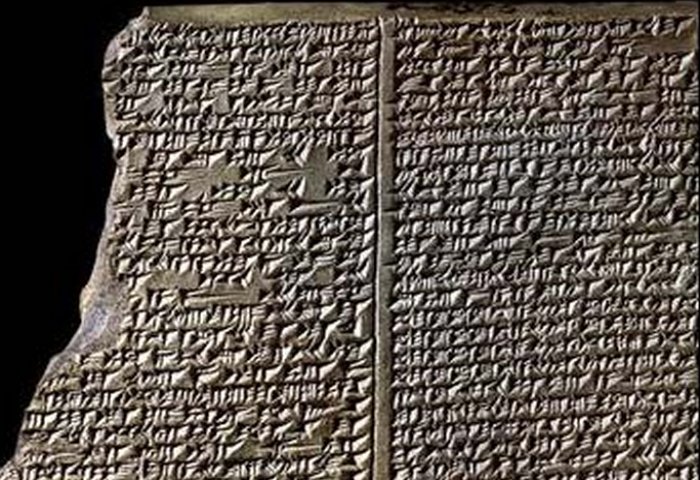
Tablet of Gilgamesh, found at Nineveh, now in British Museum
Towards the end of the fourth millennium BC, at about the time that writing was being invented but before it is able to tell us much, Uruk had already spread over some 400 hectares, and became greater in size and population than Rome, about 3000 years later, or Athens, when the northern and southern walls of the Acropolis were reconstructed and major temples including the Parthenon, were rebuilt under the leadership of Pericles during the Golden Age of Athens (460-430 BC).
Uruk was surrounded by a massive wall, which according to tradition was built on the orders of King Gilgamesh, who ruled around 2700 BC.
In the Epic of Gilgamesh’ is written:
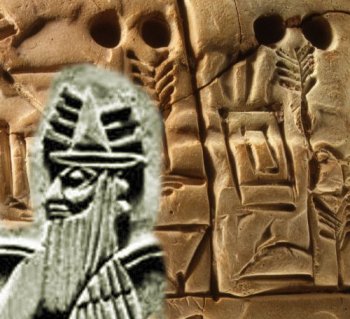 "….they arrived at Uruk, the strong-walled city. Gilgamesh spoke to him, to Urshanabi the ferryman, ‘Urshanabi, climb up onto the wall of Uruk, inspect its foundation terrace, and examine well the brickwork; see if it is not of burnt bricks; and did not the seven wise men lay these foundations?
One-third of the whole is the city, one-third is the garden, and one-third is the field, with the precinct of the goddess Ishtar. These parts and the precinct are all Uruk.
This too was the work of Gilgamesh, the king, who knew the countries of the world. He was wise 'he saw mysteries and knew secret things, he brought us a tale of the days before the flood. He went a long journey, was weary, worn out with labor, and returning engraved on a stone the whole story…’
Uruk was a place of intense activity, a city of pulsating public life within its busy and impressive streets. The city had monumental mud-brick buildings decorated with mosaics of painted clay cones embedded in the walls, and richly decorated with art.
Large-scale sculpture in the round and relief carving appeared for the first time, together with metal casting using the lost-wax process.
Widely accepted as the historical 5th king of Uruk whose influence was so profound, Gilgamesh was later remembered in many stories and epics as a great hero.
Written by – A. Sutherland AncientPages.com Staff Writer
Copyright © AncientPages.com All rights reserved. This material may not be published, broadcast, rewritten or redistributed in whole or part without the express written permission of AncientPages.com
Expand for referencesReferences:
Kriwaczek, P. Babylon: Mesopotamia and the Birth of Civilization
Freeman, H. Sumerians: A History From Beginning to End
More From Ancient Pages
-
 Surprising Discovery – Large Piece Of Egyptian Blue Found In Domus Aurea, Emperor Nero’s Palace
-
 Biblical Event Verified By Study Of Earth’s Magnetic Field?
-
 What Was Eaten In Old Dongola – Capital Of The Kingdom Of Makuria?
-
 Unique Treasure Of 500 Coins Accidentally Found Under Church Floor In Slovakia
-
 Great Pyramid Puzzle: ‘Lost’ 5,000-Year-Old Piece Of ‘Dixon Relics’ Accidentally Found
-
 Vikings Cared Deeply For Their Animal Companions – Shared Human And Horse Burials Reveal
-
 January 2016: Lost Library Of John Dee Revealed In A Special Exhibition
-
 Tuchulcha: Wicked, Hideously Grotesque Etruscan Demon Identified With Both Male And Female Genders
-
 On This Day In History: Berlin Victory Parade Took Place – On September 7, 1945
-
 Early, Complex Brain Surgery Performed In Ancient Greece
-
 Legendary Mount Penglai Where The Eight Immortals Reside
-
 Unusual Tiny Ancient Dwellings Captivate Archaeologists – Village Of Ancient Dwarves Or Something Else?
-
 Cyrus The Great: Founder Of Achaemenid Empire Who Conquered Medians, Lydians And Babylonians
-
 Palnatoke – Founder Of The Jomsvikings Brotherhood, Legendary Danish Hero And Enemy Of King Harald Bluetooth
-
 ‘Liber Linteus’ – Unique History Of Ancient ‘Linen Book’ Written In Etruscan That Still Remains Poorly Understood
-
 Long-Lost Island Documented On Ancient Maps – Erased From History Or Misidentified?
-
 Cartography Shows That The Isthmus Of Tehuantepec Was Used As An Inter-Oceanic Passage In The 16th Century
-
 Silver Needle Dismissed As Trash Was Part Of A Stunning Viking Treasure Found By Farmer On Gotland
-
 Mystery Of The 1,700-Year-Old ‘Salt’ Mummy With Long White Hair
-
 The First Conservationists May Have Been Early Pacific Islanders Who Started The Practice 3,000 Years Ago

