
Shinobi No Mono: The Shadow Warriors And Hattori ‘The Demon’ Hanzo Of Ancient Japan
Ellen Lloyd - AncientPages.com - Led by Hattori "the Demon" Hanzo, Shinobi no Mono, the Shadow Warriors of the 16th century were incredible ancient Japanese fighters who became known for their seemingly superhuman power and astonishing athletic accomplishments.

Credit: Adobe Stock - breakermaximus
The Shinobi Shadow Warriors were masters in becoming almost invisible through masterful stealth. One of their many helpful fighting skills was to avoid detection. Many credited these fighters with supernatural powers, and it was said that it was already too late to escape if you spotted a Shadow Warrior.
Today, the Shinobi no Mono and the Shadow Warriors are recognized as Ninjas.
In Japanese, the words "nin" and Wshinobi" have the same meaning: "stealth" or "quiet action." The words also mean "to endure." Meanwhile, "sha" and "mono" both mean "person." So a simple translation would be "a person skilled in the art of stealth."
In modern times, Ninjas are regarded as assassins, but historically, the Ninja played an entirely different role. Ninjas were often spies, scouts, and commando-type covert operation forces.

Credit: Adobe Stock - sheikoevgeniya
In 1562 A.D., Japan was a war-like zone. Ongoing civil wars that lasted more than 100 years devastated the country and its people.
Hattori' The Demon' Hanzo Of Ancient Japan
Tokugawa Ieyasu, an ambitious warlord, became the founder and first shogun of the Tokugawa shogunate of Japan, which virtually ruled Japan from the Battle of Sekigahara in 1600 until the Meiji Restoration in 1868.
Tokugawa Ieyasu used several skilled warriors to win battles and strengthen his military power. One of them was Hattori Hanzo (1542-1596), one of the greatest Ninjas of all time.
Hanzo Hattori began his training by climbing a mountain at eight and seeking instruction from the most hardcore ninja masters in Japan. When he was 16, he earned the nicknames "Hanzo the Ghost" and "Devil Hanzo" because of his skills to sneak up on enemies without being seen or heard.
Hanzo made a successful hostage rescue of Tokugawa's daughters in Kaminogo Castle in 1562 and went on to lay siege to Kakegawa Castle in 1569.
He became famous for unconventional warfare. He became the leader of the most elite fighting group in the Japanese world and trained his fighters in the secret martial art of Shinobi.
The Shadow Warriors And Their "Magical Powers"
The Shadow Warriors, trained by Hanzo Hattori, possessed magical powers. Hanzo himself was often attributed to supernatural abilities such as psychokinesis and precognition.
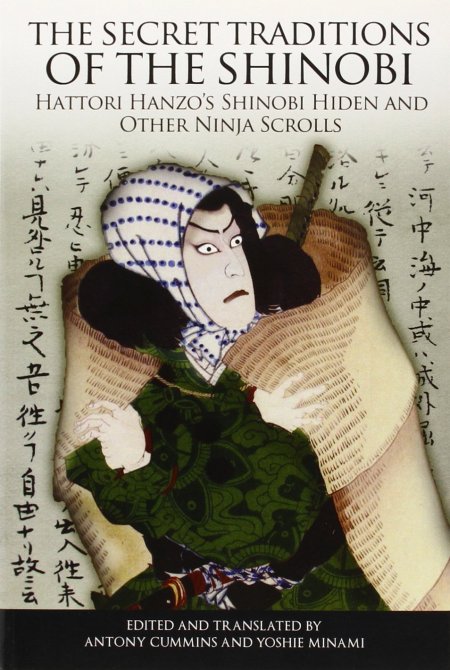
The shinobi, or ninja, is one of the most widely recognized figures in the world of espionage—and also one of the most misrepresented. What do we really know about the historical shinobi, his tactics, and his role in medieval Japanese society? In Secret Traditions of the Shinobi, these questions—and many more—are answered. Translated into English for the very first time, this widely sought-after collection of historical documents brings to light the secret practices, techniques, philosophies, and lifestyles of the shinobi. Read more
The Shinobi, or Ninja, is one of the most widely recognized figures in the world of espionage and one of the most misrepresented. What do we know about the historical Shinobi, his tactics, and his role in medieval Japanese society? In Secret Traditions of the Shinobi, these questions—and many more—are answered. Translated into English for the first time, this widely sought-after collection of historical documents brings to light the Shinobi's secret practices, techniques, philosophies, and lifestyles. Read more
The truth is that these warriors employed unusual military tactics. They could move undetected and vanish without a trace. It was one of the reasons why the Shadow Warriors were predominantly used for commando infiltration raids and information and intelligence gathering. They were considered ancient Japan's most effective resources for espionage.
Shinobi Warriors never infiltrated during the full moon due to the excessive light it reflects off the Sun during the nighttime hours. Instead, they preferred to enter either eight days before or after the full moon when optimal darkness was available. In this style of approach, the Ninja is nearly invisible in his black Shinobi gear.
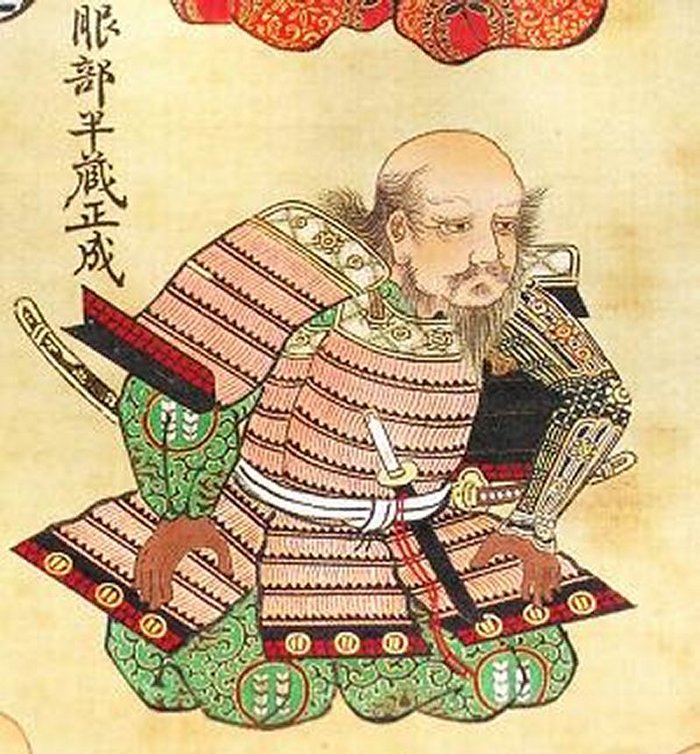
After his death on 4 November 1596, Hattori Hanzo was succeeded by his son, whose name was also Masanari, though written with different kanji. He was given the title of Iwami no Kami, and his Iga Ninjas would act as guards of Edo Castle, the headquarters of the government of united Japan.
The memory of Hattori Hanzon is still very much alive. Tokyo Imperial Palace, which was earlier the shogun's palace, still has a gate called Hanzo's Gate (Hanzomon). The Hanzomon subway line from Hanzomon Station in central Tokyo to the southwestern suburbs is named after the entrance where his house was once located.
Updated on January 16, 2024
Written by Ellen Lloyd – AncientPages.com
Copyright © AncientPages.com All rights reserved. This material may not be published, broadcast, rewritten or redistributed in whole or part without the express written permission of AncientPages.com
Expand for referencesReferences:
Joel Levy - Ninja: The Shadow Warrior
More From Ancient Pages
-
 Sphinx Statue With A Smiley Face And Two Dimples Unearthed In Qena, Egypt
-
 ‘Arcade’ Of Ancient Mancala Game Boards Carved On Rocks Found In Lewa Wildlife Conservancy, Kenya
-
 Ancient Astronomical Structure Predating The Solar Observatory Of Chankillo Discovered In Peru
-
 Discovery Of Fortified Villages And Earthworks Re-Writes Ancient History Of Amazon
-
 Unique Bones Decorated With Black Markings Discovered In 4,500-Year-Old Tomb In Ukraine
-
 On This Day In History: Battle of Stirling Bridge Took Place – On Sep 11, 1297
-
 Prehistoric House Of The Dead Discovered In Wiltshire – Is This The Burial Place Of Ancestors Of Stonehenge Builders?
-
 First Rare Evidence Of Biblical Purple From The Time Of King David And King Solomon
-
 Lejre Viking Hall And Beowulf – What Is The Connection?
-
 Ancient Roman Wooden Sewn Boat Unearthed In Croatia
-
 1,400-Year-Old Iron Hammer And Nails Among Findings At Sanhedrin, Western Galilee’s Usha
-
 Thermopolium – Ancient Roman Restaurant Offered Fast Food But Was It A Good Idea To Eat There?
-
 1,000-Year-Old Church Walls Unearthed In Ethiopia By Polish Archaeologists
-
 On This Day In History: Taoist Monk Discovers Dunhuang Manuscripts In Mogao Caves, China – On June 25, 1900
-
 Cato The Younger – Mortal Enemy Of Julius Caesar Was A Man Who Hated Luxury, New Ideas And Was Immune To Bribes
-
 On This Day In History: Sir Christopher Wren – Famous English Architect Was Born – On Oct 20, 1632
-
 Ancient Treasure Hidden In Perplexing Secret Underground Labyrinth In France – Discovery And Forbidden Excavations – Part 2
-
 Megaliths In Central France: 30 Prehistoric Monolith Stones And One Human Skeleton – Unearthed
-
 Two Unique Antiquity-Dated Discoveries Have Been Made In The Ancient City of Agrigento, Sicily
-
 Forgotten Ancient Kingdom Of Tuwana Is Hidden Among Ruins In Cappadocia

