
Huge Subterranean Pre-Columbian Shaft Tombs In Tierradentro, Colombia
A. Sutherland - AncientPages.com - One of the most representative historical and archaeological places of Colombia is Tierradentro, known as the National Archaeological Park located in the municipality of Inzá, Department of Cauca, Colombia.

Entrance to the underground tomb with spiral staircase. Image credit: inyucho - CC BY 2.0
The area of Tierradentro holds the largest concentration of pre-Columbian monumental shaft tombs with side chambers - known as hypogea ("under the earth"), carved in the volcanic tuff below hilltops and mountain ridges.
These ancient hypogea are large and elaborate subterranean funerary chambers, very similar to those that existed in ancient Egypt.
The most elaborate structures along with stone sculptures of various deities, some measuring up to 12 m wide and 7 m deep, were made from 600 to 900 AD. The hypogea were opened by their builders in the rock, like wells through which one descends by complicated spiral staircases.
The typical hypogeum with oval plan chambers, the convex roof supported by two or three large columns and, additionally with three, five, or seven niches around.
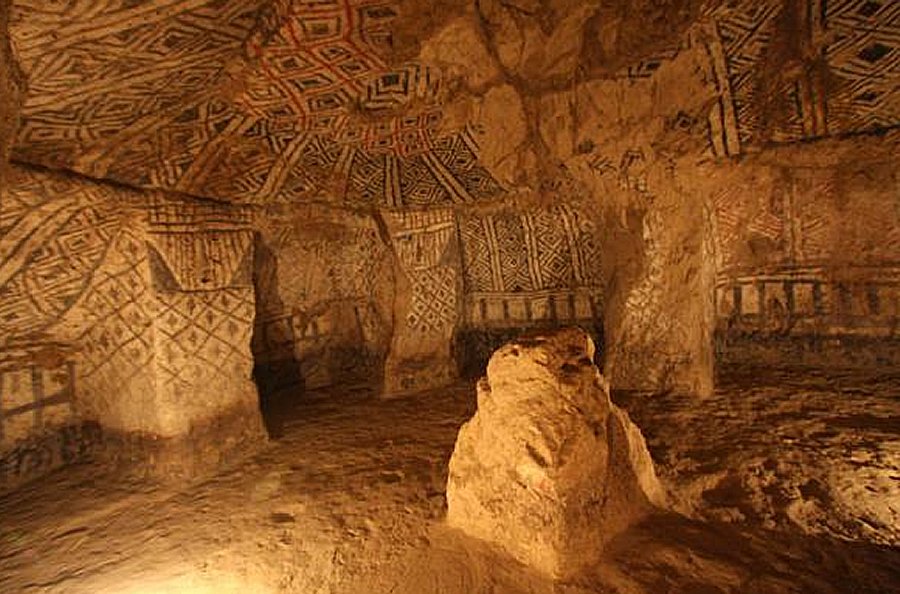 The smaller hypogea vary from 2.5 m to 7 m in depth, with oval floors 2.5-3 m wide, while the chambers of the largest examples may be 10-12 m wide. image source
The hypogeum has an entry oriented towards the west, a spiral staircase, and the main chamber (wide and deep), usually 5 to 8 meters below the surface, with doors of varied shapes, an access staircase, and with several lesser chambers around, each one containing a corpse.
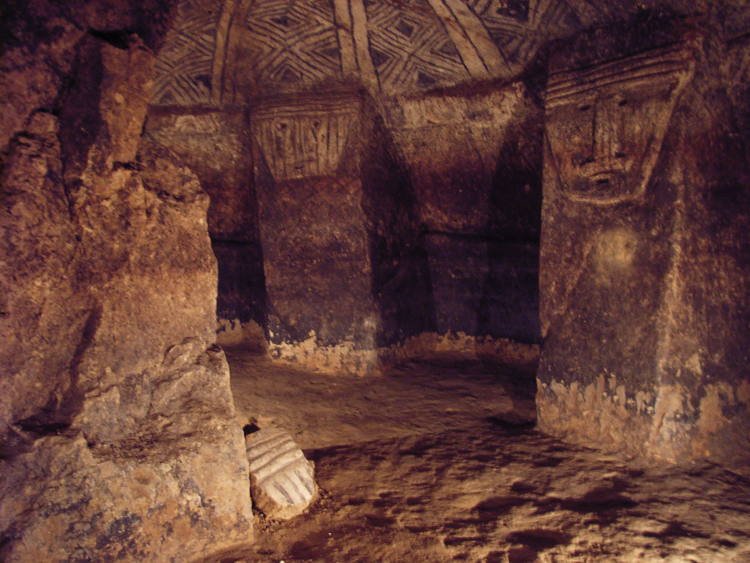 The stone statues of the Tierradentro region are of great importance. They are carved from the stone of volcanic origin and represent standing human figures, with their upper limbs placed on their chests. image source
The interior of Tierradentro has beautiful paintings in red, white, and black mineral pigments that cover walls, columns, and vaulted ceilings. These surfaces are covered with geometric, anthropomorphic, and zoomorphic. Decorations include carved figures of mysterious beings, carved on the pilasters (rectangular columns projecting from a wall) that separate the niches.
The pre-Columbian culture that created this funeral complex inhabited this area during the first millennium AD.
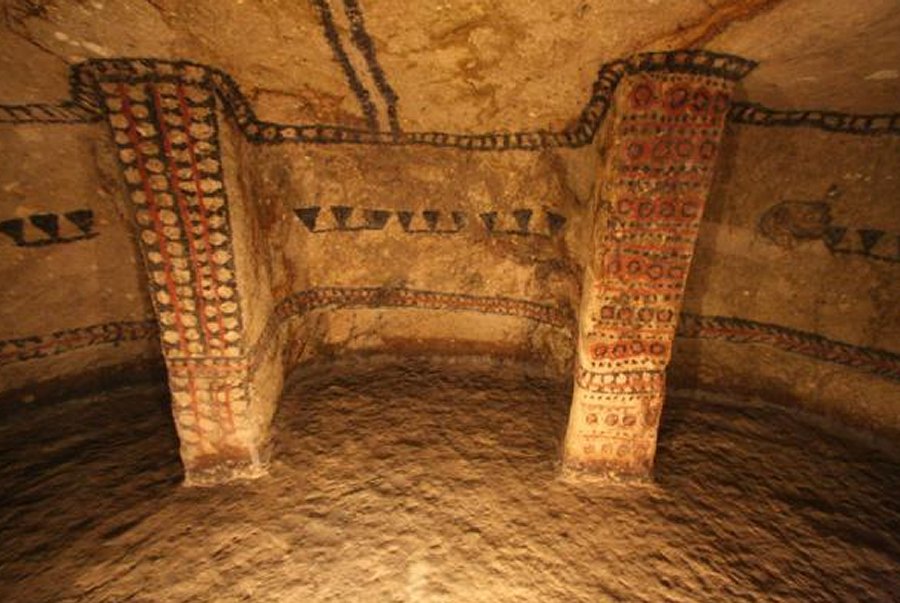 Tierradentro - an underground burial chamber hacked out in the volcanic rock, with colorful geometrical figures painted on the walls and the columns. image source
As we know, there are underground tombs with side chambers that have been found over the whole of America, from Mexico to north-western Argentina, but their largest concentration is in Colombia.
Tierradentro, however, is not only about the concentration of the tombs, but first of all their features like a vertical shaft, spiral stairs, entrance hall, and side chamber with central and surrounding columns on a large oval floor-plan, along with anthropomorphic representations and polychrome paintings – make this Colombian funerary place so unique.
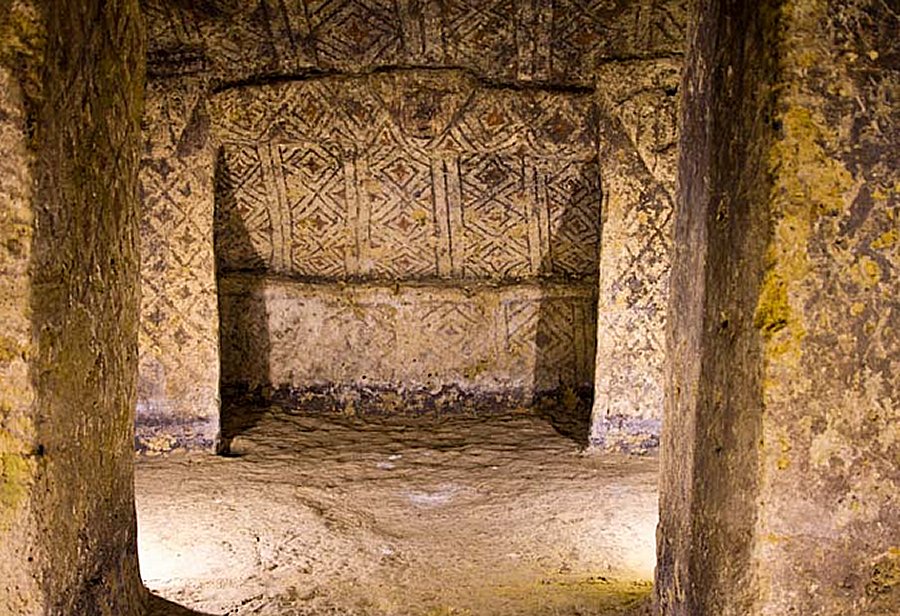 The main attributes of Tierradentro hypogea are the architectural features of the tombs, including the stairs and chambers, and the internal decoration including carvings and mural paintings. source
The uniqueness of the site lies in its large size and the staircases which in some cases give access to a hall.
The smaller hypogea vary from 2.5 m to 7 m in depth, with oval floors 2.5 to 3 m wide, while the chambers of the largest examples may be 10 to 12 m wide.
For now, it has not yet been possible to clarify whether the craftsmen who carved the statues lived in the same town as those who produced the Tierradentro hypogeum.
Written by – A. Sutherland - AncientPages.com Senior Staff Writer
Copyright © AncientPages.com All rights reserved. This material may not be published, broadcast, rewritten or redistributed in whole or part without the express written permission of AncientPages.com
Expand for referencesMore From Ancient Pages
-
 Soap Was Invented In 2800 B.C By Babylonians
-
 Joseph Pujol – The Professional Farter Who Entertained People
-
 Mayan Elites Lived In Pre-Hispanic Teotihuacán – New Evidence
-
 Catherine De Medici – Queen Of France Supported Nostradamus, Was Suspected Of Poisoning And Blamed For Horrible Massacre
-
 The Man Who Took The Greatest Alchemy Secret Of All Time To His Grave
-
 Magnificent Ancient Egyptian Gold And Soapstone Jewelry Discovered At Tell El-Amarna Necropolis
-
 Triumphal Arch Of Roman Emperor Constantine And His Great Vision
-
 Silla: The Most Successful Of Three Korean Kingdoms
-
 ‘Bone Biographies’ Reveal Lives Of Medieval England’s Common People And Illuminate Early Benefits System
-
 Ancient Mystery Of The American Southwest – Secrets Of The Cliff Dwellers – Part 1
-
 Why Napoleon’s Invasion Of Russia Was A Fiasco
-
 Howard Carter Stole Tutankhamun’s Treasures – Previously Unpublished Letter Reveals
-
 Mystery Of The Tower Of Babel – The Mountain Of God Or A Symbol Of Chaos And Ignorance?
-
 Legendary Basilisk With Deadly Petrifying Stare – King Of The Serpents
-
 Pictograms: First Written Accounts Of Earthquakes In Pre-Hispanic Mexico
-
 New Clues About The Kensington Runestone Rewrite Ancient History But One Mystery Remains
-
 King Offa Of Mercia And The Murder Of King Ethelbert – Revenge Or Jealousy?
-
 Long-Lost Roman Bridge Re-Discovered In Chepstow River Wye Mud, UK
-
 Rare 1,000-Year-Old Viking Wooden Bowl Found By Young Boy
-
 Remains of Maurya-Era Wall Discovered In Tilaurakot, Kapilvastu, Nepal

