
Mysterious Ancient Structures Hidden Under The Sand In The Sahara Desert Could Re-Write History Of Ancient Egypt
Ellen Lloyd - AncientPages.com - Satellite images reveal intriguing and mysterious structures in the Sahara desert. The constructions are either damaged pyramids or antediluvian remains.
Something very large is hidden under the sand, and we don't know what it is.
The Great Flood is a controversial topic among scientists, but some are convinced that, in the distant past, our planet was submerged, and the waters wiped out entire civilizations. Some would say it was the day when Earth nearly died.
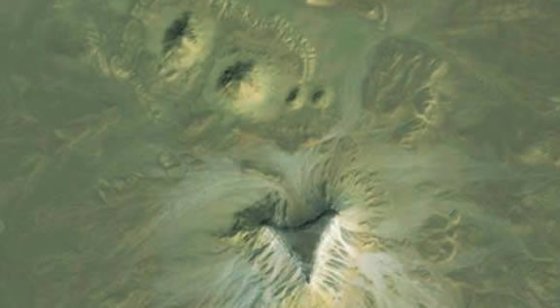
Satellite images reveal strange structures in the Sahara Desert.
Image credit: Angela Micol
Many people associate the story of the Great Flood with the Bible. However, the story of Noah's ark is not just a Biblical story. Noah was known by a different name in various cultures, including ancient Egypt, India, and Native America, among others.
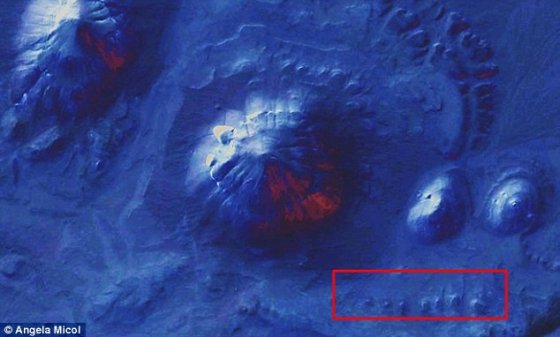
Image credit: Angela Micol
Some of the details of the Noah story seem mythical, leading many biblical scholars to believe that the story of Noah and the Ark was inspired by the legendary flood stories of nearby Mesopotamia, particularly "The Epic of Gilgamesh."
According to a controversial theory, once in the distant past, there was a mother of all floods. Fascinated by the idea that the story of the great Flood might be true, Robert Ballard, one of the world's best-known underwater archaeologists, decided to look for traces of an ancient lost civilization that could reveal more information about the Deluge.
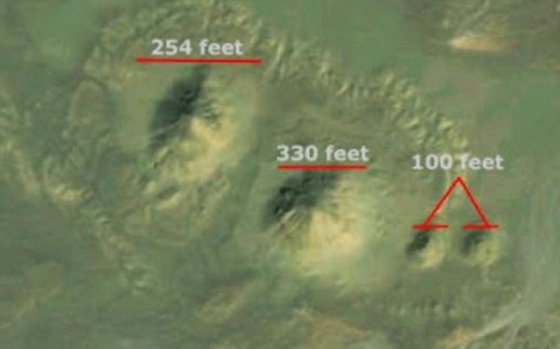
Abu Sidhum Site, Egypt- View from Google Earth.
Image credit: Angela Micol
Hopefully, one day scientists will be able to provide solid evidence supporting the ancient story of the Great Flood and offer more information about a period in our history when the Earth nearly came to an end.
Meanwhile, we can admire these puzzling ancient structures, such as those discovered by Angela Micol, founder of The Satellite Archaeology Foundation, Inc.
Based on the satellite imagery, Micol suggests that the mounds might represent eroded pyramids.
The up-close pictures make the formations look more like piles of rocky rubble.

Credit: TheDigitalArtist - Pixabay - Public Domain
The largest one appears to have the ruins of a square building or walls on its summit, but a full-blown excavation will be needed to unravel the mystery.
"We have found some incredible evidence at the Abu Sidhum site, and it could be much older than many in Egypt.
There is a distinct waterline on all four mounds, approximately 50 feet in height.
If this site is proven to be an artificial pyramid or mound site, it could date back to the Predynastic or Prehistoric period of ancient Egypt, making it one of the oldest known pyramid or mound complexes in Egypt.
The implications that this site, if proven artificial, may be an amazingly old site and could even rewrite the history of ancient Egypt," Angela Micol says.
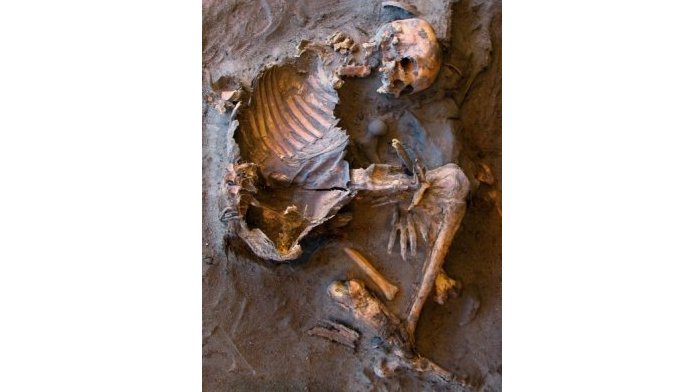
A while back scientists unearthed 20 Stone Age skeletons in the Sahara Desert. The burials spanned thousands of years, indicating that the site was a long-standing cemetery for the local people. What is more, hidden under the sand? Credit: Mary Anne Tafuri
There is no evidence that these remarkable structures date back to times before the Great Flood, but one cannot dismiss the possibility that their destruction was caused by the devastating waters.
Angela Micol was contacted by an expedition team in Egypt who visited the Abu Sidhum site.
They sent a detailed video of the mounds, showing how they resembled pyramids, along with a video of pottery shards that covered the area extensively and helped confirm that something was buried under the sand near the site of Abu Sidhum.
The team used a metal and cavity detector, which gave positive results for tunnels and cavities inside all four mounds, possibly indicating pyramids.
The team and Angela Micol believe they have identified a temple or habitation site near the Abu Sidhum site, as well as a row of what may be mastaba tombs adjacent to the mounds.
The remnants are located in an area around the present-day town of Dimai in Egypt's Fayoum Desert. The locale was once a desert settlement during Egypt's Ptolemaic era, when Greek and Roman influence was on the rise.
According to Italian archaeologist Paola Davoli, the structures may have been watchtowers, but she hasn't ruled out the possibility that they might also be tombs or wellsites. What's needed is an excavation to unlock the secrets hidden within.
For the moment, these remarkable ancient structures remain shrouded in mystery, but with proper investigation, scientists may gain a deeper understanding of the remains.
Written by Ellen Lloyd – AncientPages.com
Copyright © AncientPages.com All rights reserved. This material may not be published, broadcast, rewritten or redistributed in whole or part without the express written permission of AncientPages.com
More From Ancient Pages
-
 Is The World’s Oldest Zero Hidden In The Bakhshali Manuscript?
-
 Ancient DNA From Medieval Germany Reveals The True Story Of Ashkenazi Jews
-
 Study: Grinding Tools Were Once Used In Plant, Pigment And Bone Processing At Jebel Oraf Site, Saudi Arabia
-
 Is Legendary Celtic Warrior Queen Medb Buried In An Ancient Mound On The Top Of Knocknarea?
-
 Natural Dyes To Color Clothing Were Used Thousands Of Years Ago – New Study
-
 Quatrefoil Symbol Was Used By The Olmecs And Maya Long Before It Appeared On Christians Churches
-
 Why Is Roulette Called The Devil’s Game?
-
 Xochipilli: Aztec God Of Love, Music, Song And Ecstatic Mushroom Trance
-
 Truth Behind Mysterious Ancient Metal Depositions Revealed By Scientists
-
 4,500-Year-Old Ramp Might Explain How Huge Stones Were Transported To Great Pyramids’ Building Site
-
 Unique Structure ‘Wooden Version Of Stonehenge’ – Identified In The Perdigões Complex, Portugal
-
 Ephemeral Evidence Of Mediterranean Mobility – Boats, Migration, And The Central Mediterranean Passage In Focus
-
 Osiris Statuette Discovered During Restorations Of The King Djoser Step Pyramid In Saqqara, Egypt
-
 TB Was Transmitted in South America – DNA Study Shows How It Happened
-
 Scientists Say Large Mammals Shaped The Evolution Of Humans – Here Is What Happened
-
 Biblical Pool Of Siloam In The City of David To Be Excavated And Opened To The Public
-
 Humans Were Apex Predators For Two Million Years
-
 Dracula: Cruel, Ruthless And Bloodthirsty Ruler But Not A Vampire
-
 Tikal Of Maya: Sophisticated Culture That Experienced Humble Start, Golden Age, Wars And Decline
-
 Roman-Era Girl Buried And Adorned With 1,700-Year Old Gold Jewelry Found In Pagan Cave

