
King Tabnit’s Sarcophagus And Its Surprising Forever-Lost Secret
Ellen Lloyd - AncientPages.com - The sarcophagus of Tabnit was unearthed in 1847. At first glance, it appeared as an ordinary ancient sarcophagus, but the inscription came with a warning. When the workers opened the ancient coffin, they understood this was an unusual archaeological discovery.
Who Was King Tabnit?
Tabnit was the Phoenician King of Sidon who ruled between 549–539 B.C. Though he is today mainly associated with discovering his unusual sarcophagus, there are some historical records about his life.
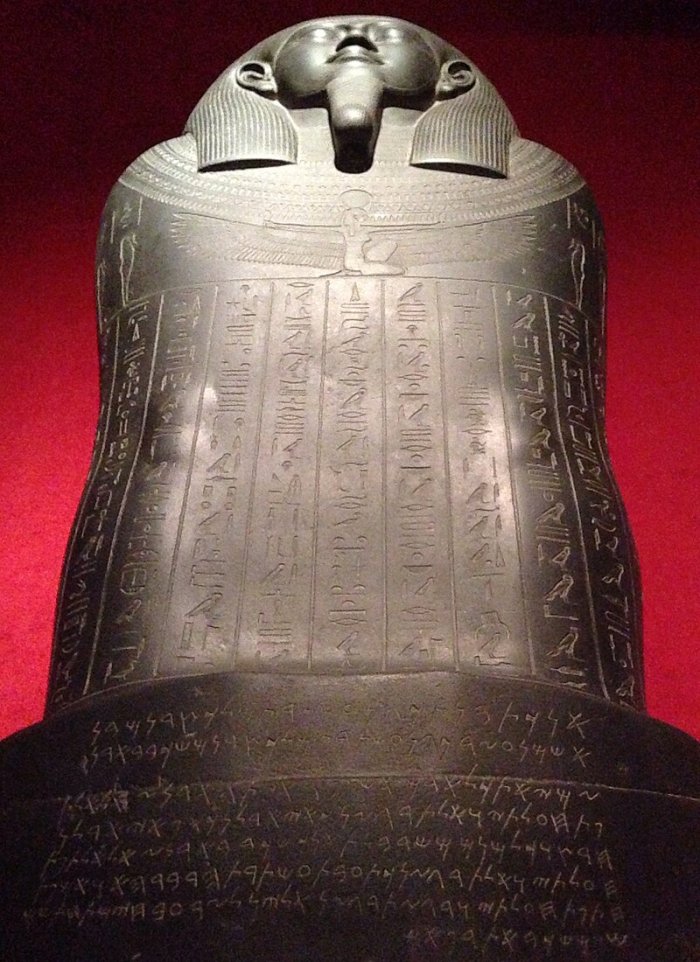
King Tabnit's sarcophagus at the Istanbul Archaeology Museum. Credit: oncenawhile - CC BY-SA 3.0
With the help of archaeological discoveries, historians have confirmed that Sidon was the main Phoenician city during the Persian period.
"The chronology of the reigns of the kings of Sidon at that time is quite well known because documentation is relatively abundant and accurate, contrary to the neo Babylonian domination over this city, the last known Sidonian king being Abdi-Milkuti who ruled c. 685-677 BCE, under Assarhaddon, king of Assyria." 1</sup
Researchers have traced the so-called dynasty of Eshmunazor, the following dynasty of Baalshillem, and the information we possess about these rulers provide a better understanding of historical events in this part of the world.
According to scientists, "the first known king of this dynasty was Eshmunazor, subsequently known as Eshmunazor I. He was succeeded by his son Tabnit who married his sister Amoashtart. Since Tabnit died before the birth of his son Eshmunazor II, the queen mother (HMLKT) Amoashtart assumed the interregnum until the birth, then the co-regency with her young son during his childhood. After that, Eshmunazor II reigned alone. At the end of his reign, he was succeeded by Bodashtart, who was the son of a brother (or a sister) of Tabnit and Amoashtart." 1
Mysterious Ancient Liquid Found In King Tabnit's Sarcophagus
When King Tabnit died, he was not mummified like ancient Egyptian pharaohs. His body was placed inside the sarcophagus and preserved all those years thanks to a specific liquid. Unfortunately, we may never know the whole story behind this curious burial tradition because something unexpected happened before scientists could examine the fluid.
When King Tabnit's sarcophagus was found by Osman Hamdi Bey at the Ayaa Necropolis east of Sidon, together with the Alexander Sarcophagus and other related sarcophagi, Hamdi Bey, the curator of the Istanbul Archaeological Museum arranged for full excavation of the site. Arrangements were also made to transfer the sarcophagus of King Tabnit to Istanbul.
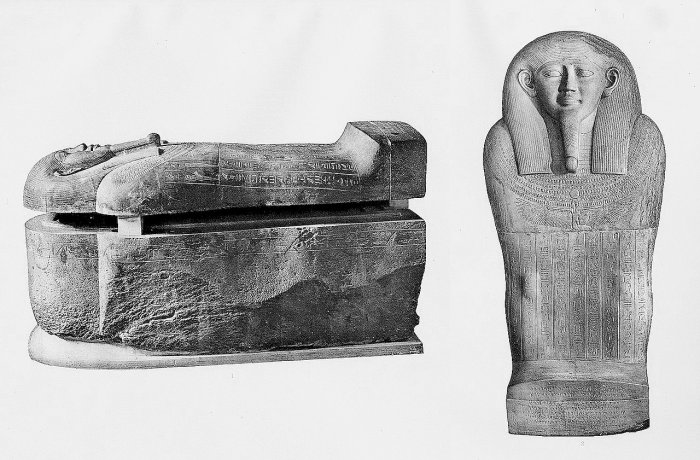
Tabnit sarcophagus (front and side). Credit: Osman Hamdi Bey (Istanbul 30 December 1842 – 24 February 1910) - 1892 - Public Domain
During the excavation, the workmen opened the Tabnit sarcophagus and found it contained "a human body floating in perfect preservation in a peculiar fluid."
"The flesh was soft and perfect in form and colour." 2
Whilst Hamdi Bey was having lunch and was not present at the archaeological site, the workmen "overturned the sarcophagus and poured the fluid out, such that the "secret of the wonderful fluid was again hidden in the Sidon sand". 2
When the original embalming fluid left the sarcophagus, the body of King Tabnit started to become un-preservable. The secret of this mysterious liquid was lost forever, and we can only speculate how the ancient people of Sidon managed to create an embalming fluid that preserved their ruler's body for all those years.
The Curse Of King Tabnit
Another curiosity about King Tabnit's sarcophagus was the frightening inscription that warned against coffin opening.
When scientists translated the Egyptian hieroglyphs, they saw it was a curse!
The curse of King Tabnit made it clear that he did not wish to be disturbed. It was his resting place. Anyone who opened the sarcophagus would suffer impotence and loss of an afterlife.
The curse read:
I, Tabnit, priest of Astarte (Ishtar), king of Sidon, the son of Eshmunazar, priest of Astarte, king of Sidon, am lying in this sarcophagus.
Whoever you are, any man that might find this sarcophagus, don't, don't open it and don't disturb me, for no silver is gathered with me, no gold is gathered with me, nor anything of value whatsoever, only I am lying in this sarcophagus.
Don't, don't open it and don't disturb me,
for this thing is an abomination to Astarte.
And if you do indeed open it and do indeed disturb me, may you not have any seed among the living under the sun, nor a resting-place with the Rephaites (dead ancestors)."
Such curses were relatively common in ancient Egypt and the surrounding areas. Placing one or many curses on the burial coffins or tomb walls was intended to prevent looting and to interrupt the deceased journey to the afterlife.
Based on the many looted ancient tombs archaeologists have unearthed, one can say with certainty that these curses did not deter thieves.
The sarcophagus and King Tabnit's decomposed skeleton are now in the Istanbul Archaeology Museums.
Updated on July 10, 2024
Written by Ellen Lloyd – AncientPages.com
Copyright © AncientPages.com All rights reserved. This material may not be published, broadcast, rewritten or redistributed in whole or part without the express written permission of AncientPages.com
Expand for references- Elayi, Josette (2006) - An updated chronology of the reigns of Phoenician kings during the Persian period (539–333 BCE)
- Jessup, Henry Harris (1910), Fifty-Three Years In Syria
- Gottheil, R. (1889). The Inscription of Tabnit. Hebraica, 5(2/3), 197–197.
- Joy Of Museums - The Curse of the Tabnit Sarcophagus
- Torrey, C. C. (1902). A Phoenician Royal Inscription. Journal of the American Oriental Society, 23, 156–173. https://doi.org/10.2307/592387
More From Ancient Pages
-
 Parthians: Their Great Empire And Skilled Horse Archers
-
 Face Of A Greek Girl That Lived 9,000-Years Ago Reconstructed In Athens
-
 On This Day In History: King Tut’s Tomb Is Unsealed And Opened – On Feb 16, 1923
-
 Unknown 500,000-Year-Old Migration Route Of Homo Erectus From Africa – Discovered
-
 Nazi Photo Album Made Of Human Skin Found At Polish Antiques Market
-
 Spectacular Victory Tower Dedicated To Hindu God Vishnu And Pioneered By King Rana Kumbha
-
 Shining Swords: Magical Artifacts That Symbolized Power, War, Punishment And Righteousness
-
 Has The Burial Place Of Mysterious Dark Age King Cerdic Of Wessex Been Located?
-
 Ancient Thriving Market Of Khan al-Tujjar (The Merchants’ Caravanserai) Discovered In Lower Galilee
-
 Excavations In Ancient City Of Bathonea Reveal Traces Of Viking Settlement
-
 ‘Long-Lost’ Troy Story Depicted On Roman Mosaic In Rutland, UK
-
 A Magical Handbook For The Afterlife – Insights To Ancient Egyptian Religion, Magic And Secret Knowledge
-
 Pharaoh Ramses II Comes One Step Closer To The Gods In The Company Of Hathor, Sekhmet and Ptah – Statues Discovered
-
 Mystery Of The Neanderthals – Search For Traces Of Neanderthals’ Lives And Hints Of Their Demise
-
 Roman Cosmetics Shop Discovered In The Ancient City Of Aizanoi, Turkey
-
 What Is The Truth Behind “Upstart Crow” – One Of The Most Famous Insults Aimed At Shakespeare?
-
 Unique Bronze Age Fortress Discovered In Galway, Ireland
-
 On This Day In History: Gutenberg Prints The First Bible – On Feb 23, 1455
-
 Mysterious Lost Kingdom Of Urartu And Its Enigmatic History
-
 Tullus Hostilius: Warrior King Of Rome, Who Succeeded Numa Pompilius And Feared Prophecies

