
How Important Was Music In Ancient Egypt?
Conny Waters - AncientPages.com - The appreciation for music is universal and timeless. Findings show the importance of music was widespread in the Upper Paleolithic period (ca. 50,000-10,000 BC).
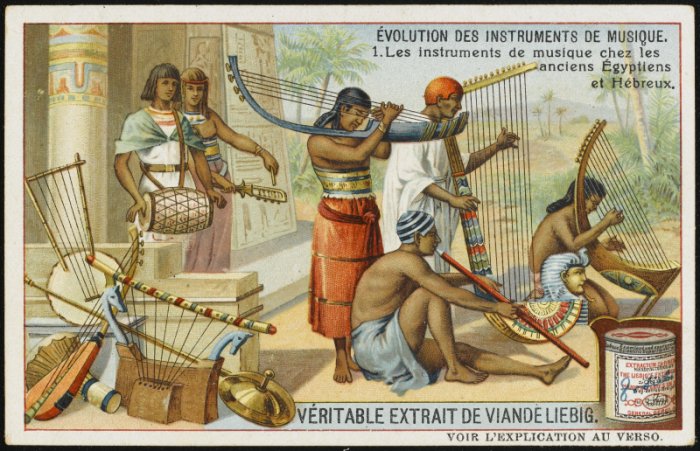
When it comes to more advanced civilizations, we find traces of some of the world’s oldest musical instruments in Egypt. Many ancient Egyptian wall paintings and carvings depict people singing and dancing. It goes without saying that must have played a role in such entertaining activities.
Credit: Archivist - Adobe Stock
While examining tomb paintings dating back to around 2575 B.C. to 2134 B.C., a period known as the Old Kingdom in Egyptian history, scientists discovered people liked to play flutes, clarinet-like reed instruments that had both single and double pipes, lutes, and harps.
One of the most famous and sacred ancient Egyptian instruments was the sistrum, an object associated with Hathor, a goddess who personified the principles of joy, feminine love, and motherhood. The object was made from clay, wood, or metal, and the instrument provided rhythmical accompaniment to other instruments, particularly in religious rites and festivals.
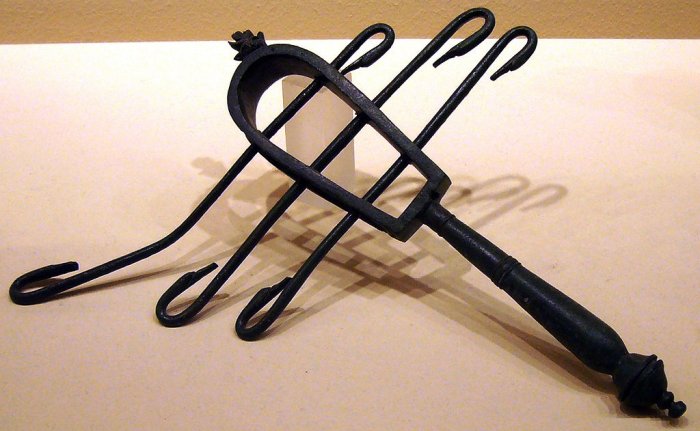
A sekhem-style sistrum. Credit: Lalupa -CC BY-SA 3.0
In the tomb of the Eighteenth Dynasty, Pharaoh Tutankhamun archaeologists discovered two trumpets and various percussion instruments. The trumpets, one of sterling silver and one of bronze or copper, are considered to be the oldest operational trumpets in the world and the only known surviving examples from ancient Egypt.
Studies of Egyptian art reveal musicians were nearly always men in the Old Kingdom. By the time of the New Kingdom, they were mostly women.
Ancient Egyptians also believed music could help a person on his or her journey to the afterlife.
“In Old and Middle Kingdom tombs, inscriptions of songs and hymns were sung to the accompaniment of a harp to celebrate the dead.” 1
Music was part of ancient Egyptians’ daily life, but special occasions sometimes required more elaborate performances.
“Festivals and holy days were marked by music and singing. Groups of musicians would sometimes have to entertain thousands of people. Such festivals were frequent. One village in the Fayum region dedicated 150 days every year to feasting in the name of the gods.
A wide variety of percussion instruments were played. Rhythms were beaten out on tambourines, ivory clappers, drums, castanets, cymbals and an array of chiming bells. Stringed instruments included the lyre (a form of lute) and the harp. These resemble versions that were introduced from Asia. Wind instruments included wooden pipes (similar to modern Egyptian folk clarinets) and early flutes, which were made from reeds and later, bronze. Bugle-like trumpets were used in religious ceremonies and in battle.” 1
See also: More Ancient History Facts
Music was not restricted to gender in ancient Egypt; men could play some instruments, and women could only play some.
We may never know what ancient Egyptian music sounded like. Still, there is no doubt several musical instruments have their roots in Pharaonic times, and listening to various sounds was as popular back then as it is today.
Updated on November 27, 2023
Written by Conny Waters – AncientPages.com Staff Writer
Copyright © AncientPages.com All rights reserved. This material may not be published, broadcast, rewritten or redistributed in whole or part without the express written permission of AncientPages.com
Expand for referencesMore From Ancient Pages
-
 Vedic God Indra: Ruler Of Heavens And Tough Warrior Who Kills Evil Serpent Vritra
-
 Denisovan DNA Found In The Genome Of Oldest Human Fossil Discovered In Mongolia
-
 Evidence Of A 2,000-Year-Old Curry, The Oldest Ever Found In Southeast Asia
-
 Lake Titicaca Reveals More Ancient Underwater Secrets
-
 Unique Roman Oil Lamp Decorated With A Crafted Mask Discovered In The Netherlands
-
 Discovered Inscription On Ancient Stone Vessel Reveals Location Of Legendary Tomb Of Chinese Emperor
-
 Sacred Island Ukonsaari Of The Sami People Will Be Respected – Tourism Company Ends Landings On The Island
-
 Rare ‘Forbidden’ Books With Ancient Knowledge Concealed From The World Examined By Experts
-
 Dramatic Life Story Of Queen Marie Antoinette Executed By Guillotine During The French Revolution
-
 Family Looking For Lost Gold Ring Finds Viking Age Artifacts In Their Garden On The Island Of Jomfruland
-
 How Norwegians Expressed Resistance Against Nazi Occupation Using Christmas Cards
-
 A Huge Site Dated To Roman-Era Unearthed In Reims (Marne), France
-
 Clovis Burial At Anzick Site And New Questions About Early Inhabitants Of North America
-
 Incredibly Well-Preserved 2,000-Year-Old Statue Of Greek God Hermes Found In Heraclea Sintica, Bulgaria
-
 Lady Justice (Justitia): Legal And Philosophical Concept Produced In Remote Antiquity
-
 Evidence Of The Biggest Ever Solar Storm 14,300 Years Ago – Found In Ancient Tree Rings
-
 3,500-Year-Old Skull And Thighbone Discovered In Sapinuwa Antique City Of Central Anatolia
-
 Roman Britain Executions Revealed – New Evidence
-
 World’s Oldest Tattoo Tools Discovered In Tennessee, North America
-
 Sacred Number One: Very Powerful Symbol Equated With The Mystic Center

