
Sumerian Stele Of The Vultures: Oldest Known Historical Records Carved On Limestone
A. Sutherland - AncientPages.com - The Stele of the Vultures is the Sumerian historical and literary work dated to the Early Dynastic III period (2600–2350 BC).
Also known as Eannatum’s Stele of Vultures, the artifact is fragmentary but it was once carved out of a single slab of limestone. The stele was commissioned by Eannatum, a powerful Sumerian ruler of Lagash around 2460 BC.
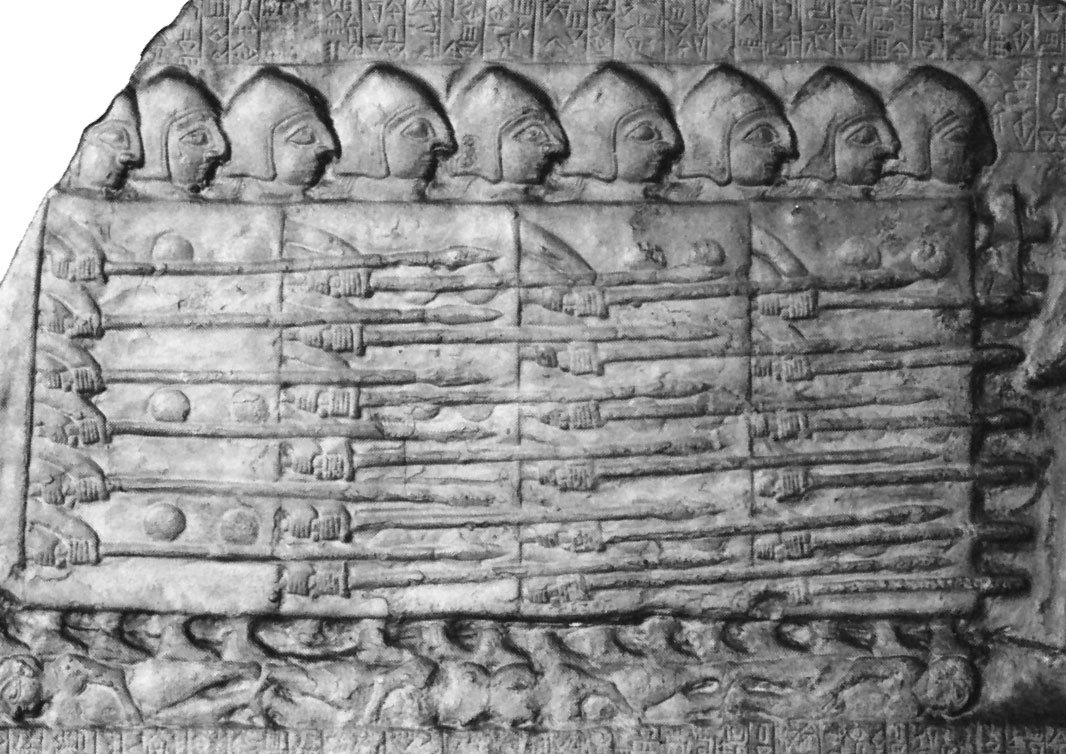
Sumerian phalanx, c. 2500 BC. A block of foot soldiers, standing shield-to-shield and presenting spears, advances in a dense mass typical of the phalanx. From the Stele of the Vultures, limestone bas-relief, c. 2500 BC. In the Louvre, Paris.Giraudon/Art Resource, New York. Image via Britannica
The king of Lagash, Eannatum, conquered all of Sumer and established one of the first verifiable empires in history. Eannatum even expanded his enormous influence beyond the boundaries of Sumer and during his reign, many palaces and formidable temples were built, especially in the city of Lagash.
It contains only seven pieces; the first three fragments were unearthed during excavations in the early 1880s by the French archaeologist Ernest de Sarzec (1832–1901) credited with the discovery of the civilization of ancient Sumer.
The place of the discovery is the mound of Tello (ancient Girsu) in what is today southern Iraq.
The excavations of 1888–1889, revealed another three fragments and finally, the last fragment was also discovered and later determined to be part of the Stele of the Vultures, the oldest known historical document.
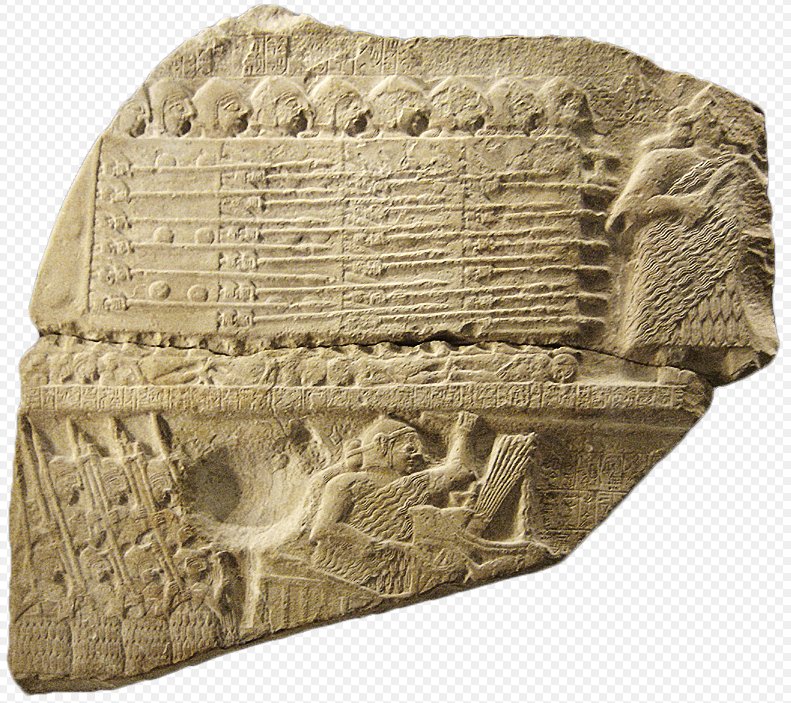
One fragment of the victory stele of the king Eannatum of Lagash over Umma, Sumerian archaic dynasties. Image credit: Sting - CC BY-SA 3.0
The Stele of the Vultures commemorates a victory of the city-state of Lagash over its neighboring city of Umma and depicts several religious, mythological, and historical scenes, and battles; the artwork was created during the time when the Sumerian artists commemorated important military victories, are celebrated on stone monuments.
The stele’s name relates to the vultures depicted in one of these scenes. The vultures are depicted with severed human heads in their beaks and a fragment of cuneiform script.
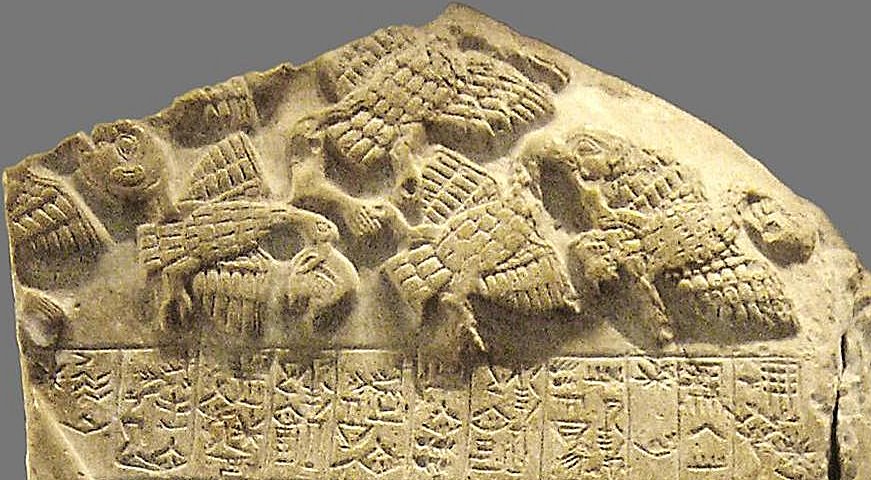
A fragment of the Stele of the Vultures showing vultures with severed human heads in their beaks and a fragment of cuneiform script. Image credit: Sting - CC BY-SA 3.0
The only seven fragments are known today and they are on display in the Louvre.
As reconstructed, the complete monument – decorated with carved reliefs on both sides - was probably 1.80 meters (5 ft 11 in) high, 1.30 meters (4 ft 3 in) wide, and 0.11 meters (4.3 in) thick and had a rounded top.
A very similar monument is the Victory Stele of Naram-Sin, created during the Akkadian period that followed on the Early Dynastic III period.
Unfortunately, the inscriptions on the Stele of the Vultures - written in the Sumerian cuneiform script - are not well-preserved and much of Sumer’s historical data is missing.
Written by – A. Sutherland - AncientPages.com Senior Staff Writer
Copyright © AncientPages.com All rights reserved. This material may not be published, broadcast, rewritten or redistributed in whole or part without the express written permission of AncientPages.com
More From Ancient Pages
-
 On This Day In History: Sweden Declares War On Its Ally The United Kingdom – On Nov 17, 1810
-
 Still Intact Renaissance Shipwreck Discovered On The Baltic Seabed
-
 Intriguing Beautiful Medieval Key Discovered In Claverham Village, UK
-
 Unfinished Roman Aqueduct Discovered In The Hellenistic Royal City Of Artashat-Artaxata In Ancient Armenia
-
 Wonderful Long-Lived Nymphs In Greek And Roman Mythologies
-
 1.5-Million-Year-Old Hominin Fossil Reveals Missing Link In Human Evolution
-
 Vikings’ Unicorn Bluff Fooled Europeans For Hundreds Of Years
-
 Largest Ancient Embalming Cachette Ever Found Unearthed At Abusir, Egypt
-
 Ancient Artifacts With Foreign Inscriptions And Unknown Signs Discovered In The American Southwest Reveal An Epic Story
-
 Edward Of Woodstock “Black Prince” – Idol Of The English People And Terror Of The French
-
 Mosaics With Oceanus And Medusa In Tomb Of Ancient City Of Perge, Turkey
-
 Who Made The Mysterious Ancient Cave Paintings And Inscriptions In Oklahoma 2,500 Years Ago?
-
 ‘Golden Man’ – Sak Warrior Covered With Thousands Of Pieces Of Gold – More Light On Gold Techniques Used In Kazakhstan
-
 3,700-Year-Old Ceremonial Stone Circle Found In Derbyshire Forest
-
 Mysterious Sophisticated Gran Coclé Culture Reveals Its Ancient Secrets
-
 Ancient Script Reveals Mysterious Location Of Legendary Hanging Garden Of Babylon
-
 Unas (Unis): First Pharaoh Who Decorated His Burial Chamber With Pyramid Texts
-
 Ife Head: Significance Of The Head ‘Ori’ In Yoruba Ancient And Present Beliefs
-
 Pharaoh Ramses II Comes One Step Closer To The Gods In The Company Of Hathor, Sekhmet and Ptah – Statues Discovered
-
 Did The Inca Use The Quipu To Collect Taxes?

